Bayelsa Community Raises Alarm Over Suspected Skin Disease Outbreak, Seeks Urgent Medical Attention
By Atlantic Reports
A community-based organisation has raised concerns over a suspected outbreak of an unidentified skin disease in Ondewari, Southern Ijaw Local Government Area of Bayelsa State, calling on the government and relevant health authorities to urgently investigate the situation.
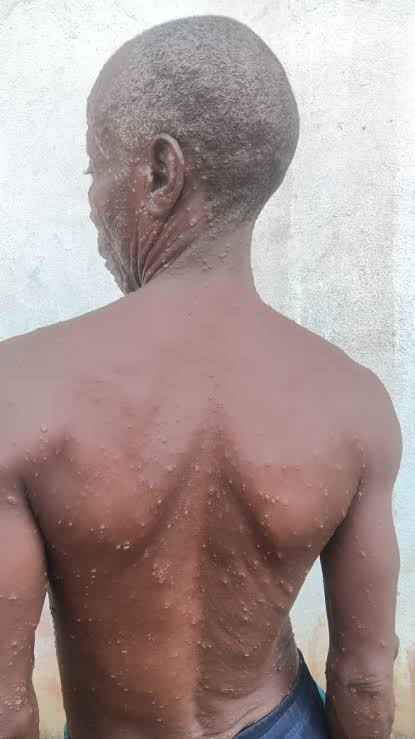
The Ondewari Health Education and Environmental Project (OHEEP) said the suspected illness was affecting children and adults, with some residents reportedly developing skin eruptions and other symptoms.
Although the condition has been suspected to be chickenpox or mpox, formerly known as monkeypox, its actual identity has not been established by medical experts.
In a field report issued on Sunday, November 22, 2026, OHEEP Programme Officer, Woyeinbrakemi Adaka, said several residents had been affected and called for immediate medical intervention.
Residents report skin eruptions and discomfort
One of the affected residents, Mr Tontiemotei Yeiyei, who is in his 60s, reportedly developed skin eruptions across his body, accompanied by discomfort, sensitivity to heat and occasional feelings of cold.
According to the report, Yeiyei said a doctor at a neighbouring health facility in Korokorosei allegedly identified his condition as monkeypox and referred him to the Niger Delta University Teaching Hospital, Okolobiri, for further medical attention.
However, there was no confirmed laboratory diagnosis establishing the disease responsible for the reported symptoms.
Another resident, Fredrick Simon, said the symptoms varied among affected persons, adding that some appeared to be recovering.
The organisation's concerns were also supported by the Public Relations Officer of the Ondewari youth body, Seitonkumo Erefawei, who said some affected residents had withdrawn from public activities.
Community raises concerns over lack of functional health centre
Beyond the suspected outbreak, OHEEP expressed concern over the absence of a functional healthcare facility in Ondewari.
The organisation said a health centre constructed and equipped by the Nigerian Agip Oil Company (NAOC) more than 10 years ago remained without the necessary operational capacity to provide medical services to residents.
It appealed to the Bayelsa State Government, Southern Ijaw Local Government Council and relevant health agencies to investigate the suspected outbreak and provide immediate medical assistance.
OHEEP specifically urged the Bayelsa State Hospital Management Board to activate the Agip-sponsored facility by deploying medical personnel and ensuring that residents have access to basic healthcare.
The organisation warned that delays in responding to the situation could expose more people to health risks.
Previous measles outbreak raises community concerns
OHEEP recalled that Ondewari experienced a measles outbreak in 2010, which reportedly claimed the lives of several children.
According to the organisation, interventions by the Bayelsa State Government and international medical humanitarian organisation Doctors Without Borders helped contain the outbreak.
The reference to the previous incident has heightened concerns about the community's preparedness to respond to another potential public health emergency.
The organisation also cited the recent death of a 43-year-old resident, Simeon Thompson, following a snake bite, as an indication of the risks residents face when emergency medical services are not readily accessible.
Urgent investigation and medical response needed
The reported cases require prompt assessment by qualified health professionals to establish the cause of the illness and determine whether there is an outbreak.
Until a diagnosis is confirmed, the suspected condition should not be presented as either chickenpox or mpox.
Health authorities will need to conduct appropriate investigations, identify affected residents, provide medical care and communicate clear preventive guidance to the community.
The situation also raises broader questions about the availability of functional healthcare infrastructure in rural and riverine communities, where geographical barriers and limited medical facilities can delay access to emergency treatment.
For Ondewari residents, the immediate priorities are disease identification, access to treatment and the restoration of a functioning healthcare facility.
Atlantic Reports: Voices. People. Facts.
Written by
Atlantic Reports Admin
Comments
- Be the first to comment.