Idris Defends Fuel Price Rises, Pledges Relief for Nigerians
By Atlantic Reports
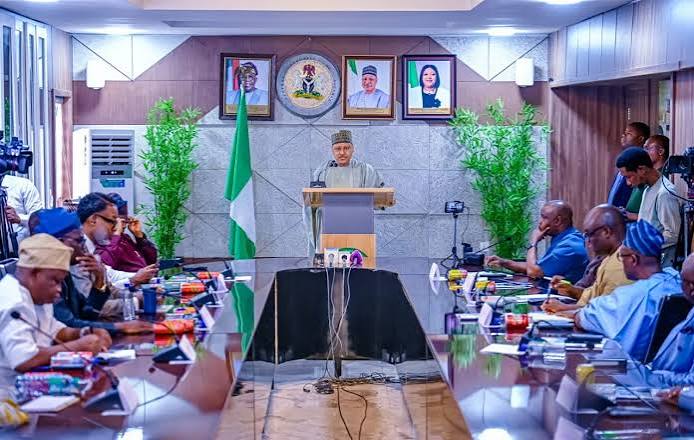
Minister of Information and National Orientation Mohammed Idris has defended rising fuel prices as part of a global energy challenge, while acknowledging the pressure higher costs place on Nigerian households and businesses.
Speaking during a media chat with senior editors and journalists in Abuja on Monday, Idris said the Federal Government remained committed to economic reforms and measures intended to improve living conditions.
“Rising energy costs are a global challenge, and governments across the world are adopting different approaches to protect their economies and cushion the impact on citizens,” he said.
The minister said the administration was expanding affordable energy alternatives, strengthening domestic production and working towards sustainable reductions in living costs.
However, the supplied account did not provide fuel price comparisons, quantify the contribution of global pressures to domestic prices or specify when the proposed measures would deliver relief.
Reform claims and household pressures
Idris said President Bola Tinubu understood the difficulties Nigerians faced and wanted economic recovery to translate into greater affordability and purchasing power.
“President Bola Tinubu remains firmly committed to the economic reforms that are strengthening our country, while ensuring that the welfare of Nigerians remains paramount,” he said.
He described the administration’s work across its eight presidential priority areas as an interconnected programme covering economic growth, security, agriculture, energy, infrastructure, social services, diversification and governance.
Those statements represent the government’s assessment of its performance. The account did not include outcome data demonstrating how the claimed gains had affected household incomes or the cost of essentials.
For consumers and businesses, the practical test will be whether energy alternatives become accessible and whether improvements in production reduce everyday costs.
Security commitments
On security, Idris said the government would continue investing in personnel, technology, intelligence and operational capacity.
“Let me assure Nigerians that the Federal Government will neither relent nor retreat in its determination to secure every part of our country,” he said.
He said Tinubu continued to demand results from security leaders and pledged protection for vulnerable communities, with the aim of enabling Nigerians to travel, farm, trade and work safely.
The account did not provide spending figures, operational targets or measures of progress against those commitments.
Accountability across government
Idris also urged the media to scrutinise federal, state and local governments according to their responsibilities.
He cited increased fiscal transfers, efforts towards local government autonomy, proposals for state police and electricity reforms allowing greater state participation as evidence of Tinubu’s approach to federalism.
State police remained a proposal in his remarks, rather than an established nationwide policing structure.
“Many of the services that touch daily life most directly, from urban transport and schools to primary healthcare and waste management, sit with States and Local Governments,” Idris said.
Citing a recent World Bank report, he said combined state capital expenditure rose by 151 per cent in real terms between 2023 and 2025, covering investments in transport, education, healthcare and social services.
That aggregate spending figure does not, by itself, establish the quality, completion or distribution of projects. Assessing its public benefit requires evidence of what was delivered and who can access it.
Idris’s appeal for accountability extends to the Federal Government’s own promises. Clear timelines and measurable results will be needed to establish whether its energy, security and economic policies are easing the pressures Nigerians face.
Atlantic Reports: Voices. People. Facts.
Written by
Atlantic Reports Admin
Comments
- Be the first to comment.