INEC Pledges Inclusive 2027 Elections for Persons With Disabilities in Nasarawa
By Atlantic Reports
INEC Promises Equal Electoral Opportunities
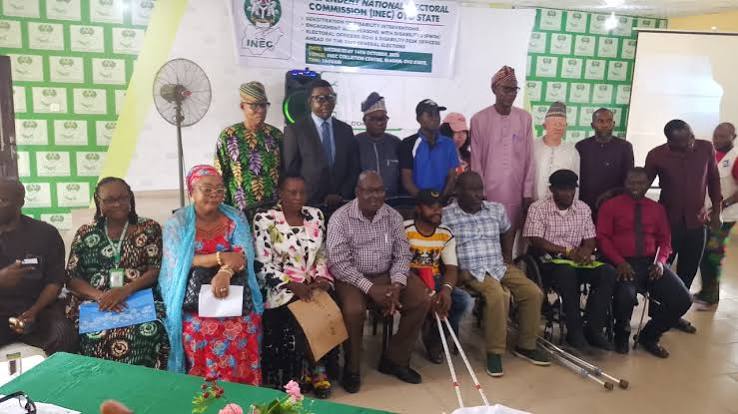
INEC Resident Electoral Commissioner in Nasarawa State, Mohammed Abubakar-Sadiq, gave the assurance on Monday in Lafia at a sensitisation workshop on disability inclusion, accessibility and electoral interventions.
The workshop brought together electoral officers, disability desk officers and other stakeholders to discuss ways to improve the participation of PWDs in the electoral process.
Abubakar-Sadiq said the credibility of the 2027 general elections would depend not only on voter turnout but also on whether every eligible citizen had a fair opportunity to vote and have their vote counted.
He warned that excluding eligible voters because of disability would undermine the democratic process.
The REC said INEC’s inclusion policy and the Electoral Act, 2026, provided for assistance to PWDs. He added that the Commission was committed to protecting their rights to participate as voters, candidates and election observers.
He assured participants that INEC would work towards making polling units accessible and ensuring that PWDs received priority attention and appropriate assistance during voting.
Workshop to Address Barriers to Participation
Abubakar-Sadiq said electoral officers from Nasarawa’s 13 local government areas, alongside disability desk officers and other relevant officials, were attending the workshop to strengthen their capacity to support voters with disabilities.
He explained that the exercise would help the Commission gather feedback on the experiences of PWDs during the 2023 general elections, identify shortcomings and develop practical measures to improve participation in 2027.
The REC urged participants to share their experiences openly, identify obstacles and propose solutions that could improve electoral services.
INEC Highlights Accessibility Materials
Earlier, INEC’s Head of Department for Voter Education, Gender, Publicity and Inclusion in Nasarawa State, Safiya Garba, reaffirmed the Commission’s commitment to protecting the electoral rights of PWDs.
Garba said the workshop was intended to deepen participants’ understanding of disability rights and promote the involvement of PWDs as voters, candidates and election personnel.
She said INEC was working to address barriers at different stages of the electoral process, from voter registration and education to voting and other forms of participation.
According to her, the initiative was guided by the Electoral Act, 2026, the Discrimination Against Persons with Disabilities (Prohibition) Act, 2018, INEC’s framework on access and participation, and international best practices.
Garba listed support materials available to facilitate participation, including Braille ballot guides, written instruction posters for voters with hearing impairments, magnifying glasses, Braille voter education materials, jingles, flyers and posters.
She urged electoral officers to ensure that the materials reached their intended beneficiaries and were used effectively.
Disability Groups Seek Greater Representation
Garba also called for stronger collaboration among INEC, the Joint National Association of Persons with Disabilities (JONAPWD), organisations of persons with disabilities, civil society groups and other stakeholders.
She said cooperation was necessary to improve voter education and encourage compliance with electoral guidelines.
The Nasarawa State Chairman of JONAPWD, Abdullahi Hudu-Baba, commended INEC for involving PWDs in its activities and providing support intended to improve their participation in the 2027 elections.
He urged the Commission to engage more persons with disabilities as ad hoc election staff, saying their involvement should extend beyond voting to include participation in election administration.
Implementation Will Determine Progress
INEC’s commitments place accessibility, voter assistance and representation at the centre of preparations for the 2027 elections.
However, the effectiveness of the measures will depend on their implementation, including the accessibility of polling locations, the availability of appropriate materials, staff preparedness and the involvement of disability groups in planning and monitoring.
For voters with disabilities, the key test will be whether the promised support enables them to participate independently, safely and on equal terms with other eligible citizens.
Atlantic Reports: Voices. People. Facts.
Written by
Atlantic Reports Admin
Comments
- Be the first to comment.