Africa's Security Council Exclusion a 'Continuing Injustice' — UNGA President
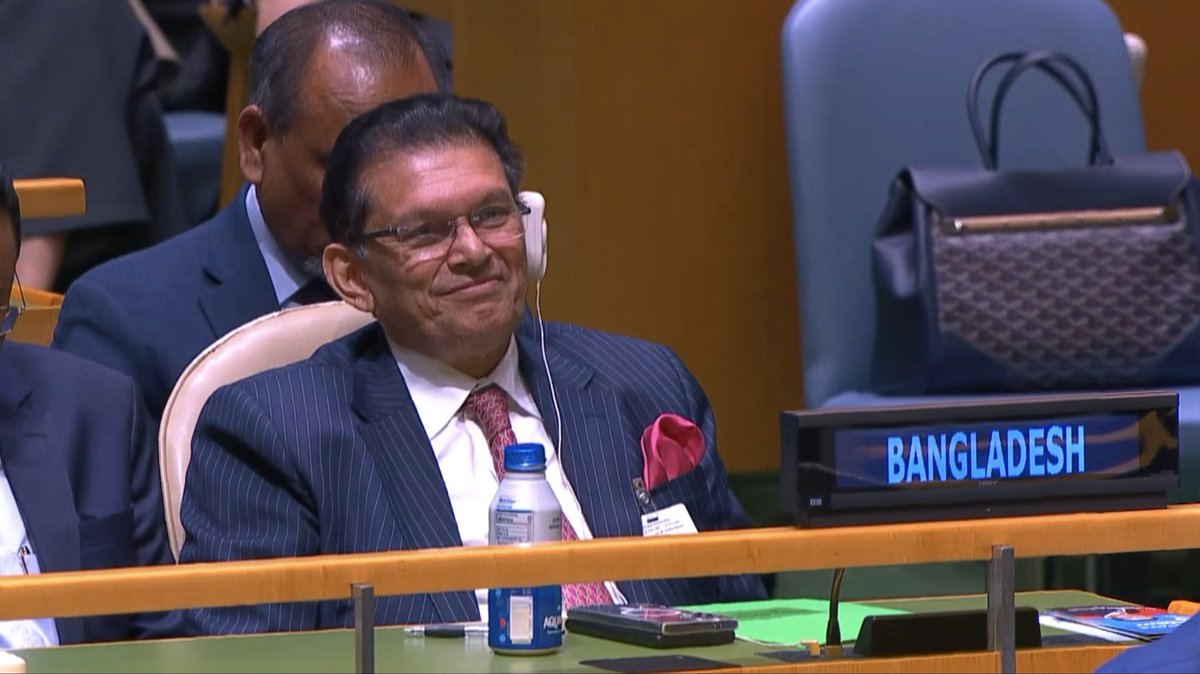
President of the UN General Assembly, Mr Khalilur Rahman, has described Africa's exclusion from permanent membership of the Security Council as "a continuing injustice," demanding justice for the continent.
Rahman made the remarks at the closing of the General Debate of the 81st session of the UN General Assembly in New York, noting that world leaders had spoken clearly about the need to reform the United Nations during the debate.
He said that while the UN80 initiative would continue, "administrative reform cannot substitute for deeper political reform." He added: "Reform is not an exercise in rearranging structures or reducing budgets, or rearranging budget lines. It is a matter of whether this organisation delivers better, faster, and more fairly for the people it serves. Administrative reform cannot be a substitute for deeper political reform truly led by member states."
On that basis, he reiterated that Africa's exclusion from permanent Security Council membership remains a continuing injustice. "The common African position is clear, no reform agenda, including UN80, is complete without addressing this long-standing inequity in the Security Council," he said.
Rahman also addressed the upcoming appointment of the next UN Secretary-General, describing it as "one of this Assembly's most consequential responsibilities at a time when the organisation is facing complex issues." He noted that the UN Charter mandates the Assembly to appoint the Secretary-General based on the Security Council's recommendation, stressing that the process must be transparent, inclusive and merit-based. "The selection process must strengthen, not diminish, the legitimacy, independence, and moral authority of the office," he said.
Giving a recap of the debate, Rahman said more than 193 delegations had taken the rostrum, including 113 heads of state and government, one crown prince, 11 vice-presidents, seven deputy prime ministers and 48 ministers.
"Across your statements, one word came before all others: peace. But peace was spoken of less as a distant aspiration than as an urgent defence — of the UN Charter, international law and the protection of civilians," he said.
He summarised the key themes raised during the debate, including peace and security, the Sustainable Development Goals, debt burdens, climate change, human rights and gender equality. He also noted a sharp rise in discussions on artificial intelligence, which was mentioned by just five delegations four years ago but was addressed by 128 delegations this year.
"Many framed AI as a question of governance: Who designs it? Who benefits? Who bears the risks? And who is accountable when harm occurs?" he said, stressing that AI governance must be human-centred, inclusive and attentive to the needs of developing countries.
The General Debate closed on Monday, though the General Assembly session continues. From Oct. 1 through December, the 193-member Assembly will move deeper into its substantive work, debating global issues, electing key officials and considering the UN budget. Much of the detailed negotiation and drafting will shift to its six Main Committees, where every member state is represented and issues range from disarmament and international security to economic, financial, humanitarian and social affairs.
One particularly consequential decision lies ahead: following a recommendation from the Security Council, the General Assembly will appoint the next UN Secretary-General, who will succeed António Guterres on Jan. 1, 2027.
Written by
Atlantic Reports Admin
Comments
- Be the first to comment.