Anambra Local Polls Spark Debate Over Electoral Credibility, Autonomy
Throughout Nigeria, it has become almost predictable that whichever party controls a state will sweep local government elections held within its borders.
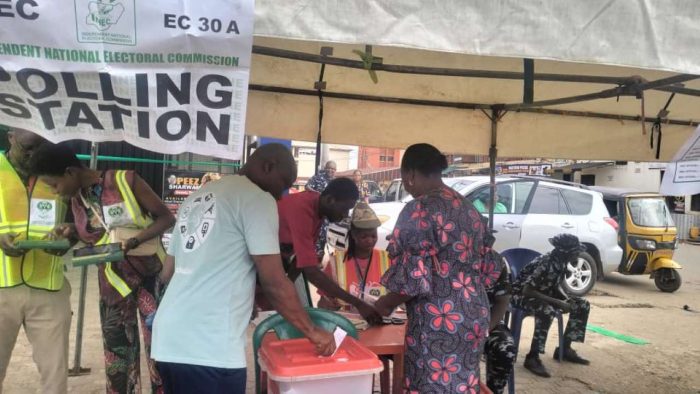
On August 29, the Anambra State Independent Electoral Commission (ANSIEC) conducted elections for the 21 Local Government Council chairmanship positions and Ward Councillorship seats across the state. The exercise marked the second election held under Governor Chukwuma Soludo's administration, and the third since local government elections resumed in the state in 2014.
Ahead of the poll, ANSIEC's Commissioner for Information and Publicity, Mr Chinedu Nnalue, announced that only two political parties — the All-Progressives Grand Alliance (APGA) and the Young Progressives Party (YPP) — would be participating. The commission disclosed that 363 candidates, comprising 22 chairmanship aspirants and 341 councillorship candidates, had been cleared to contest. APGA fielded candidates for all 21 chairmanship positions and 326 councillorship seats, while YPP fielded just one chairmanship candidate alongside 15 councillorship contestants.
With the election now concluded, questions continue to trail the rationale behind state-organised local government elections whose outcomes appear largely predetermined in favour of the ruling party. Critics argue that the scarce public resources committed to such exercises nationwide could be better channelled into infrastructure and other public goods, describing the polls as little more than a ritual for legitimising predetermined results.
Critics Question the Value of the Exercise
Mr Jude Okoye, who described himself as a member of the attentive public, said local government and ward councillorship elections had increasingly become mere formalities for legitimising the emergence of political office holders. He noted that the dominance of ruling parties in local government polls is not unique to Anambra or APGA, but a recurring pattern across states where incumbent parties control the electoral machinery — citing the recent Ebonyi local government election, in which the ruling All Progressives Congress (APC) swept all 13 Local Government Council seats and 171 Ward Councillor positions. "To me, it makes no sense," he said.
Similarly, social commentator Mr Tony Okafor questioned the current structure guiding local government elections, noting that Anambra had not witnessed a genuinely competitive local government contest since 1999. He argued that opposition parties have grown increasingly reluctant to participate due to past experiences in which outcomes were allegedly determined well before polling day.
Okafor called for the establishment of an independent Local Government Electoral Commission to conduct council elections free from direct influence or control by state governors. "The huge sums of money invested in such elections amount to a colossal waste of resources and an economic sin against the people," he said, suggesting that if the Independent National Electoral Commission (INEC) is unable to conduct local government elections, the Federal Government should establish a dedicated body responsible for council elections nationwide. "The implication of continuing to conduct local government elections the way they are currently conducted is that democracy will gradually die at the grassroots and give way to a new form of imperialism by state governors," he added.
Civil Society Links Predictability to Weak Fiscal Autonomy Implementation
Mr Chris Azor, a civil society advocate and Coordinator of the Anambra Civil Society Network (ACSONet), attributed the predictable outcome of the Anambra election to the Federal Government's failure to fully implement the 2024 Supreme Court judgment affirming financial autonomy for local governments and ending the appointment of caretaker committees.
Despite this, Azor stressed that local government elections remain necessary, arguing that abandoning them altogether would mean forfeiting other benefits tied to the Supreme Court ruling, particularly fiscal autonomy for councils. He identified prohibitive nomination fees, weak and fragmented opposition parties, and the alleged misuse of security agencies by state governors as factors capable of suppressing popular participation in council elections.
According to him, conducting elections under such condition’s risks undermining the autonomy recently granted to local governments, since elected officials may end up more accountable to governors than to the communities they were elected to serve. "Some political parties genuinely boycotted on principle, but others were obstructed. Both of these discourage the competitive politics that local government autonomy depends on to mean anything," he said.
Azor also raised concerns about transparency in the funding of state electoral commissions, warning that inadequate disclosure and auditing of electoral expenditure could erode public confidence. "The practice reduces voter turnout and civic trust, while opposition parties cannot build a base to contest higher offices. This pattern is becoming a national template, not a local anomaly," he said.
He recommended a framework granting State Independent Electoral Commissioners judicial-style tenure protection to insulate them from political interference by governors, alongside mandatory publication and independent auditing of State Electoral Commission budgets. He further advocated for sustained public pressure toward effective fiscal autonomy for local governments and reforms that would give civil society, the media and citizens a greater role in the electoral process.
Government Defends Outcome, Cites 'Bandwagon Effect'
The Anambra State Government, however, defended both the credibility and outcome of the August 29 election, attributing APGA's overwhelming victory to the perceived poor performance and lack of preparedness among opposition parties.
Dr Law Mefor, Commissioner for Information and Value Reorientation, said APGA's victory largely stemmed from a "bandwagon effect" driven by the party's track record and citizens' desire to align themselves with what they consider a success story. He maintained that elections remain fundamental to democracy and should continue to be held at the national, state and local government levels.
Mefor argued that Anambra's democratic space remains open, placing the blame on opposition parties for failing to take advantage of opportunities provided under existing electoral laws. According to him, opposition parties need to be more creative, daring and strategic if they hope to challenge APGA's dominance in the state.
He also defended the state's expenditure on the local government election, saying the exercise gave citizens the opportunity to elect their representatives. "In Anambra, the electoral guideline provided that even though a candidate is running unopposed, like in 20 LGAs, they still have to be voted 'yes' and garner two-thirds of the total votes cast. To say that we should do away with elections at the local government level because the party in power will win everything is an undemocratic idea. What should preoccupy lovers of democracy is how to make elections more competitive at that level. The opposition is too weak and APGA is very dominant here; that is responsible for the bandwagon effect," he said.
Mefor further dismissed claims that the opposition had been suppressed in the state, insisting that the democratic space remains open to political parties, civil society organisations and the media. "Opposition is not suppressed in Anambra. The democratic space is freer here than anywhere else. The press, civil society and opposition are operating freely, and I am not aware of any opposition figure that is hounded here," he said, describing the election as free and fair and noting that local government autonomy remains a constitutional matter supported by a robust local government administration law enacted by the Anambra State House of Assembly.
A Larger Question for Nigeria's Democracy
The divergent views surrounding the August 29 election highlight a broader question confronting Nigeria's democracy: whether local government elections, as currently organised by state electoral commissions, can deliver genuine political competition and meaningful grassroots representation.
While the government maintains that these elections are necessary to sustain democratic governance at the grassroots, critics insist that the process requires fundamental reforms to guarantee independence, transparency and credible competition. The Supreme Court's affirmation of local government autonomy has further raised expectations that councils should become more financially and politically independent, and more responsive to the people they serve.
For such autonomy to translate into improved governance, analysts say the electoral process that produces council officials must also command public confidence. The real issue, they argue, is no longer whether local elections should happen, but whether the system can be reformed to provide genuine choices, establish a level playing field for the opposition, and ensure leaders remain accountable to the public.
Without such fundamental reforms, political pundits warn, local government voting risks remaining a hollow democratic ritual with predetermined outcomes.
Written by
Atlantic Reports Admin
Comments
- Be the first to comment.