Army Strengthens Aviation Safety and Quality Systems
By Atlantic Reports
The Nigerian Army is strengthening its aviation quality management systems to improve flight safety, aircraft reliability and readiness for operations.
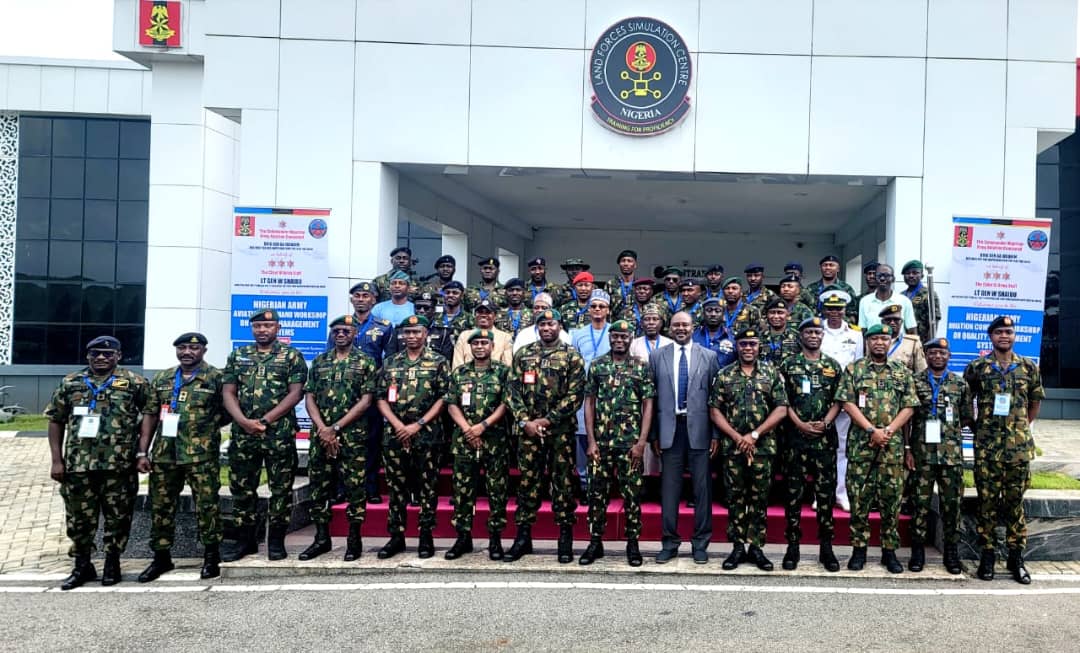
The Chief of Army Staff, Lt.-Gen. Waidi Shaibu, announced the initiative on Monday at the opening of the Nigerian Army Aviation Command Workshop on Aviation Quality Management Systems in Abuja.
Represented by the Chief of Standard and Evaluation, Maj.-Gen. Thompson Ugiagbe, Shaibu said effective aviation operations required more than aircraft and trained personnel.
“The effectiveness and sustainability of these capabilities depend not only on the availability of aircraft and trained personnel, but also on robust quality management systems that ensure safe, standardised and reliable aviation operations,” he said.
He explained that such systems should identify risks, ensure compliance with approved standards and prevent deficiencies from recurring.
As the Army expands its aviation capabilities, Shaibu said institutionalising these processes was necessary to sustain operational readiness and build an organisation capable of responding to challenges.
He said efforts since the re-establishment of Nigerian Army Aviation in 2014 had focused on developing aircraft platforms, personnel, infrastructure and support systems for land operations.
The workshop will examine practical approaches to quality assurance, safety management, maintenance, documentation and standardisation.
Shaibu urged participants to produce recommendations that would strengthen safety culture, improve operational processes and enhance the reliability of aviation assets.
The Commander of Nigerian Army Aviation Command, Brig.-Gen. Al-Amin Ibrahim, said quality management directly affected aircraft availability, mission effectiveness and the safety of personnel.
“For the Nigerian Army Aviation Command, quality is not merely an administrative requirement; it is fundamental to operational safety, aircraft availability, mission effectiveness, accountability and sustained combat readiness,” he said.
Ibrahim said the workshop would develop a structured framework for standardisation, documentation, monitoring and continuous improvement across the command.
He stressed that responsibility for safety and quality extended beyond inspectors and quality assurance officers to everyone involved in aviation activities.
“Rather, it is the responsibility of every officer, soldier and civilian staff member involved in planning, flying, maintenance, logistics, administration, training and support,” he said.
The commander urged personnel to prioritise the prevention of deficiencies through supervision, compliance with approved procedures, timely reporting and learning from operational experience.
He called for practical recommendations with measurable outcomes that could be implemented and monitored across the command.
The proceedings and recommendations will be compiled into a compendium to guide implementation and periodic review, Ibrahim said.
The opening remarks did not specify implementation deadlines or the measures that would be used to assess improvements in safety and aircraft reliability. Those details will be important in determining how the workshop’s recommendations translate into daily operations.
The five-day programme, which began on Monday, concludes on Friday.
Atlantic Reports: Voices. People. Facts.
Written by
Atlantic Reports Admin
Comments
- Be the first to comment.