COAS: Army Leveraging AI, Simulation to Strengthen Anti-Terror Operations
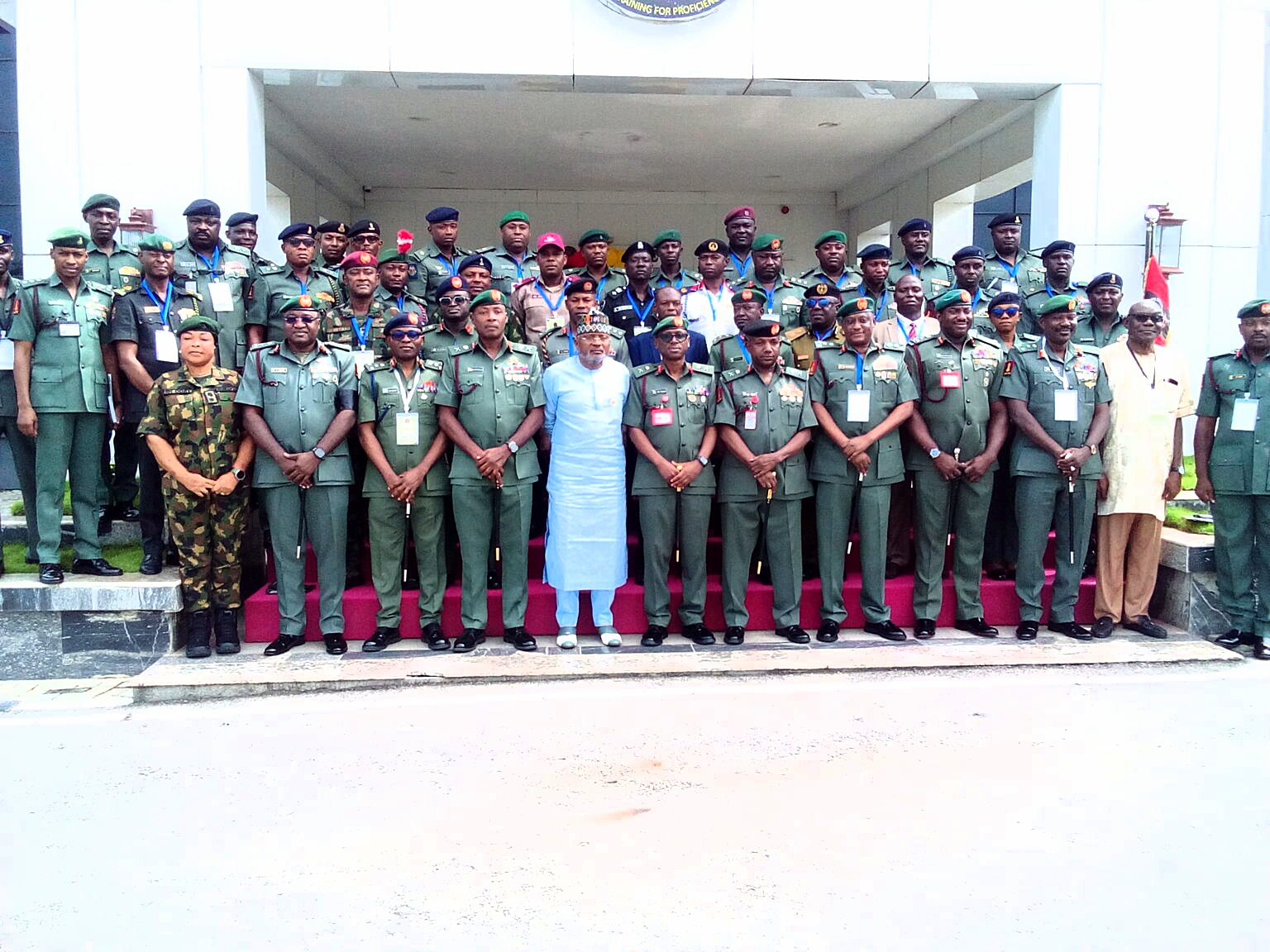
According to the Chief of Army Staff (COAS), Lt.-Gen. Waidi Shaibu, the Nigerian Army is ramping up its use of artificial intelligence, data analytics and simulation technology to enhance operational readiness and support more informed decision-making on the battlefield.
Shaibu disclosed this on Tuesday at the opening of a Simulation Training Seminar held at the Land Forces Simulation Centre Nigeria (LFSCN) in Giri, Abuja. He was represented by the Coordinator of the Nigerian Military Training Support Assistance Team, Maj.-Gen. Umar Yusuf.
According to Shaibu, simulation technology allows commanders to rehearse operational plans, anticipate how adversaries might act, and identify gaps in capability before facing them in real combat situations. He described the technology as far more than a simple training aid, calling it a vital command tool for analysing threats, testing strategies, and aligning the Army's strengths against known adversary weaknesses.
"Simulation is far more than a training aid but rather a critical command instrument for supporting data analysis, strengthening predictive capabilities and enabling commanders to match our strengths against identified adversary vulnerabilities," he said.
The COAS said the centre must function as a hub for wargaming both current and future operational plans, testing military doctrine, and refining contingency measures. He added that the facility should continuously draw lessons from active theatres of operation in order to spot weaknesses in existing plans and address them before they surface during real missions.
He further noted that simulation-based training would strengthen combat readiness while cutting down on the financial and logistical costs typically associated with live military exercises, including ammunition use and equipment wear.
Shaibu described the seminar's theme — "Harnessing Simulation Technologies to Strengthen Nigerian Army's Roles across Joint, Multi-Agency and Combined Operational Environments" — as timely, noting that it aligns with the Operational Readiness pillar of his command philosophy, which is centred on transforming the Army into a professional, adaptable, combat-ready and resilient force.
He said the seminar's blend of technical presentations, operational case studies and hands-on simulation exercises would help participants better evaluate plans and anticipate how adversaries might respond in the field. He urged attendees to apply the lessons learned toward improving wargaming practices, operational planning, command decisions and overall mission outcomes.
Earlier in his remarks, the Director-General of LFSCN, Maj.-Gen. Mohammed Wabili, observed that emerging technologies are increasingly being used by both security forces and terrorist groups alike. He pointed to tools such as robotics, unmanned aerial vehicles, artificial intelligence and simulation software as being widely accessible due to their dual-use nature, spanning both civilian and military applications.
Wabili said this reality demands that the Army continuously refine its strategies and integrate emerging technologies in order to maintain an edge over adversaries. "The Land Forces Simulation Centre Nigeria is therefore in a unique position to employ advanced simulation software for continuous validation of operation plans and contingency plans," he said.
He added that the seminar would draw on the operational experience and expertise of resource persons to examine simulation technology from multiple perspectives. The event, which runs until Thursday, is expected to yield practical methodologies and recommendations aimed at strengthening simulation-based training and operational planning across the Nigerian Army.
During the event, the COAS also formally commissioned the centre's Shooting Simulation Range.
Written by
Atlantic Reports Admin
Comments
- Be the first to comment.