INEC Pledges Accessible Voting for Persons With Disabilities in Lagos
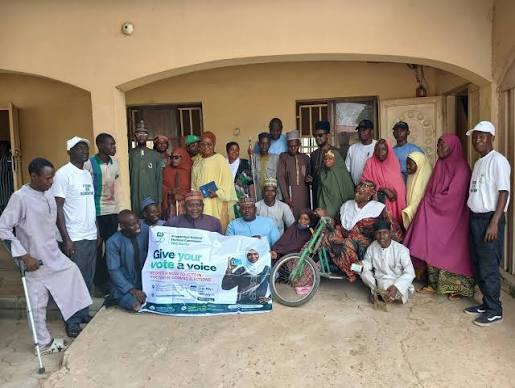
By Atlantic Reports
The Independent National Electoral Commission (INEC) has pledged to address barriers that prevent persons with disabilities from registering, obtaining electoral information and voting independently in Lagos State.
The state’s Resident Electoral Commissioner, Prof. Ayobami Salami, made the commitment on Monday at a sensitisation programme for persons with disabilities, Electoral Officers and Disability Desk Officers.
In an address read by the Administrative Secretary, Mrs Oluyemi Adeyemi-Showunmi, Salami said inclusion required more than allowing voters to enter polling units.
“It requires us to identify and remove barriers preventing them from registering, accessing electoral information and exercising their voting rights independently, safely and with dignity,” he said.
He said INEC would assess its facilities, procedures, communication methods and operational arrangements to ensure eligible voters were not disadvantaged by disability.
Assistive Tools Must Be Available and Functional
Salami outlined planned interventions, including Braille ballot guides across the 36 states and the Federal Capital Territory, Braille-transcribed voter education materials, EC30 PWD posters for deaf voters and magnifying glasses for voters with low vision or albinism.
He also said certified sign language interpreters would be provided at state collation centres.
These are announced measures. Their effectiveness will depend on appropriate deployment, availability and personnel who understand how to use them.
Salami warned that supplying devices alone would not guarantee accessibility.
He urged officers to ask voters about their preferred assistance rather than assume what they could or could not do. Staff should also explain the tools clearly, handle them properly and ensure they reach their intended users.
According to figures he attributed to the INEC chairman, the national voter register contains 232,658 registered persons with disabilities across 10 categories. The figure is national, rather than a count of voters with disabilities in Lagos.
Salami said the range of needs required different forms of support. Blind voters might use Braille guides, deaf voters could need accessible written information or sign language interpretation, and voters with mobility impairments could face physical obstacles at electoral facilities.
He called for coordinated action across voter education, logistics, electoral operations and other departments, saying every officer interacting with voters had a duty to provide respectful, non-discriminatory assistance.
Disability Advocates Seek Delivery
Mrs Mojisola Awelewa, a desk officer in INEC’s Disability Unit, said the workshop included practical demonstrations and hands-on learning to identify operational gaps before the elections.
“An inclusive electoral process does more than raise turnout among Persons with Disabilities, it strengthens the credibility and legitimacy of the election as a whole,” she said.
The Lagos Chairman of the Joint National Association of Persons with Disabilities, Mr Lukman Salami, welcomed INEC’s efforts but urged the commission to put its commitments into practice and adopt a more universal approach.
“We have equal right to express our political opinion. For this right to be meaningful, the election process must be accessible and inclusive for PWDs,” he said.
Responding to concerns, INEC’s Head of Voter Registration and ICT, Mr Muyiwa Yusuff, said the commission was continuing work to improve inclusion.
The account did not provide polling-unit accessibility assessments, quantities of assistive devices allocated to Lagos or deadlines for resolving identified barriers.
For voters, the measure of progress will be whether registration and voting can be completed safely, with dignity and the assistance they choose.
Atlantic Reports: Voices. People. Facts.
Written by
Atlantic Reports Admin
Comments
- Be the first to comment.