Disability Group Seeks Voice in Petroleum Host Community Decisions in Edo
By Atlantic Reports
The Centre for Citizens with Disabilities (CCD) has called for persons with disabilities to participate in decisions on petroleum host community development in Edo State, rather than being treated solely as recipients of assistance.
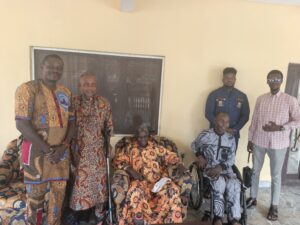
The group made the appeal during a Ford Foundation-funded advocacy visit on Saturday to the Enogie of Oben, His Royal Highness Fred Ogiemwonyi, in Orhionmwon Local Government Area.
CCD Coordinator, Chief Bartholomew Okoudo, said implementation of the Petroleum Industry Act (PIA) 2021 offered an opportunity to make community development more inclusive.
He urged traditional rulers and community structures to identify residents with disabilities, ensure their representation and consult them when selecting and implementing development projects.
Participation beyond receiving benefits
Okoudo said persons with disabilities should have equitable access to skills training, empowerment programmes, employment opportunities and other benefits arising from host community development.
Their needs, he added, should inform planning, project design and implementation.
His appeal placed participation at the centre of the advocacy: residents with disabilities should help shape decisions affecting their lives and livelihoods.
Okoudo said traditional rulers could advance inclusion through their influence and knowledge of local circumstances. He urged the Enogie to champion the effort in Oben.
He emphasised that the advocacy sought fairness, dignity and equitable participation, rather than preferential treatment or conflict.
Traditional ruler promises support
Responding, Ogiemwonyi pledged to work with the group and examine the concerns raised by the delegation.
He said disability should not prevent people from fulfilling their potential or contributing to society.
The traditional ruler expressed concern about what he described as inadequate attention to persons with disabilities by some leaders and urged political officeholders to fulfil their campaign promises.
He also promised to bring the delegation’s concerns to the attention of oil companies operating in his domain and remain accessible to the advocates.
The visit secured a commitment of support, but the account did not specify a timetable or a mechanism for ensuring representation in community development decisions.
Education concerns raised
The delegation also highlighted discrimination and barriers to education.
Mr Joshua Izekor, Public Relations Officer of the Edo State Deaf Association, spoke through a sign language interpreter and appealed for greater support for access to education.
He urged the Enogie to sensitise community members to the importance of educating children with disabilities, saying many people in rural communities lacked educational opportunities.
Another delegate, Mr Edwin Aigbekaen, said the visit also aimed to inform persons with disabilities about their rights and encourage their involvement in decision-making.
He thanked the traditional ruler for receiving the group and sought his support in ensuring that residents with disabilities had a voice in the development of their community.
The next step will be translating the assurances into practical opportunities for participation, alongside access to education, training and community development benefits.
Atlantic Reports: Voices. People. Facts.
Written by
Atlantic Reports Admin
Comments
- Be the first to comment.