Experts: Digital Tech Is Already Reshaping Nigerian Farming
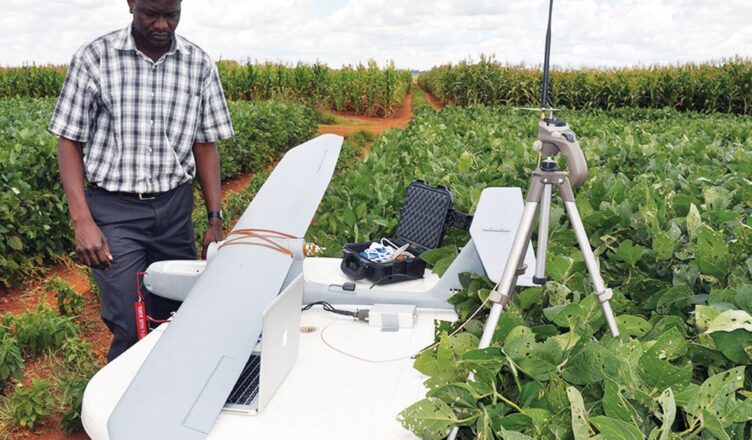
Internet access is lifting the welfare of Nigerian farming households, academics and agricultural leaders said on Monday, as they called for institutions to prepare farmers, researchers and young people for a technology-driven future in food production.
The stakeholders spoke at the 4th Annual Conference of the Federal College of Animal Health and Production Technology, Ibadan, themed "Innovating for the Future: Integrating Science, Smart Agriculture and Emerging Technologies for Sustainability and Global Prosperity".
Guest speaker Prof. Babasola Olugasa, Dean of the Faculty of Veterinary Medicine, University of Ibadan (UI), said internet connectivity was fast becoming a key channel through which farmers obtain agricultural information. The digital space, he said, now brings markets, financial services, extension advice and livelihood opportunities within farmers' reach.
"Globally, digital technologies have improved the generation, exchange and use of agricultural information, enabling farmers to obtain timely information on weather, input availability, market prices, production practices and potential buyers," he said.
Olugasa said digital farming could raise household welfare by narrowing information gaps around input sourcing, production practices and market opportunities, and could also support financial inclusion, innovation and other income-generating activities.
Drawing on Nigeria General Household Survey (GHS) data, which compared internet-using farming households with similar non-users, he said "the results show that internet usage improved farm and non-farm income, although the magnitude of the effect remains modest for the former."
"The welfare effects are more pronounced; internet usage reduces the likelihood of household poverty by 12.4 -17 per cent, reduces subjective food insecurity by 7.5 -10.0 percent and improves dietary diversity by 14.9 – 22.39 per cent," he said.
"Overall, the findings suggest that digital farming can contribute to poverty reduction and broader household welfare improvement in Nigeria."
He cautioned, however, that limited connectivity, affordability and digital literacy continue to stand in the way of full adoption and effective use of digital tools.
"Although mobile communication has expanded rapidly in Nigeria and become increasingly relevant to rural livelihoods, much of the existing Nigerian literature has focused on mobile-phone ownership or general ICT use rather than internet usage specifically," he said.
Lead paper presenter Kayode Salman, a professor of Agricultural Economics at UI, said digital farming was no longer a distant prospect but a present reality already transforming agriculture worldwide.
"If digital farming is the destination, internet usage is one of the critical roads that takes farmers there," he said.
"Digital farming is live in Nigeria and making farming easier for farmers. We have Hello Tractor for farmers needing machinery for use."
Earlier, the college's Provost, Dr Moshood Popoola, said agriculture and animal production were changing rapidly across the world, and that the challenges facing food and agricultural systems were multidimensional.
"We are dealing with climate change, population growth, food insecurity, emerging and re-emerging animal diseases, declining natural resources, rising production costs, changing consumer preferences and the need for more efficient and sustainable production systems," he said.
He listed artificial intelligence, machine learning, precision agriculture, biotechnology, genomics, drones, remote sensing, robotics, Internet of Things devices, data analytics and smart farm management systems among the technologies "transforming the way agricultural production is conceived and practised."
According to Popoola, the debate is no longer whether technology will shape agriculture.
"Technology is already transforming agriculture. The critical question is how do we ensure that our institutions, researchers, farmers, entrepreneurs and young people are adequately prepared to harness these technologies for sustainable agricultural development?" he said.
He said institutions such as the college had a critical role to play.
"We must produce graduates who are not only knowledgeable in animal health, animal production, agriculture and related disciplines, but who are also digitally literate, innovative, entrepreneurial and capable of solving real-world problems.
"Our research must also move beyond publications alone. We must increasingly ask ourselves what problem are we solving? Who will benefit from our research?
"How can the innovation be commercialised? How can it improve farmers' livelihoods, and how can it contribute to food security and economic development?" he asked.
Dr Mutiat Salawu, Chairman of the Local Organising Committee, said the state of agriculture in Nigeria demanded urgent intervention.
"It's a call for us to confront the defining challenges of our time: climate change, food insecurity, technological disruption, and the quest for sustainable prosperity," she said.
She noted that accepted papers spanned fields "from Artificial Intelligence to aquaculture; from veterinary medicine to molecular sciences; from policy analysis to entrepreneurship."
"This breadth is intentional, because no single discipline can, in isolation, solve the complex problems of sustainability," she said.
Salawu urged participants, as scholars, to resist retreating into intellectual silos, arguing that the farmer's field is now shaped by algorithms as much as by rainfall.
"The health of livestock is inseparable from the health of humans and ecosystems. The economics of aquaculture are shaped by both molecular biology and global trade.
"This conference is therefore a crucible, a place where ideas from different domains can interact, challenge, and enrich one another," she said.
Written by
Atlantic Reports Admin
Comments
- Be the first to comment.