FG Plans Additional $3bn for Health by 2030
By Atlantic Reports
The Federal Government plans to invest an additional US$3 billion in Nigeria’s health sector by 2030 as part of a transition towards greater domestic financing and reduced dependence on foreign assistance.
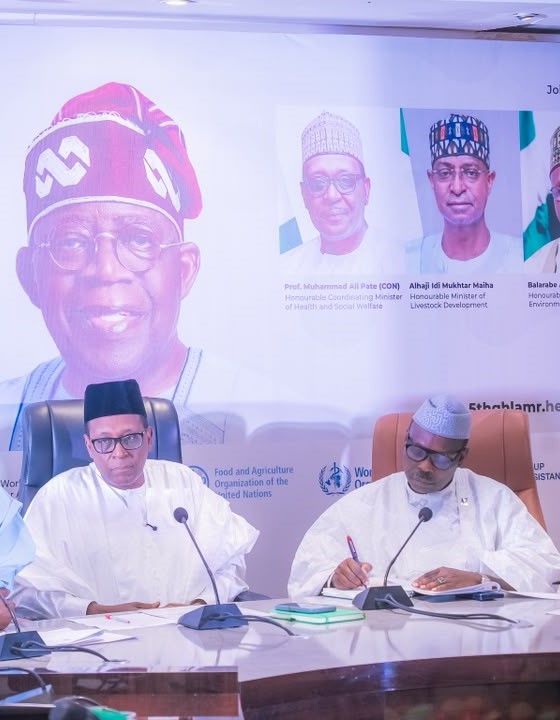
Coordinating Minister of Health and Social Welfare, Prof. Muhammad Pate, announced the plan on Monday in Abuja while responding to questions about Nigeria’s health cooperation agreement with the United States.
The proposed investment represents an expectation of future government spending. Pate did not provide an annual funding schedule or specify how much had already been budgeted, released or spent towards the target.
“From now until 2030, the expectation is that the Federal Government will put in three billion dollars into health, which is more than what the U.S. government will contribute as it ramps down its contribution,” he said.
Taking greater responsibility for health funding
Nigeria and the United States signed a five-year bilateral health Memorandum of Understanding on December 19, 2025, under the US America First Global Health Strategy.
Pate said the arrangement provided for a transition in which Nigeria would assume greater responsibility for financing its health programmes as US contributions declined.
He acknowledged that Nigeria was not yet able to fund its health sector fully, but argued that long-term dependence on external assistance was inconsistent with the country’s national interest.
According to the minister, US support over about 25 years had helped fund HIV, tuberculosis and malaria programmes serving millions of Nigerians. A change in US policy in 2025, he said, prompted Nigeria to take greater ownership of those interventions.
Pate described full domestic financing by 2030 as the government’s objective under the transition.
“We cannot rely on somebody else’s taxpayers funding for the health of Nigerians,” he said.
For people who depend on supported health programmes, a central issue will be whether domestic funding replaces declining assistance in time to sustain services.
States and councils also expected to contribute
Pate said President Bola Tinubu had increased domestic health allocations, including allocating six per cent of the government budget to health. He did not identify the budget year or distinguish that allocation from actual expenditure.
The minister stressed that federal spending alone would not deliver sustainable financing. State and local governments would also need to increase their contributions.
He acknowledged that the extent to which states would raise their health spending remained uncertain.
The proposed transition therefore depends on more than the federal investment target. It also requires budget releases, coordinated spending and sustained support for services as external contributions fall.
Minister defends cooperation agreement
Addressing concerns about the agreement, Pate described the MoU as a non-binding framework governed by Nigerian policies and laws.
He said it did not undermine either country’s sovereignty and that either party could withdraw at any time.
Pate also said the Attorney-General of the Federation had confirmed that the agreement contained nothing that undermined Nigeria’s national interest. He said 15 Nigerian government institutions, including the ministries responsible for foreign affairs, finance and health, participated in developing Nigeria’s negotiating position.
The minister said the agreement was publicly available and that interested parties could request a copy from the health ministry through the Freedom of Information process.
He linked the cooperation to the government’s Health Sector Renewal Investment Initiative, which prioritises governance, primary healthcare, health insurance, domestic production and health security.
According to Pate, the arrangement would support public health and laboratory capacity, including the detection of antimicrobial resistance, and help develop local production of essential health commodities.
Abuja conference to focus on local action
Pate spoke at a media conference announcing the fifth Global High-Level Ministerial Conference on Antimicrobial Resistance (AMR), scheduled for December 6–8, 2026, in Abuja.
AMR occurs when microorganisms become resistant to medicines used to treat infections.
The minister described the meeting as the first edition to be hosted in Africa. Its theme is “One Health: Advancing Global AMR Commitment through Local Action”.
He said stronger domestic production and reliable local supplies of essential medicines, including antimicrobials, were important to reducing external dependence.
The financing announcement sets out the government’s ambition. A detailed spending timetable, evidence of releases and clear arrangements for maintaining supported programmes will be needed to show how that ambition translates into dependable healthcare.
Atlantic Reports: Voices. People. Facts.
Written by
Atlantic Reports Admin
Comments
- Be the first to comment.