FG proposes N84.48bn for plan to end child marriage by 2030
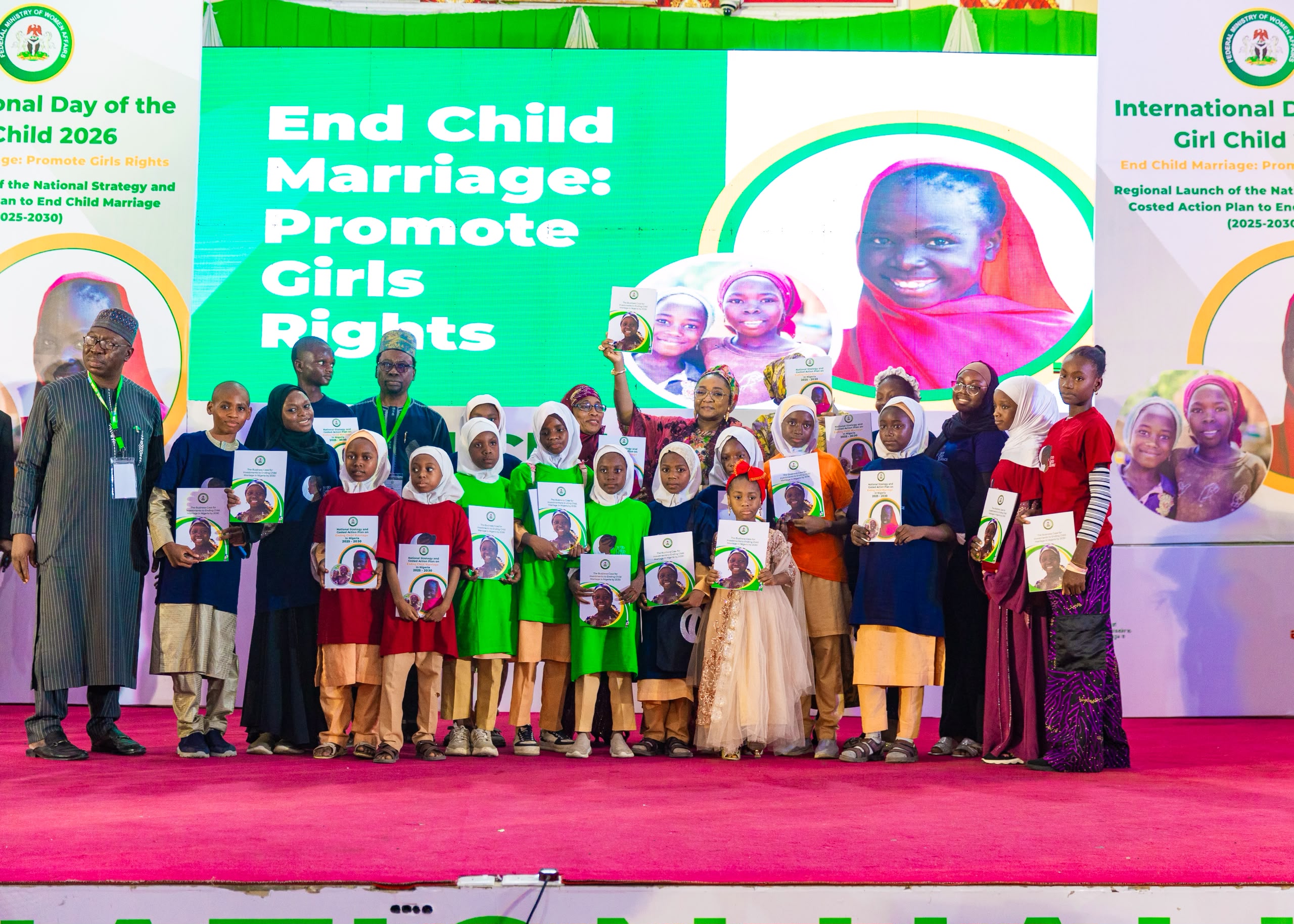
The Federal Government has proposed N84.48 billion to fund a five-year national strategy aimed at ending child marriage in Nigeria by 2030.
The Minister of Women Affairs and Social Development, Hajiya Imaan Sulaiman-Ibrahim, announced the figure on Tuesday night in Kano. She was speaking at the 2026 International Day of the Girl Child commemoration, which also marked the launch of the North-west strategy to end child marriage.
According to the minister, the National Strategy and Costed Action Plan on Ending Child Marriage in Nigeria, 2025–2030, will serve as a framework for implementation, financing, monitoring and accountability.
She said the strategy addresses the root causes of child marriage, which she listed as poverty, insecurity, exclusion from school and harmful traditional practices.
Sulaiman-Ibrahim said Kano's influence in Northern Nigeria makes it well placed to serve as a model for implementing the strategy across the country.
She cited scholarships for girls, free bus transport for female students and the domestication of school re-entry guidelines for married adolescents as initiatives in the state that support girls' education.
The minister said the Federal Government was strengthening implementation of the Child Rights Act and working with state governments to coordinate interventions against child marriage.
She added that the plan would need clear funding arrangements and defined responsibilities for the institutions carrying it out at national and subnational levels.
Presenting the cost of the plan, Mr Musa Aliyu-Musa, Director of Economic Services in the ministry, put the total cost of implementing the strategy over five years at N140.802 billion.
He said the Federal Government was expected to provide 60 per cent of the amount, or N84.481 billion, while development partners would cover the remaining 40 per cent, or N56.320 billion.
According to NAN, the strategy sets out six intervention areas, including enforcing legal frameworks, changing harmful social and cultural norms, empowering adolescents and communities, strengthening child protection services, and improving monitoring and data generation.
The plan also seeks closer coordination among government institutions, traditional and religious leaders, civil society organisations and development partners to ensure it is carried out effectively.
Earlier, Aishatu Abdulkadir, Permanent Secretary of the Kano State Ministry of Women Affairs, Children and Persons with Special Needs, said the state was running programmes to support children's development and girls' education.
She named the AGILE Project, the Girl Child Initiative and the state's free and compulsory education policies among measures to widen access to schooling.
Abdulkadir called on parents, community leaders, religious institutions and other stakeholders to act together to keep girls in school and protect them from exploitation.
She also said protecting girls from early marriage was in line with the Islamic principle of Maslaha, which stresses the public interest and the prevention of harm.
The event featured presentations on ending child marriage and implementing the national strategy, as well as goodwill messages from Girls Not Brides, Plan International, ActionAid and Girl Effect.
The organisations called for sustained domestic financing, stronger coordination among government agencies, and wider access to safe and inclusive education, so that girls can complete their schooling and make informed decisions about their futures.
Data presented at the event showed that 17.5 million Nigerian girls and women were married before the age of 18, and 6.5 million before the age of 15.
According to report, the strategy seeks to reduce child marriage through legal reform, community engagement, education, economic empowerment and stronger protection systems, with the goal of ending the practice by 2030.
Written by
Atlantic Reports Admin
Comments
- Be the first to comment.