Google: AI Must Support Critical Thinking, Not Substitute Learning
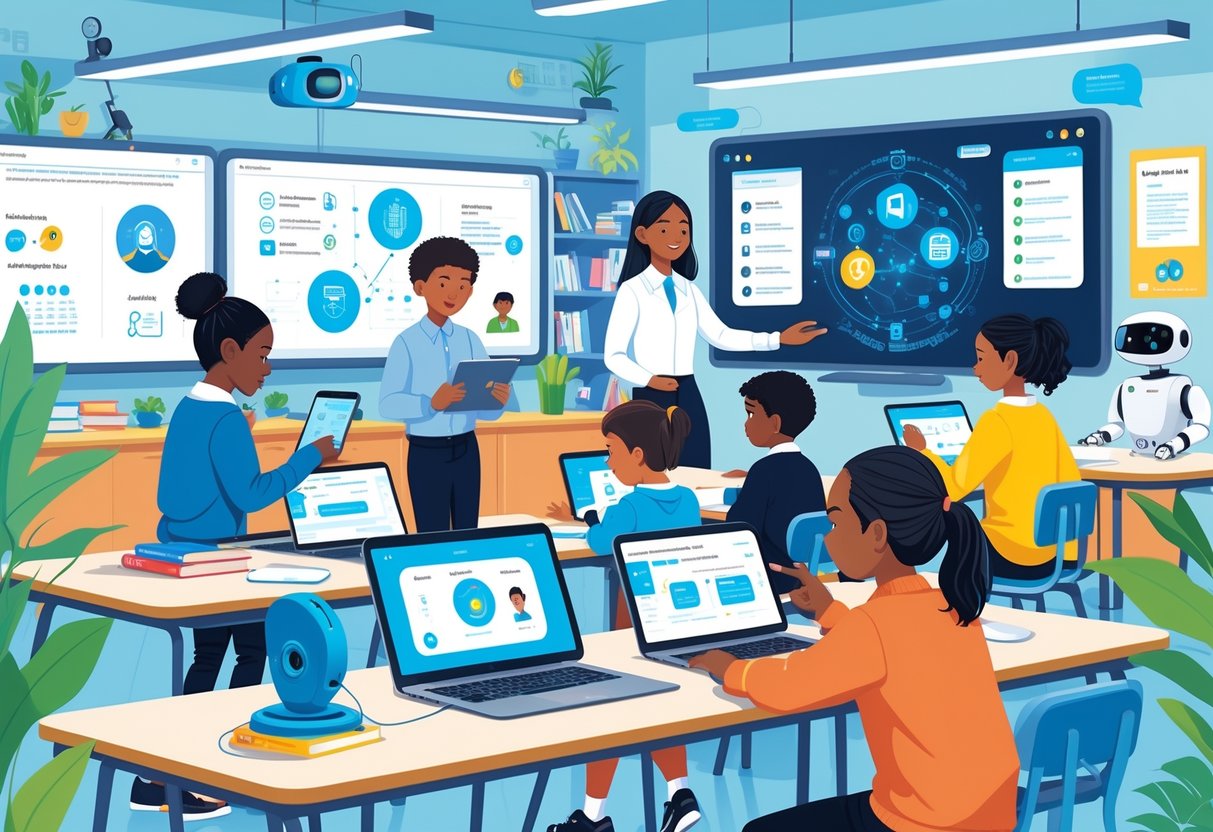
Google on Tuesday cautioned against using Artificial Intelligence (AI) as a shortcut to learning, urging students instead to leverage the technology to sharpen critical thinking, creativity and problem-solving skills.
The warning came from Google's Vice President and General Manager for Education, Mr Chris Phillips, during a virtual roundtable on the company's new AI-powered learning tools for students and teachers.
Phillips said AI is reshaping education but stressed that teachers must remain central to the learning process. Citing a global study conducted by Google in partnership with Ipsos, he noted that learning has emerged as the top reason people turn to AI. According to him, while 86 per cent of teachers want to incorporate AI into their classrooms, only 17 per cent feel adequately trained to use it effectively.
To help close this gap, Phillips said Google has introduced its free Google Educator Series, which offers short, practical AI training designed to help teachers build both confidence and competence. He noted that AI tools are already helping educators save up to 10 hours weekly on administrative tasks, freeing up more time for direct engagement with students. He added that Google is also expanding teacher-led AI features within Google Classroom to help educators create assignments, guide students, and monitor academic progress more effectively.
Phillips maintained that AI should support teachers rather than replace them, emphasising that the technology ought to strengthen — not weaken — the human connection between educators and learners. He said the future of AI in education must be built around empowering both teachers and students, rather than substituting human judgment. "The real breakthrough lies in helping people unlock their own potential," he said.
Also speaking at the roundtable, Google's Head of Learning Science, Ms Julia Wilcowski, said meaningful learning requires genuine effort — including engaging with content, recalling information, practising, reflecting, and applying knowledge. She explained that Google is designing its AI education tools around learning science principles to ensure students are guided toward discovering solutions on their own, rather than simply being handed answers.
Wilcowski cited an eight-week trial conducted in Sierra Leone, which recorded significant improvement in students' mathematics performance where teachers incorporated Google's guided learning tool into their lessons.
According to her, the improvement was equivalent to between 1.8 and 2.5 years of typical academic progress. She also noted that teachers in Italy who used Gemini to generate learning materials recorded improved outcomes, with more than 80 per cent of students demonstrating the specific skills targeted in their lessons. She further stressed the importance of fact-checking and critical thinking, pointing out that AI systems can still produce inaccurate information — commonly referred to as "hallucinations."
Google's Director of Gemini for Education, Ms Marta McAlister, said the company is rolling out new learning features within Gemini and Search to help students better organise their studies and learn at their own pace. She explained that students can now upload syllabuses, lecture notes and study guides into Gemini to generate personalised study notebooks, diagnostic quizzes, bite-sized lessons and progress-tracking tools. Gemini, she added, will also offer interactive quizzes, visualisations, voice-based learning, and step-by-step assistance for tackling complex problems.
According to McAlister, Google Lens will soon enable students to use their phone cameras to analyse difficult diagrams and mathematics problems, identify errors, and receive step-by-step guidance. She also disclosed that Google is offering Google AI Plus free for 12 months to eligible students aged 18 and above across more than 140 countries, including several in Africa. The offer, she said, includes access to advanced AI learning tools, unlimited file uploads, and 400GB of storage.
Despite these advancements, Google officials reiterated that students and teachers must continue to verify AI-generated information and understand how such answers are produced.
Written by
Atlantic Reports Admin
Comments
- Be the first to comment.