Industries Struggle Under Poor Infrastructure, Heavy Taxation in Bauchi, Gombe, Jigawa
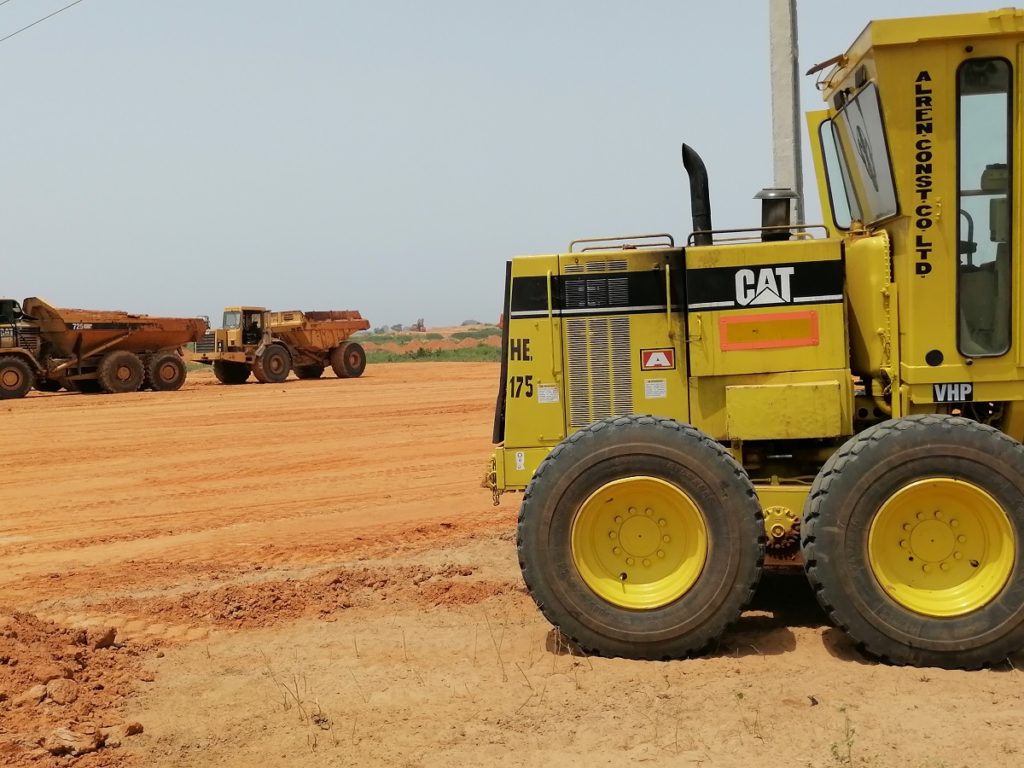
Economic stakeholders say deteriorating infrastructure combined with the burden of multiple taxation stand as key barriers preventing industries in Bauchi, Gombe and Jigawa states from achieving sustainable growth.
Bauchi: Decaying Infrastructure, Poor Management Blamed for Industrial Collapse
Mr Abdullahi Hassan, Zonal Coordinator of the Industrial Development Centre (IDC) in Bauchi, said dilapidated infrastructure and weak management practices were largely responsible for the collapse of industries in the state. He noted that poor road networks, the absence of functional rail transport, inadequate logistics, and multiple taxation have effectively cut industries off from viable market access.
According to Hassan, many companies also failed to standardise their products for export due to poor management and weak market strategies. "These are financial burdens that startups bear. In the event that they are unable to pay the taxes, they close down," he said, listing Steyr Nigeria Ltd, Supercor Industries Ltd and Bazamri Ltd among the state's moribund industries.
Mr Shuaibu Mohammed, Head of Transactions at the Bureau for Privatisation and Economic Reforms (BPER), attributed the trend to industries' inability to adapt to modern technologies, noting that the high cost of acquiring machinery and training workers has made modernisation difficult for many companies. He called for targeted intervention programmes to ease the tax burden, improve infrastructure, and provide financial support to help industries revive production and generate jobs.
An official of the Bauchi Chamber of Commerce, Industry, Mines and Agriculture (BACCIMA), who spoke on condition of anonymity, blamed the collapse of state-owned industries on poor managerial skills, urging the state government to adopt stricter criteria for appointing competent professionals to oversee industrial enterprises.
Gombe Banks on Industrial Park to Drive Economic Diversification
The Gombe State Government said it has launched industrial development programmes aimed at accelerating economic diversification and tackling unemployment. Commissioner for Trade, Industry and Tourism, Alhaji Nasir Aliyu, said the government has invested heavily in infrastructure to attract investors and position the state as an industrial hub in the North-East.
He disclosed that about N26 billion had been spent on establishing the Muhammadu Buhari Industrial Park as part of a renewed employment and investment drive. "The 1,000-hectare industrial park has critical infrastructure, including road networks, water supply and 24-hour electricity to support industrial operations. About 12 companies have secured approval to operate at the park, with some already producing while others are constructing their facilities," he said.
Aliyu projected that the park would create about 1,000 jobs initially, with employment opportunities expected to rise once it becomes fully operational. He added that farmers and grain dealers supplying raw materials to industries would also benefit through improved market access and better returns on their investments.
"We have no state-owned industry, rather, we are providing an environment conducive for industries to be established and thrive through Public Private Partnership (PPP) initiatives," he said, noting that the Nasarawo small-scale industrial cluster — home to groundnut oil processors and rice millers — currently employs more than 5,000 workers. He credited this achievement to deliberate government policies aimed at improving the business environment and attracting investment.
Jigawa Pursues Industrial Revival Through Gagarawa Park, PPP Framework
In Jigawa, the state government has embarked on a 170.8-hectare Gagarawa Industrial Park project intended to serve as a regional hub for manufacturing, trade, logistics and distribution. Commissioner for Information, Youths, Sports and Culture, Mr Sagir Musa, said 15 plots had been allocated to companies affiliated with the Manufacturers Association of Nigeria (MAN), while 20 other plots were allocated to private investors.
Musa acknowledged that the state's industrial history has not been particularly encouraging, though privatisation efforts have since produced a turnaround for some enterprises — illustrating both the challenges of government-owned industrial ventures and the potential of competent private-sector management.
He said the state has developed a PPP framework alongside a project portal that includes the Comttra Jigawa hibiscus facility, CoAmana's digital market project, an agripreneurship incubation programme, and various agricultural and renewable-energy initiatives.
Musa recalled that during the 2026 Jigawa Economic and Investment Summit, the government secured $140 million in investment commitments and adopted 40 recommendations spanning investment, climate reform, agriculture, renewable energy, industrialisation, human capital and monitoring. "InvestJigawa corporate plan also set targets for attracting more than 30 new inward investment projects by 2026, including over 10 light-manufacturing projects, and 2,500 direct jobs across targeted sectors," he said, adding that the state has also begun efforts to revive JiPHARMA, with InvestJigawa mandated to seek credible investors capable of restarting the production of essential drugs and medical consumables.
According to Musa, the initiative is designed to strengthen local production, reduce dependence on external supplies, and generate employment. He stressed that the true measure of the state's industrial strategy would not be the number of agreements signed, summits organised, or plots allocated, but rather the number of industries actually operating. "It will be measured by how many factories actually begin production, how many existing ones return to full capacity, how many sustainable jobs are created and how much value is retained within the state," he said.
Industrialist Calls for Comprehensive Policy Reform
Industrialist Lamido Nasir noted that Jigawa is richly endowed with agricultural resources including rice, sesame, hibiscus, groundnuts, wheat, vegetables and livestock, but lamented that much of the economic value tied to these commodities is often captured outside the state.
"The challenge is not simply producing more crops, but developing industries capable of processing them, creating jobs, generating revenues, supporting farmers and positioning Jigawa within the national and international value chains," he said, attributing the collapse of industries partly to agricultural export taxes, unfavourable marketing and pricing policies, export restrictions, weak investment, and general neglect of the agricultural sector.
Nasir called for a proactive industrial policy capable of simultaneously addressing challenges related to energy, finance, road infrastructure, security, taxation, land access, workforce skills, technology and market access. He further urged the state government to establish mechanisms for continuously monitoring factories after commissioning, to prevent newly established industries from becoming tomorrow's abandoned projects.
"Jigawa's industrialisation is no longer simply an economic aspiration as it has gone beyond that. With its rapid growth of youthful population and limited formal employment opportunities, building productive industries may be one of the most effective ways of converting agricultural wealth into sustainable jobs and broad-based economic growth," he said.
Written by
Atlantic Reports Admin
Comments
- Be the first to comment.