IPCR Boss: Peace Requires Daily Investment, Not Just Election Day
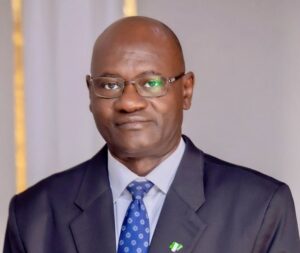
Dr Joseph Ochogwu, Director-General of the Institute for Peace and Conflict Resolution (IPCR), says achieving peaceful elections in 2027 will require sustained investment in justice, dialogue, inclusion, and fairness that extends well beyond activities at polling stations.
Ochogwu made this statement on Monday at the 2026 International Day of Peace Commemoration Lecture, themed "Invest in Peace for Everyone Everywhere Every Day," held in Abuja.
Democratic Stability Built on Everyday Practices
According to Ochogwu, democratic stability cannot rest solely on the conduct of elections on polling day, but must instead be cultivated through everyday practices that address grievances and strengthen inclusion. "Democratic stability does not rest solely on the conduct of elections at the polling booth. It is built on the everyday practices of justice, fairness, inclusion, dialogue, and respect for the rule of law," he said.
He noted that this year's global theme for the International Day of Peace holds particular relevance for Nigeria as the country prepares for the 2027 General Elections, stressing that peace should not be treated as a seasonal intervention or crisis response, but as a continuous investment involving citizens, communities, and institutions alike.
Ochogwu identified farmer-herder relations, youth and women's grievances, misinformation, hate speech, and access to justice at the community level as key areas requiring sustained attention. He also noted that the Federal Government's Renewed Hope Agenda — with its emphasis on economic reform, inclusion, and democratic governance — can be viewed within the broader context of peacebuilding.
IPCR's Election-Related Interventions
The DG said IPCR has intensified election-related conflict prevention efforts through its Early Warning and Early Response systems, alongside engagements with political actors, traditional institutions, and women and youth networks across the six geopolitical zones. He added that the institute has also developed policy briefs on electoral violence mitigation, as part of broader efforts to support a peaceful, credible, and inclusive electoral process.
Ochogwu stressed that ensuring peaceful elections is not the responsibility of government or security agencies alone, but requires collaboration among the Independent National Electoral Commission (INEC), security agencies, civil society, the media, traditional institutions, the private sector, and development partners. "We do not do this alone. We do it in partnership with INEC, with security agencies, with civil society, the media, traditional institutions, the private sector, and our international development partners," he said.
A Forum for Building, Not Blaming
Ochogwu explained that the commemoration sought practical pathways to justice and inclusion, aimed at generating recommendations for a peaceful electoral process in 2027 and a stable democracy beyond the elections. "This is not a forum for blame; it is a forum for building," he said.
He urged stakeholders to identify practical measures to strengthen social cohesion, reduce tensions, expand inclusion, and safeguard democratic processes, reaffirming IPCR's commitment to working with stakeholders to translate the outcomes of the lecture into concrete programmes and policy initiatives ahead of the 2027 elections.
He concluded that sustained investment in justice, fairness, dialogue, and inclusion would ultimately strengthen Nigeria's democratic stability and long-term peace.
Written by
Atlantic Reports Admin
Comments
- Be the first to comment.