Motorists Lament as Petrol Hits N1,450 Per Litre in FCT
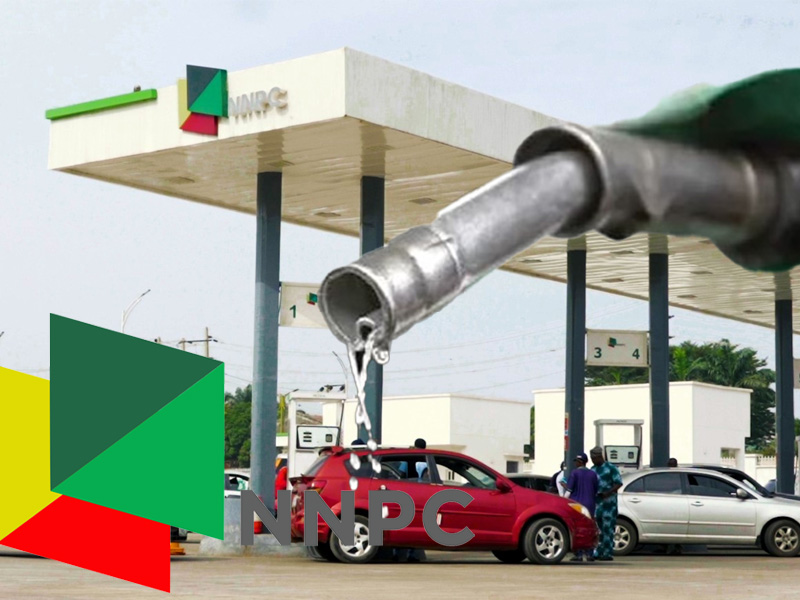
Motorists and commuters in the Federal Capital Territory (FCT) have continued to voice concerns over the rising pump price of petrol, which has now crossed N1,400 per litre.
The latest adjustment follows a recent N85 increase in Dangote Petroleum Refinery's gantry price — from N1,265 to N1,350 per litre — amid a surge in global crude oil prices. As of Thursday, Brent crude was trading at $108.60 per barrel, representing a 2.79 per cent increase, while U.S. West Texas Intermediate (WTI) crude rose by 4.42 per cent to $105.90 per barrel.
This global price surge has intensified pressure on downstream operators and triggered further upward adjustments in petrol prices across the FCT.
Filling Stations Push Prices Higher
In Abuja filling stations across the FCT have continued raising their prices. MRS filling station sold petrol at N1,395 per litre, while Salbas sold at N1,430, Energy Empire at N1,445, Afdin filling station at N1,450, and AY Shafa retail outlet at N1,430 per litre.
The development has left motorists paying significantly more at the pump, while commuters have similarly reported rising transportation fares and other living costs.
Residents Voice Growing Financial Strain
A motorist in Dutse, Mr Chris Chukwuma, said he purchased petrol at N1,430 per litre, lamenting the mounting financial pressure caused by soaring fuel prices. Another motorist in Lugbe, Mr Haruna Sagir, said he bought petrol at an AY Shafa filling station for the same amount, noting that the impact of rising fuel costs has extended well beyond transportation into other aspects of daily life.
Commuter Doris Atere said many residents are struggling to cope with the ripple effects of the price hike on their livelihoods. "I find it very difficult to move around for my daily bread again because of the increase in transportation," she said.
Another motorist, Mr Toba Obatere, said he now rarely goes out and finds it increasingly difficult to feed his family due to the rising cost of goods. "When you get to the market, traders too are complaining that things are high because of the increase in fuel prices," he said, calling on the Federal Government to urgently intervene and stabilise fuel prices.
A commuter in Kubwa, Mr James Adewale, said transportation fares from Kubwa to Wuse have risen to N1,300 as a direct result of the petrol price hike. He warned that the increase would continue to drive up food prices, as traders seek to recover higher transportation costs while maintaining their profit margins. He similarly urged the Federal Government to intervene and stabilise fuel prices to ease the growing economic burden on Nigerians.
Analyst Weighs in on Regional Comparisons, CNG Rollout
Public affairs analyst Mr Jide Ojo noted that, despite recent domestic price increases, petroleum products in Nigeria remain cheaper than in some neighbouring African countries — citing Cameroon and Benin Republic, where he said petrol prices can range between N1,000 and N2,000 per litre. However, he cautioned against using fuel prices in other countries to justify higher prices in Nigeria, stressing that income levels and minimum wage must also be factored in. "You cannot be earning a minimum wage of N70,000 and spending N1,450 or N1,500 to buy a litre of fuel," he said.
Ojo also raised concerns over the Federal Government's promotion of compressed natural gas (CNG) as a cheaper alternative to petrol, an initiative introduced under President Bola Tinubu's administration following the removal of the petrol subsidy. "This is 2026. With both of us living in Abuja, how many CNG refuelling stations do we have in Abuja? How many Nigerians could afford the cost of converting their vehicles to run on CNG? Furthermore, motorists cannot obtain CNG in the same way they can purchase petrol in containers when fuel becomes unavailable at a nearby filling station," he said.
He clarified that CNG should not be confused with cooking gas, noting that both the infrastructure and distribution requirements differ significantly. Ojo said the Tinubu administration could do more to cushion the effects of price volatility, while also improving domestic crude supply, refining capacity, and access to alternative fuels. He further called for a more competitive downstream petroleum market, supported by adequate crude supply and expanded CNG infrastructure, to improve consumer access to affordable energy.
Dangote Links High Prices to Cross-Border Smuggling
Meanwhile, the President of Dangote Industries Ltd, Aliko Dangote, has attributed part of Nigeria's high petrol prices to the continued smuggling of the commodity to neighbouring countries, where it sells for significantly more. In a recent television interview, Dangote said petrol prices in some neighbouring countries are between 30 and 50 per cent higher than in Nigeria, creating a strong financial incentive for traders to move the product across borders.
Dangote argued that Nigeria's petrol prices cannot be considered in isolation from those of neighbouring countries, adding that the continued cross-border movement of Nigerian petrol is partly driven by the significant price gap between domestic and regional markets.
Written by
Atlantic Reports Admin
Comments
- Be the first to comment.