NAFDAC Warns Farmers Against Banned Pesticides, Intensifies Nationwide Crackdown on Dangerous Agroch
By Atlantic Reports
The National Agency for Food and Drug Administration and Control (NAFDAC) has warned Nigerian farmers, agrochemical dealers and food producers against the continued use and distribution of banned pesticides, citing serious risks to public health, food safety and the environment.
The warning follows intensified enforcement operations across the country, which have uncovered substantial quantities of prohibited agricultural chemicals, unauthorised manufacturing facilities and suspected illegal distribution networks.
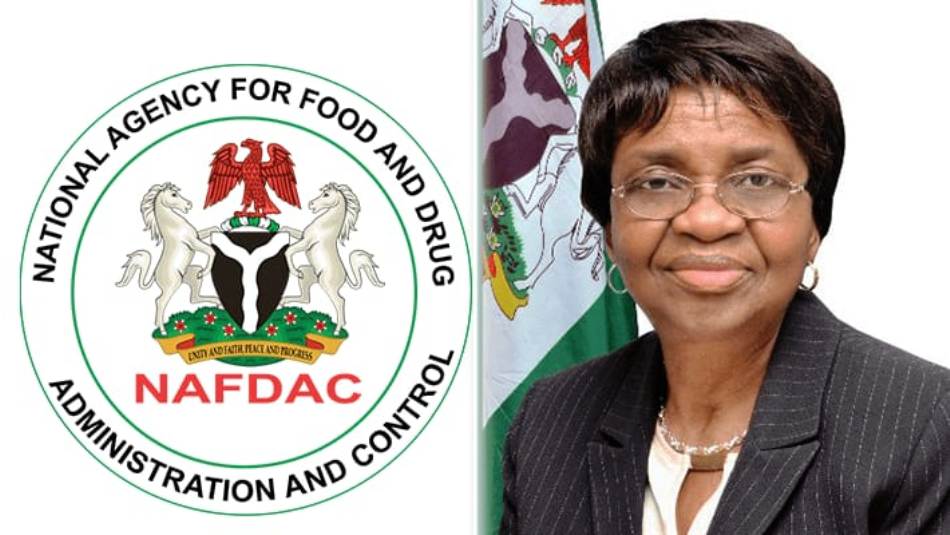
NAFDAC Director-General, Professor Mojisola Adeyeye, disclosed the developments during a news conference on the agency's enforcement activities, stressing that pesticides must be used responsibly and strictly in accordance with regulatory requirements.
She explained that although pesticides remain important for agricultural productivity and crop protection, their misuse and illegal distribution could expose consumers, farmers, animals and the environment to potentially harmful substances.
The agency's renewed warning comes after the January 1, 2026, deadline for phasing out certain prohibited pesticides, including paraquat, chlorpyrifos and atrazine.
Despite the expiration of the phase-out period, NAFDAC said enforcement operations continued to uncover banned products in Nigerian markets.
NAFDAC Explains Why Pesticide Control Matters
Adeyeye said the agency's regulatory approach recognised the importance of pesticides in protecting crops, improving agricultural output and sustaining the livelihoods of millions of Nigerians.
However, she emphasised that agricultural productivity must not come at the expense of public health.
“Humans depend on healthy farm to table systems, from the food we eat to the water we drink to the ecosystems that sustain life,” she said.
According to her, NAFDAC's objective is not to prohibit the responsible use of all agricultural chemicals but to ensure that products sold and applied in Nigeria meet established safety standards.
“NAFDAC is not against the responsible use of pesticides but rather, to ensure that pesticides sold or used in Nigeria are safe, approved and meet regulatory requirements,” she explained.
The director-general warned that improper application, adulteration, illegal distribution and the use of unregistered or falsified products could create significant health and environmental hazards.
Exposure to certain pesticides can cause acute poisoning, while repeated exposure to some substances may be associated with longer-term health effects, depending on the chemical, exposure level and duration.
Improper application can also contaminate food, soil and water, potentially affecting people who were not directly involved in pesticide use.
Paraquat, Chlorpyrifos and Atrazine Phase-Out Deadline Expires
Adeyeye recalled that NAFDAC conducted a review of registered pesticide active ingredients in 2022.
The review considered available scientific evidence, potential risks to human health and the environment, existing regulations and the availability of safer alternatives.
Following the assessment, the agency introduced phase-out arrangements for certain pesticide products.
According to Adeyeye, the transition period for pesticides containing prohibited active ingredients, including paraquat, chlorpyrifos and atrazine, expired on January 1, 2026.
The agency has consequently commenced enforcement against products covered by the prohibition.
Paraquat is a highly toxic herbicide that can cause severe poisoning following significant exposure.
Chlorpyrifos is an organophosphate insecticide associated with concerns about neurological effects, particularly from exposure during sensitive stages of development.
Atrazine is a herbicide that has attracted regulatory scrutiny in different jurisdictions because of concerns relating to environmental contamination and potential health effects.
The regulatory status of these substances varies internationally, but NAFDAC maintains that products prohibited under Nigeria's applicable requirements must no longer be marketed or used unlawfully.
Banned Agrochemicals Worth Over ₦800 Million Seized
Providing details of recent enforcement activities, Adeyeye disclosed that NAFDAC seized banned agrochemical products valued at more than ₦800 million during operations conducted in 2025.
The seizures took place across Ogun, Ondo, Osun and Oyo states.
She also reported substantial enforcement activities in the North-West geopolitical zone between September 2024 and July 2026.
During that period, NAFDAC intercepted 2,974 cartons of pesticides containing banned paraquat, with an estimated value of ₦148 million.
An additional 120 cartons of chlorpyrifos-containing pesticides, valued at more than ₦17 million, were seized.
The figures highlight the continued circulation of prohibited agrochemicals despite regulatory restrictions and public warnings.
However, the agency did not provide sufficient information to establish the total number of individuals prosecuted or convicted in connection with the seizures.
Kebbi Interception Reveals Scale of Illegal Supply
In another enforcement operation, NAFDAC reported the interception of large quantities of prohibited pesticides in Kebbi State.
According to Adeyeye, officers recovered 5,619 cartons of banned paraquat products, equivalent to approximately 67,428 litres.
The operation also uncovered 500 cartons of atrazine products, representing approximately 5,000 kilograms.
The quantities involved raise questions about the sources of supply, distribution channels and intended destinations of the products.
Such interceptions also demonstrate the importance of monitoring agricultural supply chains, particularly where chemicals move through multiple distributors before reaching farmers.
NAFDAC maintained that the continued discovery of banned products indicated that the problem extended beyond existing stock held before the prohibition.
The agency identified illegal importation, unauthorised local manufacturing and unlawful distribution as continuing enforcement concerns.
Four Illegal Agrochemical Facilities Shut in Kano
Adeyeye further disclosed that NAFDAC sealed four unauthorised agrochemical and pesticide manufacturing facilities in Bichi, Kano State, during an enforcement operation in July 2026.
According to her, officers discovered unlabelled products, bulk chemical materials and packaging materials associated with suspected illicit production.
The facilities were reportedly operating without the necessary regulatory authorisation.
The discovery raises concerns about the quality, composition and traceability of agrochemical products manufactured outside approved regulatory systems.
Unlabelled or improperly packaged pesticides can be especially dangerous because users may lack reliable information about their ingredients, concentrations, application methods and safety precautions.
For farmers, purchasing such products could result in crop damage, ineffective pest control or harmful exposure.
For consumers, the risk arises when prohibited or improperly applied substances contaminate agricultural produce entering the food supply.
NAFDAC Restricts Dichlorvos Packaging Over Misuse Concerns
The agency also announced restrictions affecting the 100-millilitre pack size of dichlorvos, commonly identified by the abbreviation DDVP.
Adeyeye said NAFDAC had prohibited the importation, manufacture and sale of the specified pack size in open markets and supermarkets following concerns about misuse on agricultural produce.
She clarified that other permitted pack sizes remained subject to applicable regulatory requirements.
Dichlorvos is an insecticide that can pose serious health risks when handled or applied improperly.
Its use on food products outside approved conditions may expose consumers to potentially harmful residues.
The restriction reflects NAFDAC's efforts to address particular patterns of misuse while maintaining regulatory controls over products that remain authorised for specific purposes.
Agency Trains 2,000 Agro-Input Dealers
Beyond enforcement, NAFDAC said it was expanding education and awareness programmes targeting agricultural input suppliers.
Adeyeye disclosed that at least 2,000 agro-input dealers had received training intended to improve their ability to identify genuine products and understand the risks associated with counterfeit, unregistered or prohibited pesticides.
Agro-input dealers play an important role in agricultural communities because farmers frequently rely on them for pesticides, fertilisers and advice about crop protection.
Strengthening their knowledge could help reduce the circulation of unsafe products and improve farmers' access to accurate information.
However, the effectiveness of the training will depend on continued monitoring, compliance checks and the availability of approved alternatives.
The agency also announced plans to increase its Investigation and Enforcement Zonal Offices from three to six, providing coverage across Nigeria's six geopolitical zones.
The expansion is intended to strengthen surveillance, improve response capacity and support coordinated action against illegal agrochemical operations.
What Farmers Must Do to Protect Their Crops and Consumers
NAFDAC urged farmers to adopt safer pesticide purchasing, handling and application practices.
The agency's recommendations include:
-
Purchase pesticides only from recognised and authorised agro-input dealers.
-
Confirm that products are properly labelled and approved for their intended use.
-
Avoid banned, unregistered, adulterated or suspiciously packaged agrochemicals.
-
Follow approved instructions and recommended application quantities.
-
Observe the specified waiting period between pesticide application and harvesting.
-
Use appropriate protective equipment and avoid exposing food, water sources and other people to pesticides.
The waiting period before harvesting is particularly important because it allows pesticide residues to decline under the conditions specified for an approved product.
Failure to observe these instructions may increase the likelihood of unacceptable residues remaining on food crops.
Farmers should also avoid using agricultural chemicals for purposes not specified on their labels, including the unauthorised preservation or storage of harvested food.
Food Safety Requires More Than Enforcement
The continued discovery of banned pesticides raises wider questions about Nigeria's food safety monitoring systems.
While seizures and factory closures can interrupt illegal supply chains, lasting improvements will require consistent market surveillance, laboratory testing, public education and access to affordable, approved crop protection products.
Smallholder farmers may face additional challenges where safer alternatives are expensive, unavailable or poorly understood.
Consequently, enforcement efforts will need to be accompanied by practical support that helps farmers maintain productivity without relying on prohibited chemicals.
For consumers, transparent information about pesticide residues, regulatory testing and enforcement outcomes would help strengthen confidence in food safety.
NAFDAC has reaffirmed its commitment to working with government institutions and law enforcement agencies to identify illegal products, remove them from circulation and prosecute offenders where appropriate.
The broader challenge is ensuring that these interventions produce lasting changes in agricultural practices.
Protecting Nigeria's food supply will depend not only on stopping illegal pesticide sales but also on giving farmers the knowledge, resources and alternatives necessary to produce food safely.
Atlantic Reports: Voices. People. Facts.
Written by
Atlantic Reports Admin
Comments
- Be the first to comment.