Nigeria and BRICS: Turning Partnership Into Economic Gains
By Atlantic Reports
Nigeria’s relationship with BRICS raises a practical question: how can its participation in the grouping translate into benefits for businesses, workers and households?
The country already holds partner-country status, formally announced in January 2025. That gives Nigeria a platform for engagement, while leaving open the possibility of seeking full membership. The State House, Abuja
At the 18th BRICS Summit, held in New Delhi on 12 and 13 September, Vice President Kashim Shettima represented President Bola Tinubu. In the interview described in the supplied account, Shettima characterised Nigeria’s current status as “substantive enough” and emphasised practical cooperation, particularly in investment and tourism.
He also left room for deeper participation, saying any future decision would be guided by Nigeria’s national interest.
That position deserves scrutiny through its results. Maintaining partner status can be a deliberate diplomatic choice, but it requires clear objectives and evidence of what Nigeria gains from the relationship.
Ghana’s move needs clarification
Ghana’s recent announcement has added urgency to the discussion. However, the suggestion that it is pursuing full membership while Nigeria remains a partner requires correction.
Foreign Affairs Minister Samuel Okudzeto Ablakwa clarified on 10 October that Ghana intended to apply for partner-country status, rather than full membership. Ghana’s foreign ministry has also described the decision in those terms. Ablakwa
Ghana is therefore seeking the category of participation Nigeria already holds. Its application is a proposed diplomatic step, not evidence that membership has been granted or that economic benefits have materialised.
The comparison remains useful because both countries are seeking wider development options. It does not establish that Nigeria has fallen behind Ghana within BRICS.
Understanding the expanded bloc
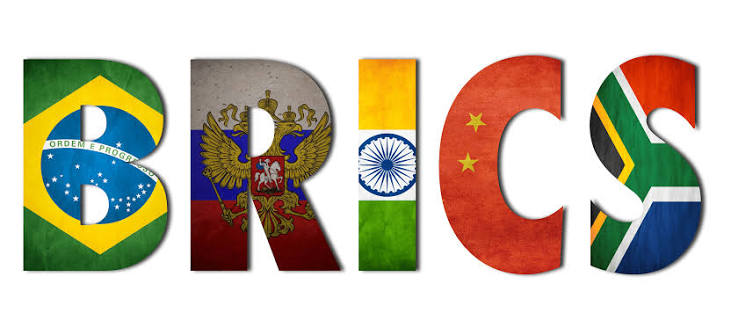
BRICS developed from cooperation among Brazil, Russia, India and China, with South Africa subsequently joining. Its expansion has widened its geographical reach and brought together countries with differing economic priorities and foreign policy interests.
The membership history also needs precision. Argentina was invited to join during the 2023 expansion but declined. Indonesia joined in January 2025. It is therefore inaccurate to suggest that all six countries invited in Johannesburg automatically became members on 1 January 2024. brics.br
BRICS advocates greater representation for emerging and developing economies in global institutions. Treating it simply as an anti-Western alliance, however, obscures the varied interests of its participants and their existing relationships with other international partners.
Nigeria can assess cooperation with BRICS alongside its African, European, American and other partnerships, guided by the value each offers.
What would Nigerians gain?
The strongest case for deeper engagement would identify specific opportunities: investment in productive industries, expanded export markets, technology partnerships and infrastructure financing on sustainable terms.
For manufacturers, meaningful progress would mean improved access to machinery, finance and customers. For agricultural producers, it could mean processing more commodities domestically and retaining a larger share of their value. For workers, it would mean durable employment supported by actual investment.
These outcomes require negotiated projects, viable businesses and implementation. A diplomatic designation alone does not deliver them.
Trade growth among BRICS countries can indicate opportunity, but it does not prove that membership caused the increase. Existing commercial relationships, commodity prices, exchange rates and demand also influence trade.
Similarly, the New Development Bank should be assessed through its own membership, financing conditions and project requirements. Access to development finance should not be assumed solely from participation in BRICS.
A strategy that can be measured
Nigeria’s government should explain what it intends to achieve through its current partnership, which institutions are responsible and how progress will be reported.
Useful measures would include investment that reaches implementation, export agreements that generate sales, technology partnerships that build domestic capability and financing arrangements with transparent costs.
If full membership would provide additional opportunities or influence, the government should identify those advantages and weigh them against the responsibilities involved. If partner status is sufficient for its immediate goals, it should demonstrate that through results.
The central issue is whether Nigeria can use its existing access effectively while making an informed decision about deeper participation. For citizens, the value of the relationship will ultimately be measured in livelihoods, productive capacity and public benefit.
Atlantic Reports: Voices. People. Facts.
Written by
Atlantic Reports Admin
Comments
- Be the first to comment.