Nigeria Pushes for African Veto Power on UN Security Council
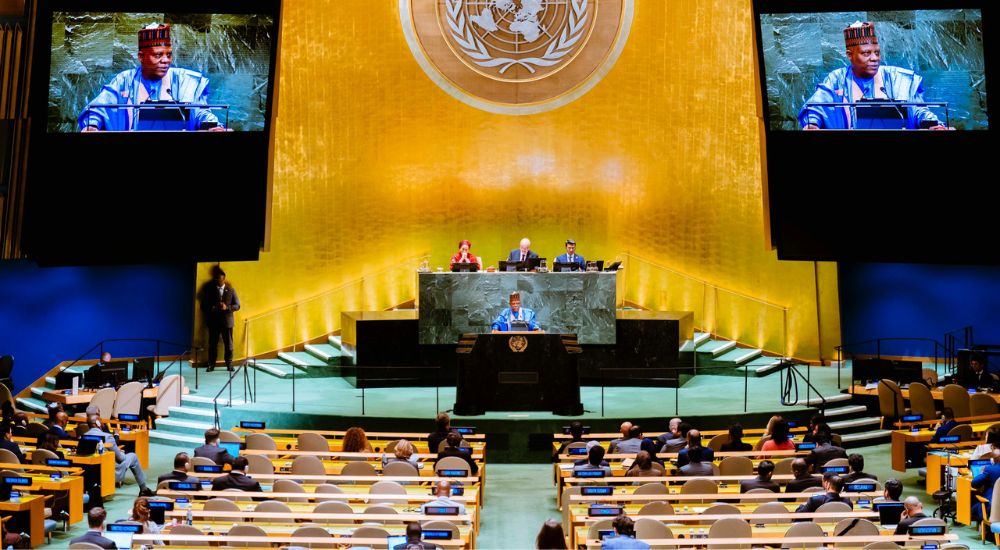
Nigeria has called for at least two permanent seats for Africa on the United Nations Security Council, complete with veto powers for as long as the privilege exists.
Vice-President Kashim Shettima made the demand while delivering President Bola Tinubu's national statement at the 81st session of the UN General Assembly in New York. He also called for five non-permanent seats for the continent, in line with Africa's longstanding common position on reforming the Security Council.
Shettima said the Council's current configuration no longer reflects contemporary geopolitical realities and undermines the legitimacy of global decision-making. "The world of 2026 cannot remain captive to the distribution of power in 1945," he said.
He argued that Africa could no longer remain outside permanent membership, given that issues concerning the continent continue to occupy a significant share of the Council's attention. According to him, Nigeria's position aligns with the Ezulwini Consensus and Sirte Declaration, which together form the Common African Position—under which the continent seeks at least two permanent seats with all existing privileges, alongside five non-permanent seats.
The African Union reaffirmed this demand in May, describing Africa's exclusion from permanent representation as a historical imbalance requiring correction.
Shettima contended that institutions claiming authority to act on behalf of humanity must adequately reflect the people for whom decisions are being taken, linking Security Council reform to broader efforts to restore confidence in multilateralism amid widening geopolitical divisions.
The Vice-President also reaffirmed Nigeria's commitment to the UN Charter and international cooperation, saying the country supports a global system in which diplomacy takes precedence over coercion and international law guides relations among states. He recalled Nigeria's contributions to peace operations in Liberia, Sierra Leone, Darfur, Mali and The Gambia, noting that the country continues to work through ECOWAS, the African Union and Gulf of Guinea mechanisms on mediation, counter-terrorism, democratic governance and maritime security.
Shettima said persistent conflicts across different regions underscore the need to return to dialogue, collective responsibility and the peaceful settlement of disputes, singling out the conflict in Sudan and other flashpoints as requiring urgent diplomatic attention given their humanitarian, economic and geopolitical consequences.
He also cautioned against a global environment where propaganda blurs the distinction between victims and aggressors, complicating accountability, and maintained that an inclusive and effective UN remains indispensable to global peace and sustainable development.
Nigeria's demand comes amid renewed calls by African leaders for reform of an institution whose permanent membership has remained unchanged since its founding. The Security Council currently has five permanent members—China, France, Russia, the United Kingdom and the United States—each holding veto power, while Africa has no permanent representative on the Council. The African Union's preferred reform model calls for at least two permanent African seats with veto privileges, alongside five non-permanent seats, while existing permanent members retain their current status.
Shettima said Nigeria remains committed to a multilateral order capable of responding more credibly to 21st-century realities, adding that differences among nations must not obscure their shared humanity or collective responsibility to preserve peace for future generations.
Written by
Atlantic Reports Admin
Comments
- Be the first to comment.