Nigeria Warns UN Budget Cuts Must Not Weaken Development
By Atlantic Reports
Nigeria has warned against United Nations budget cuts that could weaken development programmes and disadvantage developing countries, saying efficiency measures must preserve the organisation’s ability to fulfil its mandates.
Deputy Permanent Representative Ambassador Martin Adamu delivered the national statement during Fifth Committee deliberations on the proposed $3.302 billion UN programme budget for 2027.
Nigeria’s Permanent Representative, Ambassador Ibrahim Jimoh, chaired the proceedings.
Adamu said Nigeria supported institutional reform but wanted restructuring to remain transparent, inclusive and directed by member states.
“Reforms must, however, remain not only member state-driven, transparent, and inclusive, but must also strengthen the organization’s capacity to deliver on its mandates,” he said.
Assessing More Than Financial Savings
Adamu called for adequate financing of development, peacekeeping, peacebuilding and conflict prevention.
He urged the UN to assess proposed restructuring comprehensively before implementation, considering staffing, operational consequences and the capacity to carry out approved responsibilities alongside potential savings.
He also emphasised equitable geographical representation within the UN Secretariat.
Nigeria’s position places the effects of budget decisions alongside their financial savings, particularly where programmes serve countries in the Global South.
The supplied account did not identify specific programmes proposed for reduction or provide a breakdown of the restructuring measures under consideration.
Predictable Funding for Country-Level Work
Nigeria also advocated sustainable financing for the UN Resident Coordinator System, which supports coordination of the organisation’s development work at country level.
“Assessed contributions provide the most predictable, sustainable, and equitable basis for financing the resident coordinator system,” Adamu said.
He argued that dependable funding could reduce fragmentation and improve effectiveness.
Adamu reaffirmed Nigeria’s commitment to constructive negotiations and adoption of the budget within the prescribed timeframe.
Nigeria Reports Payment of Contributions
Jimoh told the committee that Nigeria had fully paid its assessed contribution to the UN’s regular budget for 2026.
The account also reported substantial payments towards peacekeeping obligations, putting the combined payments at approximately $6.3 million. It did not provide a breakdown between the two categories or establish that all peacekeeping obligations had been settled.
Jimoh urged other member states to meet their financial commitments promptly and without conditions.
Proposed Budget Remains Under Negotiation
Presenting the budget, UN Secretary-General António Guterres warned that financial instability continued to threaten the organisation’s effectiveness despite administrative reforms.
He said the proposal was approximately $40.8 million below the approved 2026 budget.
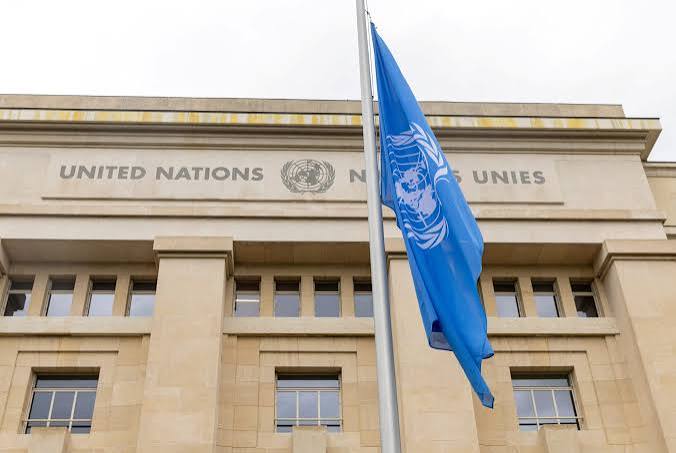
The supplied material contained conflicting budget totals: the main account stated $3.302 billion, while an accompanying image caption stated $3.03 billion. That discrepancy requires clarification; this report uses the figure stated in the main account.
The proposed budget remains subject to member-state negotiations and approval. The central question is whether savings can be achieved while preserving the staffing, coordination and programme capacity needed to deliver the UN’s responsibilities.
Atlantic Reports: Voices. People. Facts.
Written by
Atlantic Reports Admin
Comments
- Be the first to comment.