Rising Cost of School Materials Worries Education Stakeholders
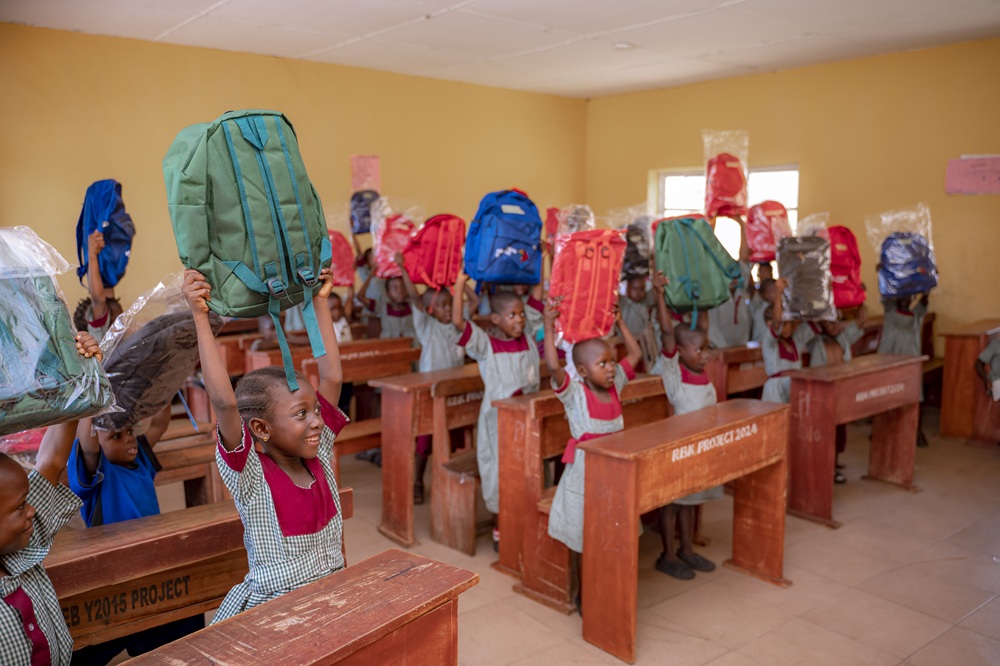
As schools resume for a new academic session, education stakeholders have raised concerns over the escalating cost of learning materials, warning that many families are struggling to cope with the added financial burden.
The prices of basic school items — including bags, sandals, socks and uniforms — have risen sharply compared to what they cost roughly three years ago.
Schools Adjust Requirements to Ease the Burden
Mrs Ezurike Loreth, Proprietress of Flora Home International School in Aso, Karu Local Government Area, said the surging cost of books, uniforms and other essentials was affecting both schools and families. In response, she said the school reviewed its requirement list and eliminated non-essential items, ensuring parents pay only for materials directly needed for effective learning.
"We asked ourselves what a child truly needs to learn well this term, and we stripped away anything that was not essential," she said.
Loreth added that the school had also begun procuring educational materials early, since prices typically spike closer to resumption when demand peaks. Parents, she said, are being encouraged to reuse textbooks and other materials that remain relevant across sessions. "We ensured this term's scheme of work builds directly on where the previous session concluded, so there is continuity rather than time lost re-establishing where a class left off," she explained, noting that the school maintains open communication with financially strained parents to find workable arrangements that keep children in school.
Similarly, Mrs Gladys Ohiwere, Headmistress of Leadway Academy in Masaka, said her school had introduced flexible payment plans to help parents avoid paying fees and other costs in a lump sum. "Instead of parents paying a huge amount at once, payments can be broken down into parts. This month you pay this, next month you pay another part, and the following month you complete the balance. This makes it easier for parents," she said.
On preserving educational standards despite rising costs, Ohiwere said the school avoids imposing unnecessary charges that could discourage parents from returning their children to school. "We do not compromise on the quality of our education, but we also make sure that whatever we do does not unnecessarily increase the cost of education for parents," she said, adding that the school was also preparing classrooms and learning spaces ahead of resumption to ensure a conducive environment for students.
Parents Describe Difficult Trade-Offs
Mrs Chinelo Ebuka, a parent, said the rising cost of school materials has forced her into difficult financial choices, particularly as a parent of multiple children who must also budget for food and accommodation. "You may want to buy everything your children need before school resumes, but the money may not be enough. Sometimes, I buy uniforms first and postpone bags, or buy sandals and promise to get other things later," she said.
Mr Matthew Caleb, a civil servant with three children in school, said the cumulative cost of uniforms, bags, sandals and books had become overwhelming when multiplied across his children. "Three years ago, a moderate amount of money could cover most of my children's basic school needs. Now, you can spend a large amount on bags and sandals alone and still have school fees, textbooks and transportation to worry about," he said.
Traders Feel the Squeeze Too
Mrs Aisha Bello, a trader, said parents frequently complain about the rising prices of school bags, sandals and other materials, noting that many now opt for cheaper products as they can no longer afford higher-quality items. "Parents complain that things are expensive, but traders also buy these goods at higher prices. Each time we go to restock, we discover that the prices have increased," she said.
The preparations for the new academic session have become a period of intense financial planning for many households, as parents work to balance the cost of education against other pressing domestic needs.
Written by
Atlantic Reports Admin
Comments
- Be the first to comment.