Rivers, Akwa Ibom, Cross River Urged to Revamp Collapsed Industries
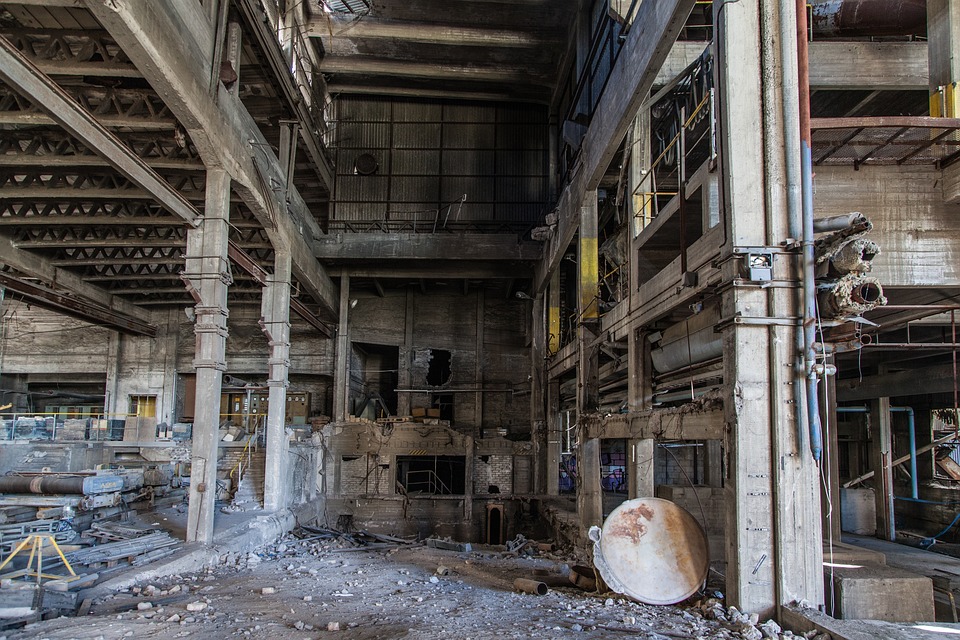
Residents of Nigeria's South-South region are calling on the governments of Rivers, Akwa Ibom and Cross River states to take deliberate action toward reviving their dormant public industries.
The call came from stakeholders, experts and professionals who spoke during a survey conducted across the three states on Monday. Many of the respondents expressed hope that reviving these moribund industries would generate large-scale employment and stimulate broader economic development within their states.
The three states had, at different points, established local industries that eventually collapsed due to poor management, corruption and political interference. Rivers State, for instance, once housed the West African Glass Industry, Rivers State Vegetable Oil Company, Delta Rubber Company, PABOD Breweries and Songhai Farm, among others. Cross River was similarly home to companies such as Cross River Estate Limited, UNICEM and Metropolitan Hotel, while Akwa Ibom owned enterprises including Qua Steel Products Company, Quality Ceramics Limited, Sunshine Battery Industry and Abestonit Industry Limited.
According to residents, the collapse of these local industries has left many people jobless and driven numerous families into poverty and hunger.
Calls for Government Intervention in Rivers
Mr Chidi Nwankwo, an official of Pipe Coaters Nigeria Limited in Port Harcourt, urged the government to carry out an audit of existing industries to identify those most in need of urgent intervention. He advised that incentives, affordable financing, reliable electricity and improved infrastructure would help encourage industries to return to full-scale production.
"The Rivers State Government should identify industries that can still be economically viable and partner private sector investors to revive them," he said, adding that industries require electricity, access to finance, markets, skilled manpower and supportive policies to remain competitive. He also called for industrial policies to be sustained across successive administrations to attract long-term investment, noting that reviving or establishing industries would boost internally generated revenue and reduce the state's dependence on oil.
Mrs Amaka Briggs, founder of The Banks Clothing Line at Trans Amadi Industrial Layout, argued that while infrastructure development is important, it must go hand-in-hand with industrialisation and job creation. "We need industries that can absorb our unemployed youths. Roads and flyovers are useful, but people also need jobs and sustainable sources of income," she said.
Another resident, Mr Promise George, called for stronger collaboration between government and private investors to revive abandoned industrial facilities, suggesting public-private partnerships for companies requiring substantial capital, modern equipment and professional management. He also urged the government to offer tax incentives to investors interested in labour-intensive industries, while balancing infrastructure development with industrialisation given the state's high unemployment rate.
Dr Ebiye Tamuno, an economist at Rivers State University, said the state could leverage its oil and gas resources to build manufacturing and service industries linked to the energy sector. He also recommended promoting agro-processing, fisheries, construction materials, petrochemicals and marine-related industries to diversify the economy, alongside integrating vocational and technical training into industrialisation programmes. "A stronger industrial base would definitely create jobs, stimulate local production, increase government revenue and improve the standard of living of residents," he said.
A senior Rivers State Government official, speaking on condition of anonymity, said the administration recognises industrialisation as key to job creation and economic growth, and is working to improve the business environment, attract investors, and explore ways to revive existing state-owned enterprises.
Akwa Ibom Residents Demand Action Beyond Promises
In Akwa Ibom, journalist Mr Assam Abia said the state government should prioritise revamping ailing local industries rather than seeking short-term public approval. He urged the Umo Eno-led administration to intentionally tap into opportunities within the Dakkada Global Oil Palm Plantation in Esit Eket, describing it as a facility capable of generating substantial jobs and driving economic growth. "The economy cannot grow without local industries, while job opportunities will remain scarce," he said.
Mr Godwin Edoho accused the state government of paying lip service to the revival of local industries, noting that no visible progress had been made at the Dakkada Global Oil Palm Plantation since it was taken over. "We want to see the expansion of the facility, we want to see new seedlings being planted, the farm cannot remain docile and be expected to grow on its own," he said.
Mr Anietie Matthew, a resident of Esit Eket, called for the revival of Qua Steel Products Company and Qua Ceramics Limited, saying both companies once had the capacity to generate significant local employment. "When these companies were operating, there were jobs, families had food to eat, and local businesses thrived. This is what local industries can bring," he said.
Responding, the Akwa Ibom Commissioner for Information, Mr Aniekan Umana, said the government remains committed to creating an enabling environment for local industries. He noted that some state-owned companies, such as Ibom Paint Industry, are already fully operational and serving Akwa Ibom and neighbouring states, while the Ibom hospitality assets, hotels, recreational facilities and industrial park are being rebranded and redeveloped to support industrial growth.
Cross River Says Industrial Review Already Underway
Meanwhile, the Cross River State Government said it has begun reviewing its moribund industries and assets with the goal of stimulating economic activity, creating jobs and empowering youths. The Commissioner for Information and Culture, Mr Ekpenyong Cobham, said the Bassey Otu-led administration has prioritised skills acquisition, recently graduating 4,500 youths trained in drone technology, filmmaking and other specialised skills, who were also assisted with business registration.
Cobham said the government has revived the state's garment factory, which has commenced mass production of mosquito nets. "As a government, we are assessing other industries for possible rehabilitation. This administration is investing in agriculture, particularly cocoa and coffee, to provide sustainable opportunities for youths," he said.
Also speaking, the Special Adviser to the Governor on Education, Mr Castro Ezama, said Cross River had lost several government-owned assets through sales and privatisation under previous administrations. He revealed that the state has since reclaimed Cross River Estate Limited and Tinapa as part of efforts to restore its industrial capacity, noting that Governor Otu intends to move the state beyond its civil-service orientation through investment in mineral resources and agriculture.
Experts Stress Urgency of Industrial Revival
Experts maintain that state governments across Nigeria need to invest in establishing new local industries or reviving dormant ones to tackle the intertwined challenges of unemployment, hunger and poverty, noting that well-managed local industries have historically served as engines of employment and economic development worldwide.
Written by
Atlantic Reports Admin
Comments
- Be the first to comment.