Sokoto Commissioner Disputes Poverty Claims, Defends Government Spending
By Atlantic Reports
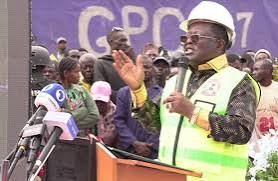
Sokoto State Commissioner for Budget and Economic Planning, Dr Bashir Achida, has rejected claims that poverty has worsened under the present administration, arguing that government interventions are expanding economic opportunities and supporting vulnerable households.
Speaking with journalists on Tuesday, Achida challenged criticism attributed to African Democratic Congress governorship candidate Alhaji Mannir Dan’Iya over a reported multidimensional poverty ranking.
According to Achida’s account, Dan’Iya cited a report attributed to the United Nations Development Programme that placed Sokoto third among Nigerian states most affected by multidimensional poverty. The reported indicators included deprivation in education, drinking water, housing, electricity and sanitation, alongside insecurity.
Dan’Iya was also said to have demanded an account of Federation Account revenues and other resources received by the state and its 23 local governments.
The supplied material did not identify the report’s title, publication date or survey period. It therefore does not establish whether the ranking measures conditions under the current administration or an earlier period.
Ranking Alone Does Not Establish Improvement
Achida argued that Sokoto had previously been ranked Nigeria’s poorest state during the administration in which Dan’Iya served as deputy governor.
“For eight years, Sokoto was number one as the poorest state, and if today the state is ranked differently, it is due to the efforts of the present government,” he said.
That attribution remains the commissioner’s assessment. A change in relative ranking does not, by itself, establish that poverty has declined. Comparable deprivation rates, survey methods and collection dates are needed to assess the direction and scale of change.
Achida also cited global economic pressures, insecurity and climate change as factors affecting living standards. He expressed confidence that a positive national economic outlook would eventually improve household welfare, but that remains a projection.
Government Lists Welfare and Agricultural Interventions
The commissioner said the administration had supported women through empowerment and training programmes and established a ministry dedicated to skills acquisition for young people.
He also cited assistance for internally displaced persons, vulnerable residents and religious leaders, alongside business support and household transfers through the NG-CARES programme.
Achida said food had been distributed free and sold at subsidised prices on different occasions. He argued that agricultural support was also necessary to increase supply rather than focus solely on consumption.
According to him, the government had provided farmers with free fertiliser worth billions of naira, as well as insecticides and pesticides, to reduce production costs.
The account did not provide expenditure records, beneficiary totals, selection criteria or measured changes in household incomes and agricultural output. Its claims of exceptional programme scale remain unsubstantiated by comparative figures.
Infrastructure Defence Leaves Revenue Question Open
Achida defended infrastructure spending, saying construction generated business for suppliers, transport operators, artisans and other workers.
“If a roundabout is to be reconstructed, you don’t look at only the beauty but how many people are employed,” he said.
He also cited visitors’ praise for Sokoto’s appearance and reportedly fully booked flights as signs of economic activity. Those observations do not establish poverty levels or how economic gains are distributed among residents.
While the commissioner outlined programmes and defended spending priorities, the supplied account did not include a breakdown of Federation Account receipts or expenditure addressing the accountability question attributed to Dan’Iya.
Achida said the government would continue supporting enterprise, agriculture and essential services. Assessing the results will require current poverty data alongside transparent records showing what was spent, who benefited and whether living conditions improved.
Atlantic Reports: Voices. People. Facts.
Written by
Atlantic Reports Admin
Comments
- Be the first to comment.