Stakeholders Demand Urgent Action on Inclusive Education in FCT
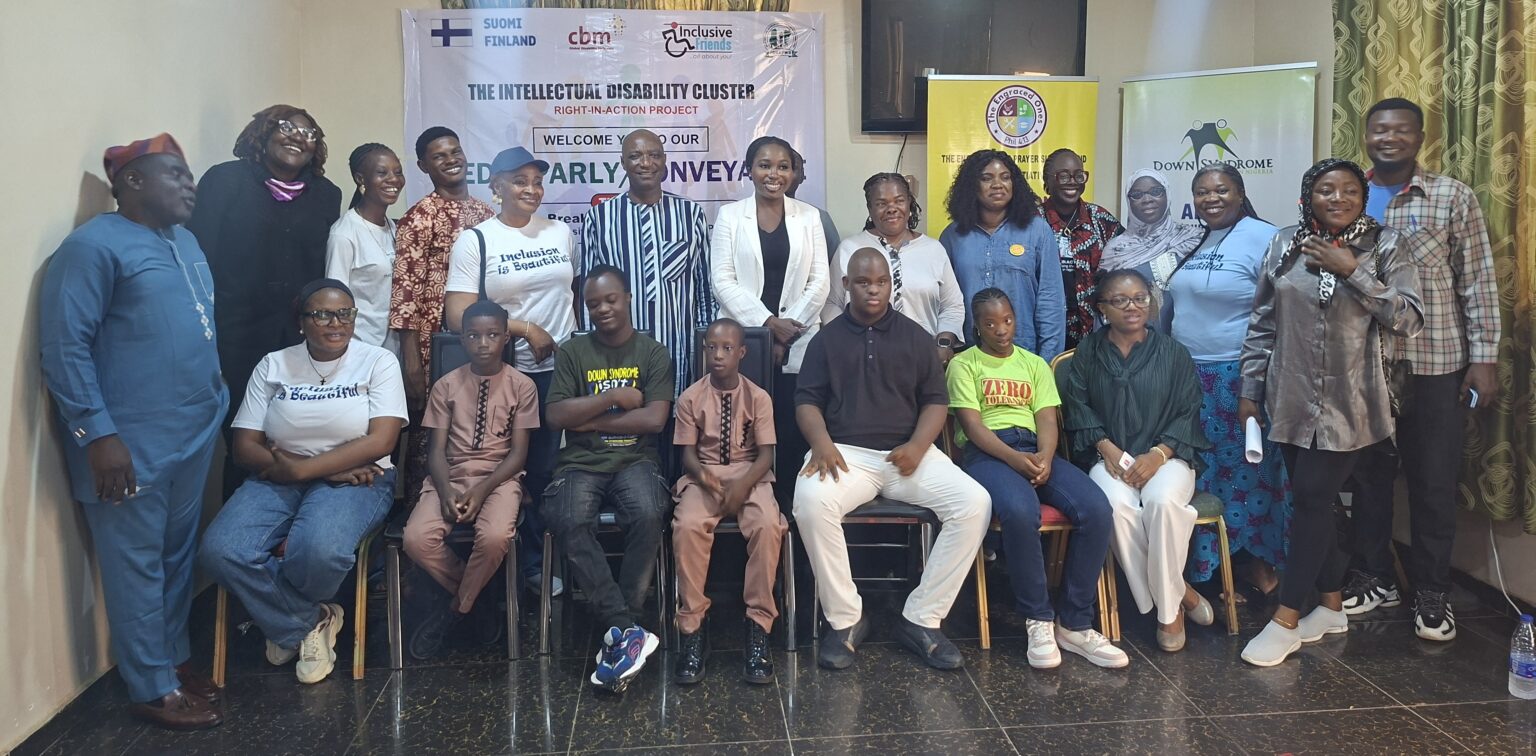
Stakeholders in the disability sector have called on the Federal Capital Territory (FCT) Administration to move swiftly in implementing its Inclusive Education Policy, stressing the need for meaningful participation of children with intellectual disabilities in schools.
The call was made on Thursday in Abuja at an event themed "Breaking the Barriers: Turning Inclusive Education into Practice," organised by the Intellectual Disability Cluster under the Rights-In-Action Project. The project is funded by Finland's Ministry of Foreign Affairs, with technical support from CBM Global Disability Inclusion, in partnership with the Inclusive Friends Association (IFA) and the Joint National Association of Persons with Disabilities (JONAPWD).
Mr Abdulazeez Musa, Country Director of CBM Global Disability Inclusion, described inclusive education as a matter of human rights, dignity and justice rather than an act of charity. He said the objective should be an education system in which every child, regardless of disability, can learn, participate, thrive and contribute meaningfully to society.
"While the FCT has taken an important step through the adoption of the Inclusive Education Policy, the true measure of success will be seen not in the existence of this policy itself, but in its implementation," he said. "Policies do not transform lives on their own. Classrooms do. Teachers do. Families do. Communities do. And of course, budgets do. Accountability does."
Musa called on government to provide adequate funding, teacher capacity development, accessible learning materials and inclusive infrastructure to give the policy real impact. He also urged organisations of persons with disabilities (OPDs) and self-advocates to remain actively engaged in the process, insisting that policies affecting persons with disabilities (PWDs) should be designed and implemented with them, not merely for them. He further called on families and communities to challenge stigma, urged educators to adopt inclusive teaching practices, and encouraged the media to move beyond narratives of pity and charity when reporting on disability issues.
Mrs Ijeoma Fynecountry, Legal Resource Person at the Down Syndrome Foundation and Project Lead, said Nigeria's commitment to inclusive education is grounded in both domestic and international legal instruments. She referenced the Universal Declaration of Human Rights, the International Covenant on Economic, Social and Cultural Rights, and the Convention on the Rights of the Child as instruments that recognise education as a fundamental right.
She also cited Article 24 of the UN Convention on the Rights of Persons with Disabilities, the 1999 Constitution, the Compulsory, Free Universal Basic Education Act of 2004, and the Discrimination Against Persons with Disabilities (Prohibition) Act of 2018, noting that the National Policy on Education and the National Policy on Inclusive Education also provide for support to learners with disabilities through appropriate learning materials, teacher training and other assistance.
However, Fynecountry said the existence of these laws and policies has not translated into meaningful inclusion in classrooms. "Too many learners with intellectual disabilities remain out of school or admitted without meaningful participation," she said. "Speaking about data, we discovered that even when you see that they have admission, there is no specific provision for them. They are just there in the classroom without actual meaningful participation. So, they are taught in environments that do not recognise their individual dignity, strengths, and potentials."
Ms Becky Selekere, Programmes Manager at the RBM Autism Foundation, said the true test of inclusive education lies not simply in a child's enrolment but in whether that child can participate, communicate, learn, belong and progress within the school environment.
"For children with disabilities, inclusion should involve access to physical school environments, meaningful participation in lessons and activities, appropriate communication and learning support," she said. "It also means reasonable accommodations, protection from discrimination, and the opportunity to progress through the education system. For autistic learners, inclusion does not mean lowering expectations; it means removing unnecessary barriers so the child has a fair opportunity to meet those expectations."
Selekere noted that many mainstream schools lack accurate data, teachers with disability-specific training, differentiated teaching approaches, accessible infrastructure, adapted learning materials, assistive technology and communication support.
Speaking on behalf of the Intellectual Disability Cluster, Ayobami Adefioye, Programmes Manager at The Engraced Ones Prayers and Supports Advocacy Initiative, called for the meaningful involvement of persons with disabilities in the design, implementation and monitoring of education policies. She invoked the principle of "Nothing about us without us," insisting that persons with disabilities should be treated as co-designers, co-implementers and monitors of policies that affect them.
"The Rights in Action Project believes the FCT has a unique opportunity to become a model for effective implementation of Nigeria's disability rights commitments," she said. "Let us be clear: a policy sitting on a shelf does not educate a child; implementation does. Inclusion becomes real only when children with disability are seen, supported, learning, and given genuine opportunity to reach their full potential."
Adefioye called on the FCT Administration to raise budgetary allocation for inclusive education to 50 per cent by 2027, create a dedicated budget line for inclusive education and assistive technology, and establish mainstream inclusive model schools across the area councils. She also urged greater media coverage of disability issues, the adoption of inclusive language and positive narratives, and media support for public education campaigns in both English and Nigerian languages.
Written by
Atlantic Reports Admin
Comments
- Be the first to comment.