WHO Urges Shift From Psychiatric Hospitals to Community Care
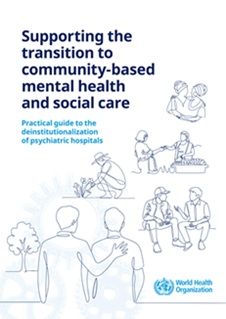
The World Health Organization (WHO) has called on countries to speed up the move away from institutional psychiatric care towards community-based services that respect people's rights, dignity and choices.
The global health body made the call in a statement on Friday, ahead of World Mental Health Day, as it unveiled a new guide to help governments reform psychiatric care and deliver person-centred support within communities.
According to WHO, the guide sets out practical steps to cut long-term admissions to psychiatric hospitals, improve practices within institutions, protect patients' rights and help people return to their communities with adequate care.
WHO said many people living with mental health conditions remain in large psychiatric hospitals and social care institutions, with nearly half reportedly held against their will for months, years or even decades.
The organisation explained that deinstitutionalisation means helping people who have spent six months or more in psychiatric hospitals return to community life, with the care and support they need.
Figures from the WHO Mental Health Atlas show that only nine per cent of reporting countries have fully transitioned to community-based mental health care, while 53 per cent remain at an early stage of reform.
The Atlas also found that more than one in four people admitted to psychiatric hospitals stay longer than six months, underscoring how difficult it has been to transform mental health services.
WHO said progress towards community-based care remained uneven across countries, despite continuing efforts to strengthen services and improve support for people with mental health conditions.
WHO Director-General, Dr Tedros Adhanom Ghebreyesus, said people should not have to give up their freedom, dignity or ties to their community in order to receive continuous mental health support.
He urged governments to reduce their reliance on long-term institutional care and to redirect investment towards rights-based mental health services and support in the community.
According to Tedros, the guide stresses that psychiatric hospitals cannot achieve deinstitutionalisation on their own, pointing to the importance of housing, healthcare, social support, education and job opportunities.
He also underlined the need to support families and to ensure that people leaving institutional care can access services that promote recovery and independent living.
The statement linked the guide to this year's World Mental Health Day theme.
"The new guide also aligns with this year's World Mental Health Day theme, 'Lived experiences heard: real voices, real change,' which promotes the involvement of people with lived experience," it said.
Tedros stressed that people who have experienced institutional care should play an active role in designing the mental health policies, services and reforms that directly affect their lives.
He noted that their experience and knowledge were vital to understanding recovery, community participation and the services people need beyond psychiatric institutions.
The WHO chief said the guide was developed with experts from different parts of the world, including people with lived experience, and could be adapted to national and local settings.
He urged governments and mental health services to accelerate the transition to community-based care and to build systems together with people with lived experience, rather than making decisions on their behalf.
Ms Grace Gatera, an independent lived experience consultant and advocate, said community-based mental health reforms must involve people who understand institutional care through personal experience.
Gatera said their expertise, alongside that of other stakeholders, was essential to developing services that promote individual choice, recovery and participation in community life.
Written by
Atlantic Reports Admin
Comments
- Be the first to comment.