ABU Vice-Chancellor Urges Libraries to Use AI to Bridge Nigeria’s Digital Divide
By Atlantic Reports
The Vice-Chancellor of Ahmadu Bello University (ABU), Zaria, Prof. Adamu Ahmed, has urged libraries nationwide to embrace artificial intelligence (AI) and smart technologies as part of efforts to bridge the digital divide and promote inclusive access to information.
Ahmed made the call on Wednesday at the fifth International Conference of Kashim Ibrahim Library, held at the university in Zaria, Kaduna State.
The three-day conference, themed “Reimagining Library and Information Ecosystem for Inclusive Development: Harnessing Artificial Intelligence, Smart Technologies and Sustainable Knowledge”, brought together scholars, policymakers and library professionals to discuss the future of information services.
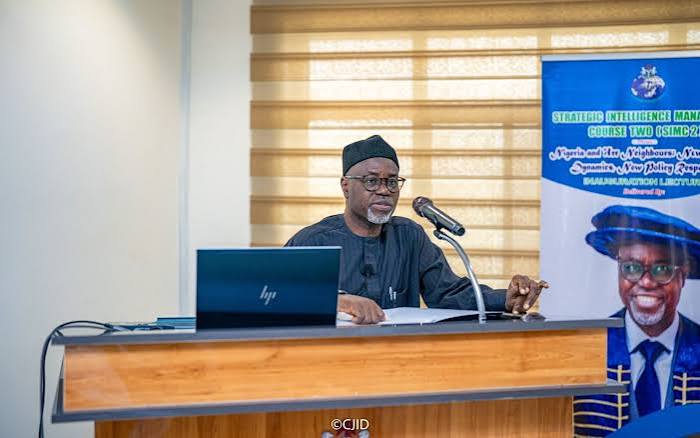
Represented by the Deputy Vice-Chancellor (Advancement, Research and Innovation), Prof. Sanusi Rafin-Dadi, Ahmed said emerging technologies were changing how knowledge was created, accessed, stored and applied, with significant implications for teaching, learning and research.
He maintained that libraries must move beyond their traditional role as repositories of books and information to become active centres of knowledge creation, digital innovation, research support and intellectual engagement.
Investment in infrastructure and human capacity
The vice-chancellor said universities needed to strengthen their information infrastructure, invest in staff development and establish institutional frameworks to guide the responsible use of emerging technologies.
He urged conference participants to move beyond discussions about the possibilities of AI and develop practical solutions, institutional partnerships and sustainable strategies that could improve library services.
According to him, the adoption of new technologies must be supported by the capacity and policies required to make them effective in academic environments.
Technology must not deepen digital exclusion
Earlier, the Acting University Librarian, Dr Abubakar Mohammed, represented by former University Librarian Abdulhamid Liman, warned that technology alone could not guarantee inclusive development without deliberate efforts to ensure that disadvantaged groups were not left behind.
He said libraries must consider the needs of rural readers, persons with disabilities, students without laptops and communities whose indigenous knowledge remained undocumented or difficult to access.
Mohammed also said the conference would examine responsible AI deployment, privacy protection, intellectual freedom, preservation of indigenous knowledge and ways to prevent digital exclusion.
His position highlighted a major challenge facing technology-driven library services: expanding digital access without creating new barriers for people who lack devices, reliable connectivity or the skills required to use emerging platforms.
ABU outlines improvements to library facilities
The university librarian also acknowledged the institution's support for the development of Kashim Ibrahim Library.
He cited the renovation of leaking roofs and toilets, plans to install solar facilities and ongoing landscaping around the library complex.
These improvements form part of the physical infrastructure needed to support the library's services alongside its proposed digital transformation.
Conference seeks wider AI adoption
The chairman of the occasion, Prof. Zakari Mohammed, expressed optimism that the conference would strengthen understanding and encourage wider adoption of artificial intelligence among library professionals and other stakeholders.
Mohammed said the Department of Library and Information Science had been producing higher-level graduates with knowledge of AI for the past five years.
He expressed hope that the conference would further popularise the technology and encourage participants to apply it to improve university services and address broader societal challenges.
Balancing innovation with access and accountability
The discussions at ABU come as artificial intelligence increasingly influences research, education and information management.
For Nigerian libraries, the challenge extends beyond acquiring digital tools. Reliable electricity, internet connectivity, affordable devices, staff training, accessibility for persons with disabilities and protection of users' privacy will all influence whether the technology benefits a wider population.
The conference's emphasis on indigenous knowledge also raises an important question about how libraries can use digital systems to preserve local languages, histories and community knowledge without excluding the people who hold that information.
The success of the proposed transformation will ultimately depend on whether technological innovation translates into practical improvements in access to knowledge for students, researchers and underserved communities.
Atlantic Reports: Voices. People. Facts.
Written by
Atlantic Reports Admin
Comments
- Be the first to comment.