Onion Prices Surge in Abuja as Traders, Households and Food Vendors Feel the Pressure
By Atlantic Reports
Residents of the Federal Capital Territory (FCT) have raised concerns over the sharp increase in onion prices, saying the development is putting additional pressure on household budgets and small businesses.
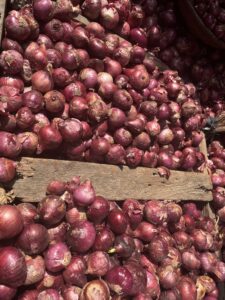
Market checks by the News Agency of Nigeria (NAN) on Sunday showed that the price of a bag of onions, previously sold for between ₦120,000 and ₦130,000, had risen to between ₦250,000 and ₦280,000, depending on size.
Smaller bags now sell for about ₦180,000, while a big basket that previously cost between ₦70,000 and ₦75,000 now sells for between ₦125,000 and ₦140,000.
A small basket has also increased from between ₦8,000 and ₦9,500 to between ₦11,000 and ₦13,000.
The rising prices have affected consumers, traders and food businesses, with many struggling to adjust to the higher cost of an essential cooking ingredient.
Seasonal Scarcity Drives Price Increases
An onion trader in Suleja, Sulaiman Ma’azu, attributed the increase to seasonal scarcity, explaining that the rainy-season harvest had ended while the dry-season crop was yet to become available.
He said limited market supply had pushed prices upwards, with the cost varying according to the quality and size of the onions.
Ma’azu explained that traders were also struggling with high replacement costs, making it difficult to reduce their selling prices.
According to him, traders must consider the cost of purchasing new stock when determining their prices.
Another trader in Kubwa, Sabiu Muhammad, identified poor returns from the previous farming season, post-harvest losses and transportation expenses as additional factors affecting supply.
He said some farmers had abandoned onion production after failing to make sufficient returns from their previous harvests.
Households Reduce Onion Purchases
For many residents, the increase has meant spending more money to purchase smaller quantities.
Sadiya Aminu, a resident of Dei-Dei, said she had reduced the quantity of onions she bought to manage household expenses.
She explained that a quantity she purchased for ₦1,500 two weeks earlier now cost ₦2,500.
Aminu said she previously bought onions in bulk, with a small basket lasting her household between 10 and 14 days.
Another resident, Ruth Okafor, said the rising cost had forced her to spend more while receiving less.
She noted that onions remained an essential ingredient in household cooking, making it difficult for families to eliminate them from their food budgets.
Food Vendors Struggle With Rising Operating Costs
The price increase is also affecting restaurants and small food businesses, where onions form part of the daily cost of preparing meals.
Glory Akpan of Cali Kitchen, Gwarimpa, said her weekly spending on onions had increased from between ₦8,000 and ₦10,000 to between ₦15,000 and ₦18,000.
She said the additional expense was reducing profit margins, while increasing meal prices remained difficult because customers were also facing financial pressures.
Similarly, Mary Odiori, a food vendor in Kagini, said rising ingredient and transportation costs were significantly reducing her earnings.
She disclosed that she had increased the prices of some meals to keep her business running but was still trying to ensure customers received reasonable value for their money.
Traders Seek Support for Onion Farmers
Traders have called for increased support for onion farmers, particularly in production, storage and transportation, to improve supply and moderate market prices.
Improving storage facilities could also help reduce post-harvest losses and make onions available beyond peak harvest periods.
The latest price increases highlight the wider connection between agricultural production, transportation, storage and food affordability.
For households and small food businesses, the immediate concern is how to cope with rising costs without further reducing food purchases or passing the entire burden on to consumers.
Addressing the challenge will require sustained support for farmers, improved supply chains and measures to reduce the costs involved in moving agricultural produce from farms to markets.
Atlantic Reports: Voices. People. Facts.
Written by
Atlantic Reports Admin
Comments
- Be the first to comment.