ActionAid Urges Nigeria to Turn Economic Growth into Household Relief
By Atlantic Reports
ActionAid Nigeria has urged federal and state governments to make household welfare central to economic recovery, arguing that rising output and public revenues must deliver affordable essentials, decent jobs and reduced poverty.
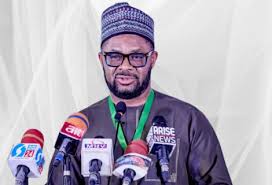
The organisation’s Country Director, Dr Andrew Mamedu, made the call in a statement issued on Monday in Abuja in response to the World Bank’s October 2026 Nigeria Development Update.
Mamedu acknowledged the economic improvements highlighted in the report but said employment, purchasing power and access to essential services remained critical measures of progress.
“We acknowledge the improvements in Nigeria’s economic indicators, but economic growth must mean more than impressive figures in government reports,” he said.
“When revenues rise, but families cannot afford food, transportation, healthcare and education, we must ask who benefits from that growth.”
Growth and household welfare
Citing the World Bank report, Mamedu said Nigeria’s real Gross Domestic Product grew by 4.2 per cent in the first half of 2026, compared with 3.9 per cent in the corresponding period of 2025.
He also cited reported increases in government revenues. According to his account of the report, federation revenues rose by 69 per cent in real terms between 2023 and 2025, while state government revenues increased by about 93 per cent. External reserves, he said, exceeded US$54 billion in September 2026.
Mamedu said the report indicated that Nigeria’s poverty rate had stabilised for the first time since 2019. However, he stressed that halting an increase in poverty did not necessarily mean poverty had declined.
“The true measure of economic progress is not how much money government generates, but how many Nigerians are lifted out of poverty,” he said.
Electricity, security and small businesses
ActionAid called for investment in electricity generation, transmission, distribution and renewable energy to reduce production costs, support businesses and expand employment.
Mamedu also urged governments to strengthen security in farming communities and along transport routes, linking those priorities to agricultural production, trade and food security.
For small businesses, he advocated affordable financing, a review of business levies and targeted assistance for enterprises led by women and young people.
He called for productive investment in manufacturing, agriculture, technology and renewable energy, with an emphasis on job creation and local value addition.
These proposals place attention on the conditions under which households earn a living: whether farmers can work safely, businesses can afford power and entrepreneurs can access finance.
Public spending must show results
Mamedu urged governments to increase investment in education, healthcare and social protection, alongside policies to control inflation and support decent wages.
He also called for transparent tracking of public expenditure and measurable poverty-reduction targets, saying increased revenues should produce visible improvements in essential services and household incomes.
ActionAid’s central demand is that economic recovery be assessed through everyday outcomes, including what people can afford, the work available to them and the services they can access, particularly in vulnerable communities.
Atlantic Reports: Voices. People. Facts.
Written by
Atlantic Reports Admin
Comments
- Be the first to comment.