UBEC Begins Distribution of Two Million Sanitary Towel Packs to Schoolgirls
By Atlantic Reports
The Universal Basic Education Commission (UBEC) has begun distributing two million packs of sanitary towels, alongside learning materials, to girls in public basic education schools across Nigeria.
The initiative aims to improve attendance and retention by addressing menstrual hygiene challenges and financial pressures that can interrupt girls’ education.
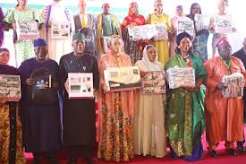
UBEC Executive Secretary Dr Aisha Garba announced the distribution on Monday in Abuja at the launch of “Flow with Confidence 2.0: Keeping Every Girl in School”.
First Lady Senator Oluremi Tinubu launched the programme, which covers all 36 states and the Federal Capital Territory.
“Our message is clear: no girl child should have to choose between her dignity and her education,” Garba said.
Supplies and financial support
Garba said the sanitary towels would be distributed with school bags, shoes, exercise books, mathematics textbooks and other writing materials.
The two million figure refers to packs of sanitary towels, rather than a confirmed number of individual beneficiaries. The supplied account did not specify how many packs each girl would receive, the distribution timetable or arrangements for replenishing supplies.
Garba also announced a scholarship intervention under UBEC’s Learners Retention Support Programme, targeting 100,000 learners in its first phase.
Each beneficiary is expected to receive ₦20,000 from a ₦2 billion allocation to help address financial barriers to school attendance.
The allocation and planned payments do not establish that funds have already reached beneficiaries. The account did not detail selection criteria or the payment schedule.
Accountability and rural access
Garba urged state governments, State Universal Basic Education Boards, traditional rulers, religious leaders, parents and development partners to ensure transparent distribution.
Tinubu also called on state first ladies, education commissioners and SUBEB chairmen to uphold accountability in implementing the scholarship programme.
She welcomed the expansion of support to schoolgirls, particularly those in rural communities, and urged community leaders to challenge the stigma surrounding menstruation.
For girls who face difficulty obtaining menstrual supplies, the programme is intended to reduce one barrier to regular attendance. Its lasting impact will also depend on reliable access to water, sanitation and appropriate facilities at school.
Wider education claims
Garba said UBEC had facilitated the construction of more than 4,000 classrooms nationwide in less than three years, alongside water and sanitation facilities, learning materials and digital technology.
She added that more than three million pupils received back-to-school materials in the preceding year and that about 700,000 out-of-school children had returned to classrooms through interventions involving relevant agencies and stakeholders.
Those figures were presented by UBEC. The supplied account did not include state-level breakdowns or information on how sustained attendance was measured.
Minister of Education Dr Tunji Alausa encouraged students to make use of the interventions and remain committed to their studies. Minister of State for Education Prof. Suwaiba Ahmad said the programme was intended to promote menstrual health and remove barriers to girls’ education.
The immediate test is whether supplies and financial assistance reach the intended learners transparently. Beyond distribution totals, progress should be assessed through improved attendance and the number of girls able to remain in school.
Atlantic Reports: Voices. People. Facts.
Written by
Atlantic Reports Admin
Comments
- Be the first to comment.