Africa Eyes New Markets, Industrial Investment at China Import Expo
By Atlantic Reports
China’s import market offers new opportunities for Africa
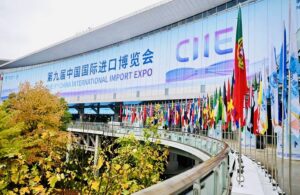
Africa’s efforts to diversify exports, attract investment and strengthen its position in global supply chains featured prominently at the ninth China International Import Expo (CIIE), held in Shanghai from November 5 to 10, 2026.
The six-day exhibition brought together businesses, governments and international organisations to explore commercial partnerships, investment opportunities and emerging markets.
For African countries, the discussions went beyond exporting agricultural commodities and mineral resources. They highlighted the potential to expand agro-processing, manufacturing, technology partnerships, employment and value addition.
Held at the Shanghai National Exhibition and Convention Centre, the expo attracted 4,142 overseas exhibitors from 162 countries, regions and international organisations, occupying more than 440,000 square metres.
More than 300 Fortune Global 500 companies and industry leaders participated, while over 480 products and innovations made their global, Asian or Chinese debuts.
Addressing the opening ceremony, Chinese Vice Premier Ding Xuexiang described the CIIE as a demonstration of China's commitment to trade liberalisation, economic globalisation and greater access to its domestic market.
“The CIIE has evolved from a one-sided invitation extended by China into a shared commitment of all parties,” Ding said.
Since its launch in 2018, the annual exhibition has attracted participants from more than 180 countries, regions and international organisations. Its first eight editions recorded cumulative intended transactions exceeding 580 billion US dollars.
Ding said China had maintained the world's second-largest goods-import volume for 17 consecutive years, making it a major export destination for nearly 80 countries.
He added that imports grew by 22.3 per cent in the first three quarters of 2026, nearly six percentage points above export growth.
For developing economies seeking to diversify their trading relationships amid global economic uncertainty, the figures point to the scale of potential opportunities in the Chinese market.
Zero-tariff access creates an opening for African exporters
One of the most significant developments for African businesses is China's expansion of zero-tariff treatment to all 53 African countries with which it maintains diplomatic relations.
The policy took effect on May 1, 2026, extending preferential access previously available to 33 African least-developed countries.
For the remaining 20 eligible countries, the arrangement applies for an initial two-year period ending April 30, 2028, subject to applicable preferential tariff and product-specific provisions.
By reducing import duties, the arrangement could lower the cost of entering China's market and improve the competitiveness of eligible African exports.
Products such as South African apples, Kenyan avocados, Egyptian citrus fruits, Moroccan gypsum and Nigerian bovine bone chips have reportedly entered China under the arrangement.
Chinese Foreign Ministry spokesperson Guo Jiakun said the initiative was supported by improvements in customs procedures, agricultural inspection arrangements and trade facilitation, including streamlined quarantine clearance.
Early shipments have provided examples of the potential savings.
Shanghai Customs reported that 516 tonnes of Egyptian oranges cleared Waigaoqiao port on May 1, becoming the city's first import under the expanded arrangement.
The Chinese importer reportedly saved approximately 320,000 yuan in tariffs, while a shipment of Kenyan avocados generated savings of about 26,000 yuan for its importer.
Such reductions can improve exporters' margins and make African products more competitive.
However, preferential access does not automatically guarantee commercial success. African producers must still meet Chinese requirements on quality, certification, packaging, food safety and supply consistency. They also need reliable distribution networks and a clear understanding of consumer preferences.
African businesses seek commercial partners
For Rwanda's Ambassador to China, retired Lt.-Gen. Emmanuel Karake, the CIIE provides an important platform for local enterprises, particularly smallholder farmers and women-led cooperatives, to connect with Chinese buyers.
“CIIE has proven to be an invaluable platform for Rwandan enterprises, particularly smallholder farmers and women-led cooperatives, to access the Chinese market and build lasting business partnerships,” he said.
He added that purchases of Rwandan coffee and honey by Chinese consumers could support farmers, families and entrepreneurs in his country.
Nigeria's Trade Commissioner in Shanghai, Hassan Mohammed, also described the exhibition as a platform for opening new export opportunities for Africa.
African exhibitors at the event included Nigerian spice and foodstuff sellers, Rwandan coffee and tea merchants, Zambian gemstone businesses, Ghanaian chocolate producers and craft sellers from South Sudan.
Despite the opportunities, some entrepreneurs identified transportation costs, export procedures and difficulties securing commercial partners as major obstacles.
Zambia's Teresa Stumbeko, chief executive of Colourful Culture, exhibited malachite and amethyst sourced from her country.
She said Chinese customers showed interest in the gemstones but explained that transporting larger quantities to China remained a challenge.
Rwandan entrepreneur Ivan Shema, founder of 1000 Hills Products, said his company was prepared to supply both roasted and green coffee to the Chinese market.
Ghana's Eric Agbozo, chief executive of Sekoko Enterprise, showcased chocolate made with cocoa and ingredients including nuts, seeds, dates, banana, coconut and ginger.
“What we are seeking to do is combine all this into a healthier chocolate for Africa and for the world at large,” he said.
Their experiences illustrate the gap between attracting attention at an international exhibition and establishing sustainable export businesses. Interest from potential customers must translate into orders, distribution agreements, dependable logistics and repeat purchases.
AfCFTA could strengthen Africa's export capacity
The opportunities presented by the CIIE also intersect with the African Continental Free Trade Area (AfCFTA), which seeks to establish a single African market for goods and services.
The agreement aims to progressively reduce tariffs on most intra-African trade and address barriers that restrict commerce across national borders.
A stronger regional market could help African producers expand their customer base, achieve economies of scale and develop more competitive supply chains.
It could also prepare businesses to take advantage of preferential access to China.
For example, manufacturers could source raw materials and intermediate products from neighbouring African countries, process them regionally and distribute finished goods across the continent before exporting to international markets.
Cooperation on product standards, customs procedures, logistics and rules of origin would further improve the ability of African businesses to meet international market requirements.
The two initiatives could therefore complement each other. AfCFTA offers an opportunity to strengthen Africa's productive base and regional commerce, while China's preferential market access provides an additional destination for competitive exports.
Together, they could support a shift away from fragmented commodity exports towards regional manufacturing, value addition and more diversified international trade.
Industrialisation remains central to long-term gains
A recurring theme at the Shanghai exhibition was the need for African economies to move beyond exporting largely unprocessed natural resources.
For decades, many countries on the continent have depended heavily on crude oil, minerals and primary agricultural commodities. This has often limited the share of value retained locally, as well as opportunities for industrial employment and technological development.
China's experience was presented as an example of how manufacturing, technological innovation, infrastructure and international trade can reinforce one another.
Ding said foreign-funded enterprises accounted for 27 per cent of China's total exports in 2025, highlighting the contribution of international investment to manufacturing and export development.
He also referred to China's support for industrial parks in Africa, Southeast Asia and other developing regions, aimed at encouraging industrialisation, employment and improved trading conditions.
For African countries, the opportunities include investment in manufacturing, agro-processing, mineral beneficiation, renewable energy and other productive sectors.
Cocoa-producing countries, for instance, could expand chocolate and processed-food industries rather than relying predominantly on exports of raw cocoa beans.
Nigeria could also explore greater domestic processing of its mineral resources, including lithium, gold, coal, manganese and iron ore, alongside investment in manufacturing and related industries.
However, the development of these industries requires more than access to raw materials. It depends on reliable electricity, transport infrastructure, skilled workers, technology, finance and stable investment policies.
Gabon presents investment opportunities at the expo
Gabonese President Brice Nguema used his country's participation to promote investment and economic diversification.
Gabon presented its first national pavilion at the expo, showcasing its natural resources, biodiversity and investment opportunities.
Nguema said his administration was seeking to reduce dependence on raw-material exports by encouraging domestic processing and stronger local value chains.
“Come and invest in Gabon and build with us the new edifice of our dreams,” he told business leaders.
He identified timber, manganese, iron ore, energy, agriculture, digital infrastructure and the green economy as priority investment sectors.
The president also invited investors to explore the operational Nkok Special Economic Zone, highlighting its incentives and industrial potential.
Gabon’s presentation demonstrated how participation in international trade exhibitions can serve a wider purpose beyond displaying products. Governments can use such platforms to promote investment opportunities and attract partnerships capable of expanding domestic production.
The more difficult task, however, is converting expressions of interest into bankable projects, functioning industries, technology partnerships and employment.
This requires credible policies, dependable infrastructure, regulatory transparency and predictable conditions for investors.
UNDP warns that market access must be matched by production capacity
United Nations Development Programme (UNDP) Administrator Alexander De Croo welcomed expanded duty-free access for least-developed countries and African partners but cautioned that market access was only the beginning.
“The real task, the larger task, is to build productive capacity that can make use of that market access,” he said.
His observation reflects a central challenge facing developing economies. Without sufficient production capacity, industrial infrastructure, technical expertise and access to finance, countries may struggle to benefit from preferential trade arrangements.
De Croo said development gains were strongest when countries created more value domestically, strengthened industries and generated skills and employment.
He identified infrastructure, technology transfer, financing and institutional development as important components of economic transformation.
He also drew attention to the global employment challenge, noting that about 1.2 billion young people worldwide would enter the labour market over the next 15 years.
For Africa, where a youthful population represents both an economic opportunity and a development responsibility, productive investment will be essential to creating sustainable employment.
De Croo argued that trade should be assessed not only by the volume of goods exchanged but also by its contribution to local jobs, environmental sustainability, gender equality and poverty reduction.
“Trade can be an incredibly powerful accelerator” for sustainable development, he said.
Technology and innovation offer another route to cooperation
Technological innovation and emerging industries formed another important part of the exhibition.
The CIIE featured 633 innovation and technology projects from nearly 40 countries and regions, reflecting the growing role of technology in international commerce.
Ding said China's competitiveness increasingly reflected sustained investment in research, industrial innovation and technological advancement.
He disclosed that integrated-circuit exports increased by 99.1 per cent in the first three quarters of 2026.
Exports of the so-called new three products, electric vehicles, lithium-ion batteries and solar photovoltaic products, also increased by 45.6 per cent during the period.
He expressed China's readiness to deepen scientific and technological cooperation, particularly in digital development, green technologies and industrial upgrading.
For African economies, these sectors offer opportunities to participate in emerging industries rather than remain concentrated in traditional commodity exports.
Potential areas of cooperation include solar technology, agricultural machinery, electric mobility, digital services and industrial automation.
However, the long-term value of such partnerships will depend on meaningful technology transfer, local participation and skills development. Investment should strengthen domestic expertise and production capabilities rather than create new forms of dependence.
China's manufacturing experience also demonstrates the importance of connecting research institutions, manufacturers, suppliers and distribution networks within functioning industrial ecosystems.
Austria's Chancellor, Christian Stöcker, also highlighted the importance of sustained international economic engagement.
He described Austria-China relations as a longstanding partnership and said more than 650 Austrian companies operated successfully in the Chinese market.
“Economic exchange creates opportunities, prosperity and mutual understanding,” Stöcker said, while emphasising fair competition, transparency and constructive dialogue.
His remarks reflected the broad international interest in China's market and the importance of dependable commercial relationships.
Hongqiao forum provides market intelligence for exporters
The CIIE's accompanying Hongqiao International Economic Forum provided another platform for governments, businesses and international organisations to discuss global economic challenges and trade opportunities.
One development at this year's event was the introduction of the first Export-to-China Capacity Development Report.
The report examines China's import structure, market demand, trading entities and policy environment, providing exporters with information to identify opportunities and improve their ability to supply Chinese consumers.
Ding projected that China's annual retail sales of consumer goods would reach approximately 60 trillion yuan by the end of its 15th Five-Year Plan period, while its services sector would exceed 100 trillion yuan.
These are projections rather than achieved figures, but they indicate the potential scale of future demand in areas including agricultural products, consumer goods, healthcare, tourism and education.
For African businesses to benefit, governments and the private sector will need to invest in agricultural productivity, cold-chain facilities, modern ports, transport networks, industrial capacity and internationally recognised quality standards.
Export financing, market intelligence and partnerships connecting small producers with international distributors will also be important.
Nigeria faces an opportunity to diversify its trade relationship
Nigeria's participation in the broader discussions highlights the potential to expand its trade relationship with China beyond the traditional exchange of raw materials and manufactured imports.
The country has opportunities to develop exports in processed agricultural products, food, minerals, pharmaceuticals and creative industries.
Its agricultural and mineral resources, alongside its manufacturing potential, could support a more diversified export base.
However, achieving this would require policies that connect farmers, manufacturers, exporters, financiers and international buyers.
Small and medium-sized enterprises also need access to affordable finance, modern processing facilities, export information and reliable logistics.
The zero-tariff arrangement may reduce one barrier to entering the Chinese market, but businesses must still satisfy applicable product requirements and demonstrate the ability to supply consistently.
The wider question is whether Nigeria and other African countries can use new market opportunities to build industries that retain more economic value within their borders.
Turning trade opportunities into lasting development
The ninth China International Import Expo has provided African countries and businesses with another platform to identify markets, attract investment and explore industrial partnerships.
China's large consumer market, expanded preferential tariff arrangements and interest in international investment offer additional opportunities for developing economies.
Yet the benefits will depend on how effectively African governments and businesses prepare to compete.
The AfCFTA could strengthen the continent's regional production base, while partnerships with China and other international markets could provide additional commercial opportunities.
Ultimately, success should not be measured only by the number of exhibitors, products displayed, meetings held or agreements announced.
More meaningful indicators would include new factories, increased exports of processed goods, technology transfer, improved productivity, decent employment and stronger local industries.
As international business leaders and policymakers gathered in Shanghai, the message for Africa was clear: access to China's market is an important opening, but investment, industrialisation, regional integration and strategic preparation will determine how much lasting value the continent derives from it.
Atlantic Reports: Voices. People. Facts.
Written by
Atlantic Reports Admin
Comments
- Be the first to comment.