African Health Ministers Call for Joint Action as Ebola Outbreak Spreads Across Four Countries
By Atlantic Reports
African health ministers have called for stronger continental preparedness and coordinated action to contain an expanding Ebola outbreak that has reportedly spread to four countries, raising concerns about cross-border transmission and the capacity of health systems to respond.
The call followed an emergency virtual meeting involving the Africa Centres for Disease Control and Prevention (Africa CDC) and the World Health Organisation (WHO), amid concerns over the spread of the Bundibugyo strain of the Ebola virus.
Africa CDC Director-General Jean Kaseya said the outbreak had recorded 10,172 confirmed cases and more than 4,932 deaths, with the Democratic Republic of the Congo (DRC), Uganda, Kenya and Nigeria identified as affected countries.
He put the case fatality rate at 48.5 per cent and said 2,727 patients had recovered.
These figures, as presented in the meeting account, underline the reported severity of the outbreak. However, the reporting period, underlying surveillance data and country-by-country breakdown were not specified in the supplied information.
Kaseya said the outbreak had escalated within five months from a national emergency into a major continental health security challenge.
He identified insecurity, complex humanitarian conditions, inadequate medical countermeasures and funding shortages as obstacles to containment efforts.
“The main priority today in our continent is to stop Ebola,” he said.
WHO Warns of Complex Outbreak in the DRC
In a message delivered on his behalf, WHO Director-General Tedros Adhanom Ghebreyesus described the outbreak as extremely serious and difficult to control.
“This outbreak in the DRC is not a single outbreak in a single place. It is many outbreaks across a vast and complex area, requiring a sustained response everywhere at the same time,” he said.
Tedros noted that measures taken by authorities in Uganda, Kenya and Nigeria demonstrated the importance of early detection and rapid response in managing public health emergencies.
His remarks highlighted the need for sustained surveillance, coordinated interventions and sufficient resources to prevent infections from spreading across national borders.
The response challenge is particularly significant where insecurity and humanitarian emergencies restrict access to affected communities or disrupt the delivery of health services.
Kenya Identifies Gaps in Regional Preparedness
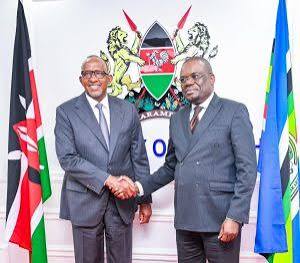
Patrick Amoth, Director-General for Health at Kenya’s Ministry of Health, said the country’s response had adopted a “whole-of-government and whole-of-society” approach.
He also identified weaknesses that African countries needed to address, including infections among healthcare workers, cross-border transmission that could evade surveillance and contact tracing, and limited access to reliable medical countermeasures.
Amoth raised concerns about Africa’s reliance on uncertain supplies of donated medicines, alongside the reported lack of licensed vaccines or specific therapeutics for the outbreak strain.
He said Kenya would maintain open travel and trade arrangements and would not introduce restrictions beyond those justified by international health regulations and available evidence.
He also pledged that the country would share data, viral sequences and lessons from its response openly.
The approach reflects the need to balance public health protection with the economic consequences of unnecessary travel and trade restrictions.
Uganda Urges Regional Cooperation
Ugandan Health Minister Chris Baryomunsi said his country’s experience demonstrated that transmission could be interrupted when authorities acted early and decisively.
“Uganda was affected by this outbreak and was able to interrupt transmission within our borders,” he said.
“Our experience should give us hope, but should also give us a sense of responsibility.”
Baryomunsi stressed that an outbreak affecting several countries required a response extending beyond individual national borders.
“The lesson is straightforward: when a public health emergency threatens several countries, our response must also become regional and continental.”
His remarks reinforced calls for stronger information-sharing arrangements, coordinated surveillance and rapid communication among neighbouring countries.
Ten Other Countries Identified as High-Risk
Beyond the four countries identified as affected, the supplied account said 10 other African countries had previously been designated as high-risk.
They are South Sudan, Rwanda, Zambia, the Central African Republic, Tanzania, Ethiopia, Angola, the Republic of the Congo, Burundi and Somalia.
A high-risk designation does not necessarily mean that an outbreak has been confirmed in those countries. Rather, it indicates a need for heightened preparedness and monitoring, depending on the criteria used by health authorities.
The account did not specify when the designations were made or the precise risk assessment applied to each country.
Funding, Surveillance and Medical Access Remain Critical
The ministers’ call places regional coordination at the centre of efforts to contain the reported outbreak. Effective action will require reliable funding, trained health workers, accessible diagnostic services, timely reporting and sufficient protective equipment and medical supplies.
Cross-border surveillance will also be important in identifying infections that might otherwise go undetected, particularly where people travel frequently between neighbouring countries.
For Nigeria and other countries identified as affected or at risk, clear public communication and evidence-based public health measures will be essential to protecting communities without causing unnecessary disruption.
The reported figures and geographical spread underline the need for urgent attention. However, independently confirming the outbreak totals, the affected countries and the status of available vaccines and treatments is essential for an accurate assessment of the situation.
Atlantic Reports: Voices. People. Facts.
Written by
Atlantic Reports Admin
Comments
- Be the first to comment.