Artisanal Miners Urge FG to Establish Buying Centres to Curb Middlemen Exploitation
By Atlantic Reports
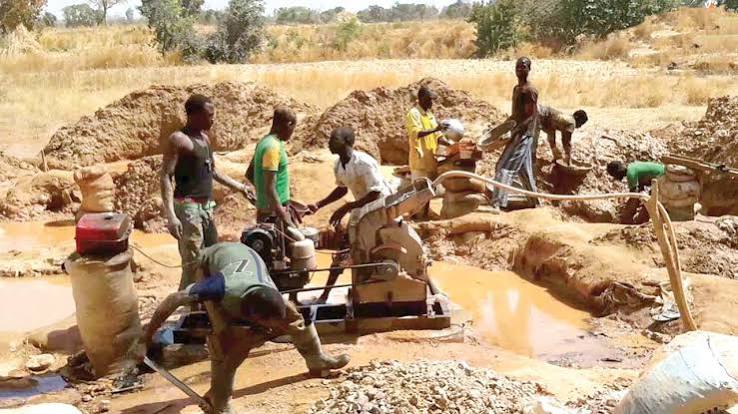
The National Artisanal and Small Scale Mining Cooperative Society (NASSMCS) has called on the Federal Government to establish mineral buying centres across Nigeria to protect artisanal miners from exploitation by middlemen and improve transparency in the solid minerals sector.
The cooperative made the appeal in a statement jointly signed by its National President, Alhaji Abdullah Dantansidi, and Vice-President, Mr Israel David, and made available to journalists in Keffi, Nasarawa State, on Friday, 27 November 2026.
The group said many artisanal miners were being underpaid because they lacked recognised outlets through which to sell their minerals, leaving them dependent on middlemen and dealers who allegedly determined prices arbitrarily.
Proposed Buying Centres to Ensure Fair Pricing
NASSMCS said the proposed centres would provide transparent pricing based on prevailing international market rates and give small-scale miners access to formal commodity markets.
According to the cooperative, the centres would also connect miners with local industries and export markets, creating a more organised system for buying and selling mineral resources.
The group argued that formal purchasing arrangements could reduce the influence of unregulated dealers and improve miners' bargaining power.
It also said the centres would help curb illegal mining, illicit mineral transactions and smuggling while making it easier for government to collect appropriate royalties and taxes.
However, the proposal leaves important implementation questions, including how mineral prices would be determined, who would operate the centres, how payments would be protected and what safeguards would prevent manipulation or corruption.
Millions Depend on Artisanal Mining
The cooperative described artisanal miners as a major component of Nigeria's solid minerals industry, stating that they produce gold, lithium, tin and more than 40 other mineral varieties across over 500 sites in the 36 states and the Federal Capital Territory.
It estimated that the sector supports about 1.6 million artisanal miners nationwide, with each miner providing livelihoods for numerous other people, including young people, women, food vendors, drivers and equipment operators.
These figures were provided by the cooperative and were not independently verified in the statement.
NASSMCS also highlighted the contribution of mining communities to local development, saying miners had supported the construction of houses, schools, markets, health centres, mosques, roads and boreholes.
The group maintained that artisanal mining could contribute to improved security by creating employment opportunities for young people and reducing their vulnerability to drug abuse, banditry and insurgency.
Miners Seek Support Under Tinubu's Agenda
The cooperative urged President Bola Tinubu to make the empowerment of artisanal miners a priority under the Renewed Hope Agenda.
It commended the administration's mining sector reforms, claiming that they had generated ₦63.9 billion in government revenue within 11 months.
The statement, however, did not specify the period covered by the revenue figure, the particular revenue streams involved or the extent to which the amount represented actual collections.
Independent details would be needed to assess the figure and determine how much of the revenue has translated into improved conditions for mining communities.
Call for Infrastructure in Mining Communities
NASSMCS also appealed to federal and state lawmakers to prioritise infrastructure development in mineral-bearing communities.
It identified rural electrification, access to potable water, schools, cottage hospitals, skills acquisition centres and bursary awards for disadvantaged students as important interventions.
The cooperative argued that communities supplying mineral resources should benefit from improved public services and economic opportunities.
Formal Markets and Community Benefits
The proposed buying centres could help address longstanding concerns about pricing transparency, informal trading and government revenue collection. Their effectiveness, however, would depend on transparent management, accessible locations, reliable payment systems and effective regulation.
There is also a need to ensure that formalisation does not exclude small-scale miners who lack the documentation, equipment or financial capacity to meet regulatory requirements.
For communities dependent on artisanal mining, the central issue is not only how much mineral wealth is extracted, but how fairly the resulting economic benefits are distributed.
The Federal Government's response to the proposal, alongside the practical measures adopted to protect miners and host communities, will be important in determining whether the sector can deliver more sustainable livelihoods.
Atlantic Reports: Voices. People. Facts.
Written by
Atlantic Reports Admin
Comments
- Be the first to comment.