Atiku Urges Nigeria to Invest in Human Capital and AI for Economic Development
By Atlantic Reports
Former Vice-President Atiku Abubakar has called for greater investment in human capital, technology and Artificial Intelligence (AI), arguing that Nigeria’s development will depend largely on how effectively it prepares its citizens for a rapidly changing global economy.
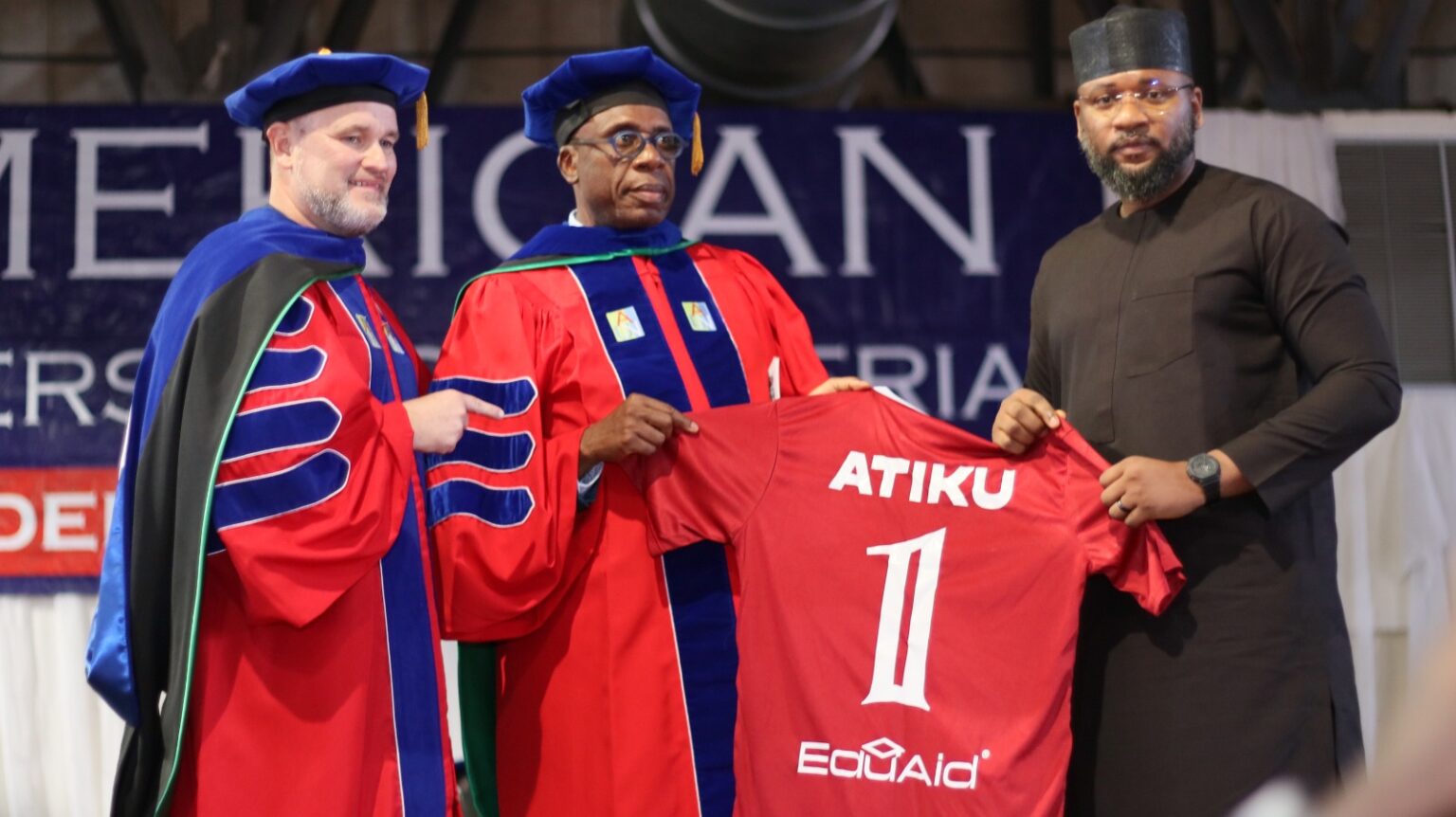
Atiku made the call on Saturday in Yola, Adamawa State, during the 18th Founders’ Day celebration of the American University of Nigeria (AUN), which also marked his 80th birthday.
Represented by former Minister of Transportation, Rotimi Amaechi, Atiku described Nigerians, particularly young people, as the country’s greatest resource.
In a presentation titled “The Future We Choose: Human Capital, Artificial Intelligence and Nigeria’s Renewal”, he said national progress required a deliberate effort to educate, equip, employ and empower citizens.
Education must deliver practical skills
Atiku argued that academic qualifications alone could no longer adequately prepare graduates for the demands of modern society and the technology-driven labour market.
He identified five qualities that education should develop: strong foundational knowledge, practical competence, entrepreneurial confidence, ethical judgement and social responsibility.
He warned that failing to harness Nigeria’s growing population through education and productive opportunities could deepen unemployment, insecurity, poverty and social frustration.
His remarks place renewed attention on the relationship between education, job creation and the country's ability to benefit from emerging technologies.
AI presents opportunities and challenges
Atiku noted that Artificial Intelligence, automation, robotics and biotechnology were transforming several sectors of the global economy.
He urged Nigeria to prepare its young population for the opportunities created by these developments rather than allow technological changes to widen existing economic and social inequalities.
He also called on universities to strengthen their roles as centres of innovation, research, entrepreneurship and economic transformation.
According to him, higher institutions should develop practical technological solutions to national challenges while producing graduates equipped to participate in the global economy.
Atiku further advocated stronger partnerships among government, the private sector, universities and Nigerians in the diaspora to support education, research and technological advancement.
University urged to measure impact beyond certificates
The keynote speaker, Prof. Obiora Okonkwo, also called for a broader understanding of the purpose of higher education.
Delivering a lecture titled “Purposeful Education and the 21st-Century University: Leadership, Innovation and Social Responsibility”, Okonkwo said universities should develop critical thinking, creativity, leadership, employability and the capacity to address societal problems.
He argued that institutional relevance should not be judged solely by the number of certificates awarded or research publications produced, but also by the practical contributions universities make to society.
“The fundamental purpose of education must extend beyond the acquisition of academic qualifications to the development of human and social capabilities,” he said.
Okonkwo also commended Atiku for his financial support, scholarship initiatives and contributions to the development of AUN over nearly two decades.
AUN records enrolment growth, announces medical school dean
AUN President, Dr DeWayne Frazier, said the university’s growing diversity reflected its founding vision of expanding access to quality education.
He disclosed that the institution had recorded an enrolment of nearly 1,700 students drawn from all 36 states of Nigeria and more than 20 countries.
Frazier also announced the appointment of Dr Abdullahi Abba as the founding Dean of the university’s proposed Medical School.
He said the planned school would strengthen medical training, healthcare research and community health services in North-East Nigeria.
The initiative, he added, would support research into infectious diseases and improve understanding of health challenges affecting communities in the region.
The wider development challenge
The calls made at the anniversary celebration highlight a central question for Nigeria’s development: how to translate its large youthful population and expanding access to education into productive employment, innovation and improved living standards.
Investment in technology and artificial intelligence could create new opportunities, but delivering those benefits will require accessible education, reliable infrastructure, relevant training, research funding and stronger links between universities and industry.
AUN’s enrolment growth and proposed medical school represent institutional developments, but their long-term contribution will depend on the quality of education, research outcomes and services delivered to surrounding communities.
Atlantic Reports: Voices. People. Facts.
Written by
Atlantic Reports Admin
Comments
- Be the first to comment.