Bangladesh Threatens to Arrest Former Prime Minister Sheikh Hasina if She Returns from India
By Atlantic Reports
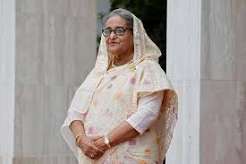
The Bangladeshi government has vowed to arrest and imprison former Prime Minister Sheikh Hasina if she returns from India, where she has been living since fleeing the country during the 2024 uprising that ended her 15-year rule.
State Minister for Foreign Affairs, Shama Obaed Islam, said Hasina would be arrested immediately upon entering Bangladesh and made to face the country's legal system.
In an interview with Reuters on Sunday, Obaed said the government wanted India to honour an existing extradition treaty and return the former prime minister to Bangladesh.
“As soon as she tries to enter Bangladesh, she will be arrested. And she will be taken to jail, and the law will take its course,” she said.
She added that Dhaka expected India to return Hasina as a convicted individual.
Extradition Dispute with India
Hasina fled Bangladesh in August 2024 after widespread protests demanding her resignation escalated into a major political uprising.
She has remained in India since then, while Bangladesh has pursued her extradition.
Obaed said New Delhi was expected to comply with the existing extradition treaty between both countries.
However, India's Ministry of External Affairs had yet to respond to Reuters' latest request for comment.
In April, the Indian government said it was examining Bangladesh's extradition request.
The former prime minister reportedly sought a new passport and identity card ahead of a planned return in December, but the Bangladeshi government rejected the requests.
Hasina has been sentenced to death in Bangladesh, while her Awami League party has been banned following the 2024 uprising.
The United Nations has estimated that as many as 1,400 people were killed during the unrest.
Political Tensions and Renewed Violence
The possibility of Hasina's return has intensified political divisions, with supporters of the Awami League organising protests and rallies demanding her return.
The party announced a week-long programme of demonstrations, which culminated in a nationwide lockdown on November 19.
According to local media reports cited by Reuters, police recorded dozens of crude bomb explosions and arson attacks targeting vehicles across at least 28 districts within 10 days.
Several police officers and civilians were reportedly injured.
Obaed accused the Awami League of using violence as a strategy for political survival, describing the party as politically bankrupt.
However, senior Awami League official Khalid Mahmud Chowdhury blamed the current political establishment for the violence.
The competing accusations underscore the deep political divisions surrounding Bangladesh's post-2024 transition.
Dhaka Seeks Balanced Relations with New Delhi
Despite the extradition dispute, Obaed said Bangladesh wanted to maintain balanced diplomatic and economic relations with India.
She clarified that there had been no official discussions about sending an aircraft to bring Hasina back to Bangladesh.
However, she urged New Delhi to reconsider its foreign policy towards Dhaka, stressing that bilateral relations should respect Bangladesh's dignity, sovereignty and national interests.
Bangladesh Intensifies Pressure over Rohingya Refugees
Beyond its dispute with India, Bangladesh is also increasing diplomatic pressure on neighbouring Myanmar over the repatriation of Rohingya refugees.
Obaed welcomed a ruling by the International Court of Justice concerning allegations of genocide against the Rohingya Muslim minority in Myanmar.
The 2017 military crackdown in Myanmar's Rakhine State involved widespread killings and sexual violence, forcing hundreds of thousands of Rohingya to flee into Bangladesh.
Myanmar has criticised the court proceedings and maintained that refugees would only be able to return when conditions permit.
Obaed said the court's ruling strengthened Bangladesh's position and the Rohingya community's demand for justice and safe repatriation.
She insisted that any return must guarantee dignity and security.
Approximately 1.2 million Rohingya refugees currently live in Bangladesh, with repeated repatriation efforts failing to produce a lasting solution.
Their return remains complicated by Myanmar's ongoing civil war and the Arakan Army's control of much of Rakhine State, where most Rohingya originate.
Obaed called for stronger international pressure on Myanmar and the Arakan Army, arguing that responsibility for resolving the refugee crisis rests with Myanmar.
Regional Stability Faces Further Uncertainty
Bangladesh's threat to arrest Hasina, its extradition demands to India and the continuing violence linked to political divisions present significant challenges for the country's diplomatic relations and internal stability.
The proposed December return remains uncertain, while India's response to the extradition request could shape relations between the neighbouring countries.
For the millions affected by Bangladesh's political crisis and the prolonged Rohingya displacement, the coming months will be important in determining whether diplomatic engagement can deliver greater stability, accountability and security.
Atlantic Reports: Voices. People. Facts.
Written by
Atlantic Reports Admin
Comments
- Be the first to comment.