Beijing’s 12345 Hotline Offers Public Service Lessons for Global South Journalists
By Atlantic Reports
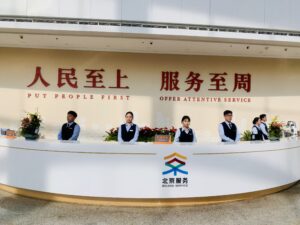
A public service hotline in Beijing has drawn interest from visiting Global South journalists for its approach to connecting residents with government departments, tracking complaints and accommodating different communication needs.
During a visit on Monday, journalists highlighted the Beijing 12345 Hotline Citizen Service Centre’s sign-language services, centralised case handling and use of digital technology as features their countries could explore.
The centre operates a 24-hour, non-emergency platform through which residents and businesses can submit questions, complaints and requests for assistance to government departments, sub-district authorities and public utilities.
It accepts communication through phone calls, text messages, photographs, videos, sign language and multiple languages.
From Individual Complaints to Coordinated Responses
Each request is registered as a case, allowing officials to route it to the appropriate department and track the response.
Artificial intelligence supports case assignment, quality control and data analysis. The system also helps authorities identify recurring concerns that may require wider administrative action.
Beijing integrated more than 60 separate hotline services into the unified 12345 platform in 2019, simplifying access for a city of approximately 21 million residents.
The account presented during the visit put the number of cases handled since the hotline’s establishment at about 200 million, with reported resolution and satisfaction rates above 97 per cent. It did not detail how those rates were calculated or independently assessed.
Accessibility Draws Attention
Webster Clayeh, President of the Reporters Association of Liberia, said the provision of sign-language services stood out as a lesson for African countries.
“To see this centre providing service for people with disability, it was amazing for me,” he said.
He also highlighted the coordination of different government departments within a single operational framework.
Apenisa Waqairadovu, a senior multimedia journalist with the Fijian Broadcasting Corporation, praised the central reception and routing of requests.
“Everything is brought under one roof, dealt with there, and then distributed to the relevant departments to deal with it right away,” he said.
Ugandan multimedia journalist Jacky Achan said the centre’s emphasis on serving people across different backgrounds was a major takeaway.
“It’s not just for a specific group of people, it’s for everyone,” she said.
Adapting the Approach to Local Needs
Nigerian editor Mark Longyen said a similar system could strengthen communication between citizens and public institutions in Nigeria.
“How can China help Nigeria develop a similar thing? How can we replicate it?” he asked.
He said responsive handling of everyday concerns could make urban life easier and strengthen public confidence in government.
CGTN correspondent Wang Hao said the visit offered an opportunity to examine how public feedback could inform urban administration. He stressed adaptation to local conditions rather than copying China’s system wholesale.
For cities considering such an approach, the central question extends beyond receiving complaints: whether responsible agencies act on them, residents can track progress and reported resolutions address the problems raised.
Atlantic Reports: Voices. People. Facts.
Written by
Atlantic Reports Admin
Comments
- Be the first to comment.