Benue Trains 120 Youths in Digital Literacy, AI and Digital Safety
By Atlantic Reports
RHHF, Benue Government Launch Training
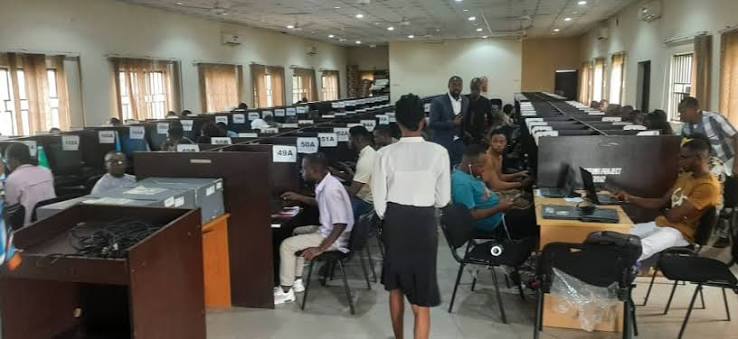
The Royal Heritage Health Foundation (RHHF), in collaboration with the Benue Ministry of Youth, Sports and Creativity, on Tuesday commenced the training programme aimed at equipping young people with practical digital competencies.
The initiative is supported by the United Nations Population Fund (UNFPA) and funded by the Government of Japan.
Benue Commissioner for Youth, Sports and Creativity, Mr Nick Eworo, said the programme was designed to improve participants’ employment prospects, entrepreneurial capacity and access to information.
Eworo, represented by the ministry’s Permanent Secretary, Dr Philip Nongu, described digital competence as increasingly important for employment, business development, online transactions and access to educational resources.
He pledged the ministry’s commitment to sustaining digital literacy initiatives and disclosed plans to organise three additional training programmes for young people in the state.
The commissioner urged participants to apply the knowledge acquired to improve their professional performance and contribute to development in their communities.
Training to Cover Artificial Intelligence and Digital Safety
Benue Programme Officer of UNFPA Nigeria, Mr Adamu Hamman, said the initiative was designed to promote digital inclusion, particularly among women, adolescent girls, young people and vulnerable communities.
He noted that digital skills had become increasingly important for education, employment, entrepreneurship and access to information.
According to Hamman, the training would be delivered in two phases, beginning with foundational digital literacy.
The basic phase will introduce participants to navigating digital devices, accessing information, communicating effectively and using digital tools safely.
The advanced phase will cover artificial intelligence (AI) foundations, prompt engineering, AI chatbots, digital marketing, graphic design, technology-facilitated responses to gender-based violence, digital safety and AI ethics.
The programme will be delivered in English, Hausa and other relevant local languages to encourage wider participation.
Hamman said the training was intended to help participants overcome technological barriers, explore new livelihood opportunities and use digital tools responsibly.
Training-of-Trainers Model to Extend Reach
Director-General of the Benue Bureau for International Cooperation and Development, Dr Leonard Viashima, said participants had been drawn from various ministries, departments and agencies to encourage knowledge sharing across government establishments.
He described the initiative as a Training of Trainers (ToT) programme and urged participants to organise follow-up sessions within their respective organisations.
Viashima also recommended establishing a community of practice involving relevant government agencies to sustain collaboration, share resources and strengthen digital literacy efforts beyond the initial training.
Hamman said trained facilitators would cascade the training to additional participants through at least two rounds before the programme ended.
If implemented as planned, the approach could extend the benefits beyond the initial 120 trainees. Its longer-term reach will depend on the number of follow-up sessions conducted and the extent to which participants apply and share their skills.
Officials Stress Digital Inclusion and Collaboration
Commissioner for Women Affairs and Social Welfare, Mrs Theresa Ikwue, represented by Principal Welfare Officer Mr Teryima Orkuma, encouraged participants to make effective use of the opportunity.
Ikwue said digital literacy was increasingly important for accessing information, acquiring knowledge and contributing to societal development. She also urged participants to share their knowledge with others.
Similarly, UNHCR Head of Field Office in Benue, Ms Evelyn Katono, commended UNFPA, RHHF and the state ministry for supporting digital inclusion.
Katono said digital competencies were becoming essential for education, employment, entrepreneurship and participation in contemporary society.
She added that training facilitators could create a multiplier effect by enabling more young people and communities to benefit from the programme.
Focus on Employment and Sustainable Digital Skills
The initiative comes amid growing demand for digital competencies across education, business and public administration.
For Benue youths, skills in digital marketing, graphic design and AI tools could provide additional opportunities to develop businesses, access information and improve workplace productivity. However, training alone does not guarantee employment or income, and its impact will depend partly on participants’ ability to apply their knowledge and access the necessary technology.
The planned follow-up sessions and proposed inter-agency collaboration will be important in determining whether the programme develops into a sustained digital inclusion effort across the state.
Atlantic Reports: Voices. People. Facts.
Written by
Atlantic Reports Admin
Comments
- Be the first to comment.