Beyond Networking: Why African Entrepreneurs Must Turn Connections into Sustainable Growth
By Atlantic Reports
For African entrepreneurs seeking sustainable growth, business contacts alone are not enough. Turning relationships into commercial opportunities requires reliable systems, effective communication, competitive products and a clear understanding of the markets they intend to serve.
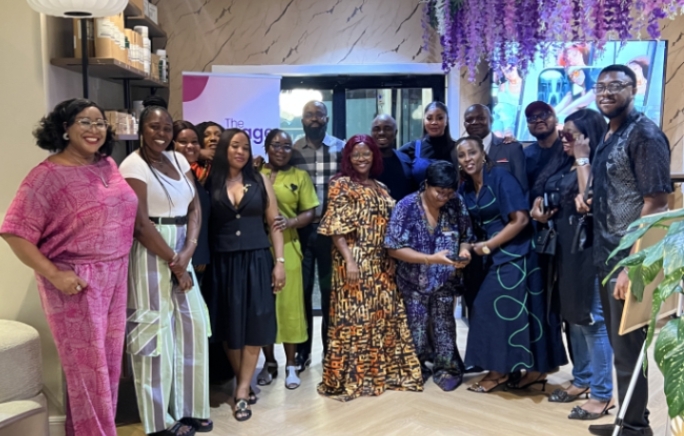
These issues took centre stage at The Leverage Room, a monthly platform that brings together entrepreneurs, creatives, executives and professionals to explore opportunities for business growth.
The gathering, themed “Beyond Business: Building Value, Strategic Relationships and Global Influence,” brought participants from different sectors together to discuss networking, business management, pricing, international trade and the influence of storytelling on commercial opportunities.
Speakers emphasised that relationships could create access to new opportunities, but businesses needed the capacity to deliver value and sustain growth once those opportunities emerged.
Networking Must Create Mutual Value
The convener of The Leverage Room and founder of E Travels and Tours, Uche Chinonso, said the platform was designed to go beyond bringing people together by encouraging relationships that could generate mutual benefits.
He described meaningful networking as an exchange in which participants contribute knowledge, resources and opportunities rather than focus solely on what they stand to gain.
“Networking is not about take, it’s about give and take. It’s about having something to offer,” Chinonso said.
He acknowledged that organising such gatherings came with challenges, including persuading people to pay to attend and ensuring that the right participants found sufficient value in the experience.
His remarks highlighted a wider challenge for professional networking platforms: creating environments where introductions lead to lasting relationships, collaboration and measurable business outcomes.
Building Businesses That Do Not Depend on Their Founders
For Mimi Orjiekwe, Executive Director of FBM Homes and Interior, networking can open doors, but sustainable growth depends on what businesses do after making those connections.
Drawing on her experience running a former makeup business, Orjiekwe explained how personally managing multiple responsibilities made it difficult to sustain operations.
“I was the founder, I was the customer service, I was the dealer, I was the delivery, I was doing everything,” she said.
The experience taught her that talent and customer demand alone could not guarantee long-term business sustainability.
She urged entrepreneurs to establish clear operating procedures, train employees and delegate responsibilities instead of allowing every aspect of a business to depend on the founder.
Orjiekwe said a business should be able to meet its obligations, pay salaries, manage multiple projects and continue operating without the owner overseeing every task.
“The fact that I can sleep and wake up and my business is running,” she said, describing the independence that effective business systems can provide.
Her argument was that entrepreneurs should build organisations capable of operating beyond their personal involvement, rather than becoming indispensable to every routine activity.
Why Competing on Price Can Undermine Growth
Manufacturing and commercial growth strategist Udoka Abanobi examined the pressure businesses face when competing in crowded markets, particularly when customers make decisions primarily on price.
He warned that repeated price reductions to attract customers could erode profit margins and make it harder for businesses to maintain product quality and service standards.
Although discounts could help businesses enter new markets or achieve specific commercial objectives, he said they should not replace a clear competitive advantage.
Abanobi illustrated the challenge with local oil filter manufacturing, pointing to competition from imported products and the costs associated with raw materials.
Rather than relying exclusively on lower prices, he encouraged entrepreneurs to identify what distinguishes their products or services and communicate that value to prospective customers.
He recalled purchasing a laptop from a seller who charged more than competitors but explained the product specifications and offered a warranty.
The experience, he said, demonstrated how reliable information and assurances could influence purchasing decisions even when cheaper alternatives were available.
“If everybody is offering the same thing, there must be something else you must offer,” Abanobi said.
He also urged business owners to calculate their full operating costs before setting prices, including labour, packaging and transportation.
The underlying challenge is to establish prices that customers can accept while allowing businesses to cover costs, maintain quality and generate sufficient returns to remain viable.
Looking Beyond Domestic Markets
Ginette Kadigiri, regional manager of RwandAir, encouraged entrepreneurs to explore opportunities beyond their immediate markets through travel, commercial partnerships and exposure to different business environments.
She said visiting other countries could help business owners identify potential suppliers, customers and partners while learning how enterprises operate in different markets.
Kadigiri also discussed the African Continental Free Trade Area (AfCFTA), which aims to expand trade among African countries, highlighting logistics as an important consideration for businesses seeking to move goods across borders.
She cited a partnership involving RwandAir and Nigeria’s Ministry of Trade that, according to her, offered eligible Nigerian exporters discounted cargo services to selected destinations.
Entrepreneurs seeking to benefit from such arrangements, she said, needed to understand the applicable requirements and plan their international activities around clear commercial objectives.
Access to new markets can create opportunities, but businesses must also consider transportation costs, regulatory requirements, product standards and the capacity to fulfil orders reliably.
Who Tells Africa’s Business Stories?
The discussion also explored how media ownership and storytelling influence the way African businesses, communities and creative industries are perceived.
Sikona Cibini, head of partnerships for West Africa at Forbes Africa, focused on the importance of African ownership of media platforms and greater control over narratives about the continent.
She argued that ownership matters because those who control media platforms have considerable influence over which stories are told, how they are presented and the audiences they reach.
Greater African participation in media ownership and distribution, she said, could create more opportunities for businesses and communities to shape their own representation.
Tsholo Ezeani also emphasised the need to document African cultures and challenge stereotypes through storytelling.
She said preserving traditions, histories and everyday experiences could keep cultural knowledge accessible while allowing communities to present more nuanced accounts of their lives.
Such documentation, she argued, could help audiences understand African societies beyond prevailing assumptions and encourage greater understanding across national and cultural boundaries.
The discussion connected storytelling to a broader question of influence: African businesses and communities need not only access to markets, but also opportunities to shape how their products, experiences and achievements are understood.
Turning Connections into Lasting Results
The conversations at The Leverage Room pointed to several interconnected requirements for sustainable entrepreneurship: meaningful professional relationships, dependable business systems, informed pricing, international market awareness and the ability to communicate value effectively.
For African businesses, the challenge is to translate access into action. An introduction must lead to a useful relationship, a new market must be approached with a viable commercial plan, and increased demand must be matched by the capacity to deliver.
The same principle applies to the continent’s cultural and commercial identity. Stronger representation can create opportunities, but lasting influence requires African businesses and communities to participate actively in producing and distributing their own stories.
Ultimately, networking is a starting point rather than a guarantee of success. Sustainable growth depends on what entrepreneurs build around the connections they make.
Atlantic Reports: Voices. People. Facts.
Written by
Atlantic Reports Admin
Comments
- Be the first to comment.