BPP Calls for Climate-Resilient Infrastructure and Long-Term Value in Public Procurement
By Atlantic Reports
The Bureau of Public Procurement (BPP) has called for a fundamental shift in Nigeria’s public procurement system, urging government institutions to prioritise long-term value, environmental sustainability and climate-resilient infrastructure rather than focusing primarily on the lowest contract cost.
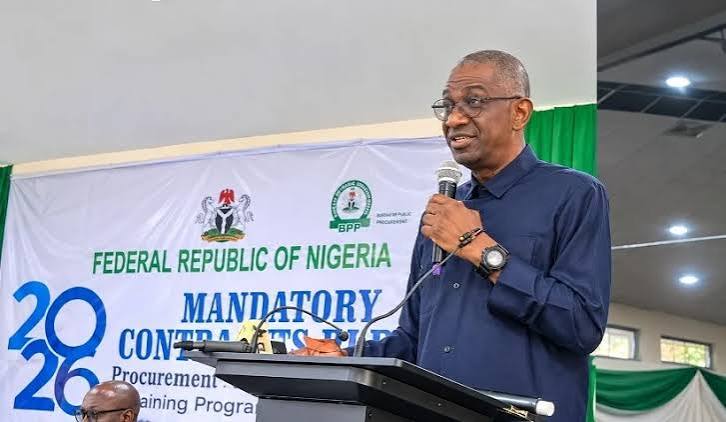
The Director-General of the bureau, Dr Adebowale Adedokun, made the call at a public procurement dialogue organised by the BPP in partnership with the Chartered Institute of Procurement and Supply (CIPS).
The event, tagged “The Great Conversation”, took place at the Nigeria Pavilion during the 31st United Nations Climate Change Conference (COP31) in Antalya, Türkiye, on Wednesday.
Adedokun said Nigeria needed to move beyond transactional purchasing and adopt procurement practices that connected public spending with environmental protection, infrastructure resilience and national development.
He argued that traditional procurement approaches had not adequately incorporated value for money, environmental considerations, operational sustainability and the long-term durability of public infrastructure.
Beyond the lowest contract price
According to the BPP director-general, public procurement should no longer be assessed solely by the immediate cost of goods, works and services acquired by government.
Instead, he said, decisions should consider the benefits such expenditure would deliver to citizens, the environment and the national economy over several years.
Using the health sector as an example, Adedokun questioned the purchase of expensive medical equipment, including magnetic resonance imaging (MRI) scanners, without adequate consideration of energy efficiency, reliability, maintenance requirements and environmental impact.
He said Nigerians deserved modern healthcare facilities equipped with technology capable of operating efficiently, consuming less energy and delivering essential services over the long term.
He also called for roads, electricity systems and water infrastructure to be designed to withstand changing climate conditions and remain functional over extended periods.
“Public procurement decisions should be guided by professional expertise, technical evidence and long-term national development priorities rather than subjective considerations,” he said.
Climate commitments should shape procurement decisions
Adedokun identified Nigeria’s Nationally Determined Contribution (NDC 3.0) as an important framework for aligning public procurement with the country's climate commitments.
He said the BPP was working towards a system that encouraged environmentally responsible production, energy efficiency, reliable power solutions and sustainable water and infrastructure development.
The director-general described procurement as a strategic tool capable of influencing market behaviour, improving production standards and preparing the country for future economic and environmental challenges.
He urged public officials to consider the long-term consequences of government purchasing decisions.
“What are we buying today, and what will be the outcome of what we buy in the next 10, 20 or 30 years?
“We must begin to look beyond the immediate transaction and consider the kind of country we want to build.
“We must also consider the quality of healthcare we want our citizens to enjoy and the infrastructure that will sustain future generations,” he said.
Whole-life costing and stronger procurement standards
The BPP chief advocated a procurement framework that goes beyond the lowest evaluated bid to incorporate whole-life-cycle costing, durability, environmental performance, operational efficiency and overall value.
Whole-life-cycle costing considers not only the initial purchase or construction price but also the expenses associated with operating, maintaining and eventually replacing an asset.
Under this approach, a project with a higher initial cost could offer better value if it lasts longer, requires less maintenance and consumes fewer resources.
Adedokun said sustainability requirements should be integrated into every stage of procurement, including planning, needs assessment, technical specifications, bidding documents, contract implementation and evaluation.
He identified three priorities for achieving the proposed transformation:
-
Developing clear and robust procurement specifications aligned with NDC 3.0.
-
Strengthening statutory, regulatory and institutional frameworks.
-
Deploying digital solutions to improve transparency, accountability, efficiency and access to procurement information.
Local businesses and sustainable supply chains
Adedokun also called for stronger engagement with domestic suppliers, manufacturers and contractors to encourage local innovation, responsible production and sustainable supply chains.
He said government should clearly communicate procurement requirements and expected standards so that businesses could develop and supply appropriate technologies, products and services that support Nigeria’s economic and environmental objectives.
Such engagement, he suggested, would help align public purchasing with local industrial development while encouraging businesses to adopt more sustainable production practices.
The BPP director-general reaffirmed the bureau’s commitment to professionalism, innovation, transparency and sustainability in public procurement.
Accountability must extend beyond contract awards
The proposed shift raises important questions about how government agencies will measure and enforce sustainability standards, assess contractors’ performance and ensure that completed projects deliver the benefits promised at the procurement stage.
For climate-resilient infrastructure to become a practical outcome rather than a policy aspiration, procurement requirements must be supported by credible technical assessments, adequate funding, effective contract supervision and transparent performance monitoring.
Adedokun said public expenditure should ultimately be judged not by the amount government spends or how cheaply contracts are awarded, but by the quality, resilience, sustainability and lasting benefits delivered to Nigerians.
Atlantic Reports: Voices. People. Facts.
Written by
Atlantic Reports Admin
Comments
- Be the first to comment.