Catholic Church Urges Nigerians to Demand Accountability Ahead of 2027 Elections
By Atlantic Reports
The Catholic Church has urged Nigerians to demand accountability from public office holders and take a more active role in governance, saying sustained citizen participation is essential for transparency and national development.
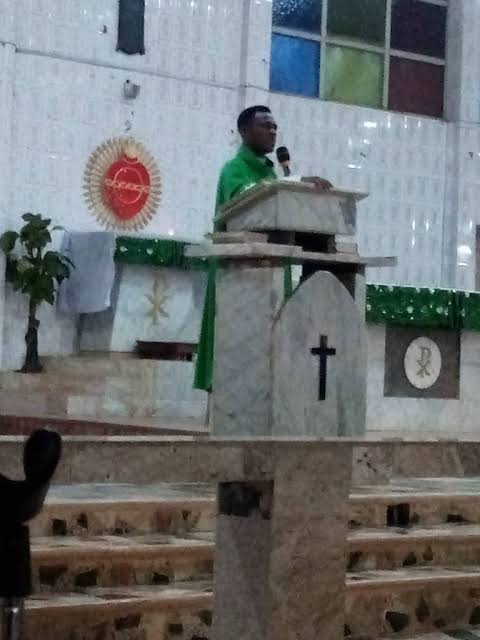
The call was made on Tuesday at the 9th National Seminar organised by the Diocesan Politics Commission in collaboration with the Justice, Development, Peace and Caritas (JDPC) of the Catholic Diocese of Enugu.
The seminar, themed “Active Citizenship and Good Governance in Nigeria”, sought to educate citizens, particularly Christians, on the importance of good governance and the Church’s role in promoting responsible political participation.
Delivering the opening remarks, the Catholic Bishop of Enugu, Most Rev. Callistus Onaga, said the Church had a responsibility to guide its members not only on spiritual matters but also on issues affecting society, including politics.
Onaga, represented by the Diocesan Chancellor and Secretary, Rev. Fr. Wilfred Agubuchie, said the Church should contribute to discussions about public leadership and the welfare of citizens.
He urged politicians to regard public service as a vocation that demands moral responsibility, while encouraging Christians to consider the character and integrity of candidates when voting.
“We are not just after the construction of roads and schools, but we must ask if politicians have the moral character needed to rule us,” the bishop said.
Church calls for responsible political participation
The Chairman of the seminar, HRH Igwe Michael Uzoigwe, called for continuous political dialogue within the Church, particularly as the country prepares for the 2027 general elections.
He urged Christians to complement prayers with practical action by participating in the electoral process and supporting the emergence of competent leaders.
Uzoigwe, however, cautioned against political intolerance, stressing that the Catholic Church was not a political party.
He advised members to express their political opinions with moderation and avoid attacking individuals or groups because of their differing views.
Professor identifies institutional weaknesses
In a paper presentation, Professor Chidozie Chukwuokolo of Ebonyi State University, Abakaliki, called for stronger public institutions and sustained citizen participation to improve governance.
He identified corruption, insecurity, unemployment, poverty and weak institutions as major obstacles to public confidence and national development.
Chukwuokolo said Nigeria’s return to democratic rule in 1999 had not, by itself, guaranteed accountability, constitutional freedoms or respect for citizens’ rights.
He questioned how the country could move from recurring crises towards sustainable national renewal, identifying poor leadership, political patronage and misuse of public resources as significant barriers.
The professor advocated transparent procurement procedures, effective monitoring of public expenditure and greater public access to information about government contracts and projects.
He also called on governments to make job creation a central policy priority, strengthen security institutions and protect judicial independence.
According to him, citizens must move beyond voting by monitoring government policies and demanding explanations from those entrusted with public resources.
JDPC urges citizens to use Freedom of Information Act
Earlier, the Executive Director of JDPC, Rev. Fr. Donatus Onuigbo, said good governance depended on dialogue, active listening and the involvement of citizens in decisions that affected their lives.
“Every opinion counts, and every individual counts,” he said, describing leadership as a responsibility to serve the public.
Onuigbo urged Nigerians to make use of the Freedom of Information Act to request information from government ministries, departments and agencies on public spending and project implementation.
He also outlined citizens’ responsibilities before, during and after elections, urging eligible voters to participate, protect their votes and continue monitoring government activities after electoral contests.
Accountability must continue after elections
The seminar's message highlights a central challenge for Nigeria's democracy: participation should not end when voters cast their ballots.
While elections provide citizens with an opportunity to choose their representatives, effective accountability also depends on access to public information, transparent spending, responsive institutions and the willingness of citizens to question decisions made in their name.
Participants included the governorship candidate of the National Rescue Movement, Christopher Okonkwo, and the senatorial candidate of the Nigeria Democratic Congress, Adaku Ogbu-Aguocha, among others.
Atlantic Reports: Voices. People. Facts.
Written by
Atlantic Reports Admin
Comments
- Be the first to comment.