CBN Targets Doubling of Private Sector Credit by 2030 as Cardoso Outlines Financial Reforms
By Atlantic Reports
The Central Bank of Nigeria (CBN) is targeting at least a doubling of credit to the private sector by 2030, as part of efforts to channel more long-term financing into businesses and productive economic activities.
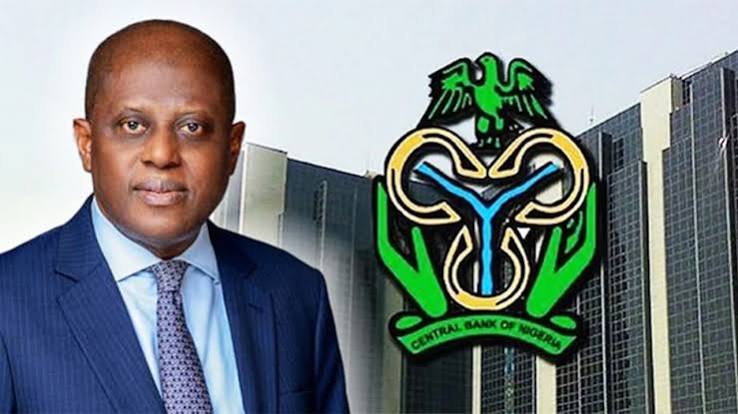
CBN Governor Olayemi Cardoso announced the projection on Friday, November 27, 2026, at the 61st Annual Bankers Dinner organised by the Chartered Institute of Bankers of Nigeria in Lagos.
He said achieving the target would require stronger domestic institutional investment, deeper capital markets and financial institutions capable of supporting businesses at different stages of growth.
Cardoso stressed that recent economic and financial sector reforms must translate into wider opportunities for households and businesses.
Bank recapitalisation raises lending expectations
The governor said the banking sector recapitalisation exercise, concluded earlier in 2026, had strengthened the industry's capacity to support economic development.
According to him, 33 banks met the revised minimum capital requirements, raising approximately ₦4.65 trillion in fresh capital.
However, he cautioned that stronger bank balance sheets would not automatically result in cheaper or more accessible loans.
He identified elevated lending risks, high interest rates, weaknesses in credit assessment and shortcomings in collateral systems as continuing barriers to borrowing.
Cardoso said addressing these constraints would require sustained reductions in inflation, stronger credit information infrastructure and closer coordination between monetary and fiscal authorities.
For businesses, particularly small and medium-sized enterprises, the availability of credit will depend not only on the financial strength of banks but also on lending conditions, collateral requirements and the cost of borrowing.
CBN highlights improvements in economic indicators
Cardoso said Nigeria's macroeconomic conditions had improved, citing a decline in inflation from 24.48 per cent in January 2025 to 14.06 per cent in October 2026.
He also reported that external reserves had reached their highest level in approximately 18 years, while foreign exchange market reforms had improved transparency, price discovery and investor confidence.
The economy recorded real Gross Domestic Product growth of 4.43 per cent in the second quarter of 2026, according to figures cited by the governor.
He said the CBN would focus on consolidating these gains through credible monetary policy, regulatory transparency and stronger financial sector governance.
The apex bank is also expected to introduce a comprehensive and accessible regulatory rulebook in 2027 to clarify regulatory requirements and supervisory standards.
Cardoso reiterated the bank's ambition to achieve sustainable single-digit inflation, arguing that price stability would protect purchasing power and give businesses greater certainty when planning investments.
Financial inclusion remains uneven
The governor identified access to useful and affordable financial services as another priority.
Citing the 2026 Access to Financial Services Survey, he said 79 per cent of Nigerian adults used formal or informal financial services, while 64 per cent accessed digital financial services.
However, only 10 per cent reportedly borrowed through formal financial channels, despite 53 per cent having formal savings.
The figures point to a gap between access to financial services and the ability to obtain formal credit.
Cardoso said the next phase of financial inclusion must focus on making financial products more useful to individuals and businesses, particularly through improved access to appropriate financing.
He also said the CBN's Payments System Vision 2028 was targeting 95 per cent financial inclusion by 2028, alongside stronger payment security, improved interoperability and reduced fraud.
The bank, he added, would strengthen consumer protection, operational reliability and transparency in digital transactions.
AI and digital assets enter regulatory focus
Cardoso said artificial intelligence and digital assets, including stablecoins, would increasingly influence financial services.
He identified potential applications in credit assessment, fraud detection, payment systems and cross-border settlements.
However, he said financial innovation would need to operate within appropriate regulatory safeguards to protect monetary and financial stability.
The CBN's approach will therefore involve balancing the potential benefits of emerging technologies with risks relating to consumer protection, financial crime and the stability of the financial system.
The challenge of turning credit targets into business growth
Doubling private sector credit by 2030 would represent a major expansion of financing available to businesses. But the volume of credit alone will not determine its economic value.
The terms on which loans are offered, the sectors receiving financing, the ability of smaller businesses to qualify and the capacity of borrowers to repay will all influence the outcome.
The CBN's own concerns about high interest rates, lending risks and weak credit infrastructure highlight the challenges ahead.
For businesses seeking capital, the key question is whether the proposed expansion will produce more affordable loans and wider access, rather than simply increase the amount of money circulating through the financial system.
Cardoso said Nigeria's ability to convert financial sector reforms into productive investment, stronger businesses and broader economic opportunities would determine the success of its development agenda towards 2030.
Atlantic Reports: Voices. People. Facts.
Written by
Atlantic Reports Admin
Comments
- Be the first to comment.