Child Rights Groups Urge Lagos Traders to Report Abuse of Domestic Workers
By Atlantic Reports
Campaign targets child exploitation in domestic work
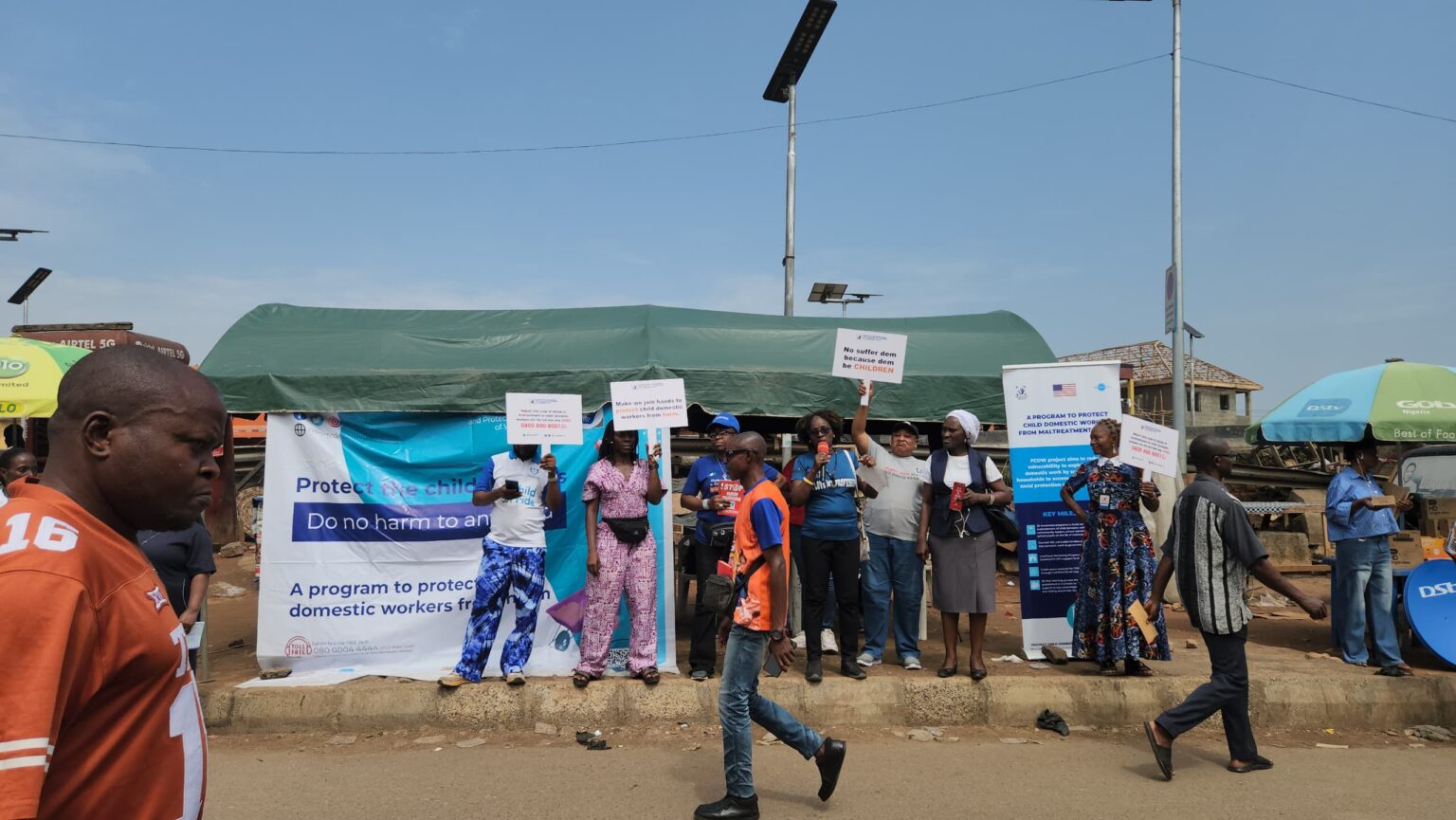
The Centre for the Advancement and Protection of the Rights of Vulnerable People (CAPRIGHTS-VP) has urged traders and residents to take an active role in protecting child domestic workers from abuse, exploitation and human trafficking.
The organisation made the appeal on Wednesday during a sensitisation exercise at Iyana Ipaja Market in Lagos.
The campaign, organised in collaboration with child protection organisations and supported by The Freedom Fund, focused on raising awareness about exploitative domestic labour and strengthening community participation in protecting vulnerable children.
Executive Director of CAPRIGHTS-VP, Mrs Clara Kanu, said protecting children working as domestic helpers required collective responsibility from individuals, families and communities.
She urged traders and residents not to remain silent when they witnessed cases of child abuse or exploitation.
“Protecting children, particularly those working as domestic helpers, is a collective responsibility requiring the active participation of individuals, families and communities,” Kanu said.
NAPTIP warns against hazardous child labour
Elizabeth Ajeseni, Head of the Public Enlightenment Unit, who represented the Lagos Zonal Commander of the National Agency for the Prohibition of Trafficking in Persons (NAPTIP), Mrs Comfort Modupe Agboko, described child exploitation as a serious offence.
She warned against employing underage children in hazardous domestic activities, subjecting them to physical abuse or denying them their basic rights.
Ajeseni stressed that children were entitled to education, recreation and adequate rest.
She also raised concerns about children brought to Lagos with promises of better opportunities but allegedly denied sufficient food, education and other basic necessities.
Her remarks highlighted the risks faced by children whose movement from rural communities to urban centres is arranged through informal family or employment relationships without adequate safeguards.
Groups condemn children hawking during school hours
The Lagos State Coordinator of the Network Against Child Trafficking, Abuse and Labour (NACTAL), Mrs Abosede Oyeleye, expressed concern about children being used to sell goods in markets during school hours.
She described the practice as a violation of children's rights and urged traders to prioritise education over commercial activities involving school-age children.
“Some children are still being used to sell goods in markets during school hours, and this is a violation of their rights,” Oyeleye said.
CAPRIGHTS-VP Project Manager, Mrs Ngozi Mirian Arinze, said the campaign also focused on children living with people other than their biological parents, who could be exposed to domestic exploitation.
She said such children deserved adequate food, healthcare, education, freedom and opportunities for recreation, just like other children in the households where they lived.
Parents urged to verify promises of better opportunities
Project Manager of Bakhita Empowerment Network, Rev. Sister Clara Azubuike, cautioned parents against handing their children over to individuals promising better opportunities without first verifying their intentions and circumstances.
She said some children taken to cities or neighbouring countries under such arrangements had faced trafficking, sexual exploitation and abuse.
According to her, some victims required rehabilitation before they could safely reunite with their families.
The Field Officer of Street Project Foundation, TheGift Chikere, said children brought from rural communities to live with relatives or family acquaintances were entitled to the same fundamental rights as the biological children of those households.
“Bringing a child from the village to Lagos under the guise of providing better opportunities should not become an excuse to subject the child to domestic servitude or deny them access to education,” Chikere said.
She urged employers and guardians to provide children with adequate food, healthcare, rest and education, warning that household responsibilities should not interfere with schooling.
Chikere also condemned situations in which child domestic workers were made to work late into the night while other children in the same household enjoyed adequate rest.
Community vigilance essential to preventing trafficking
The sensitisation exercise ended with a call for stronger community participation in preventing child trafficking, domestic servitude and other forms of abuse.
Residents were urged to report suspected cases to the relevant authorities rather than treating exploitation as a private family or employment matter.
The campaign also drew attention to the vulnerability of children placed in domestic arrangements through informal agreements, particularly when parents or guardians have limited information about the conditions in which they will live and work.
However, awareness campaigns alone cannot guarantee protection. Effective enforcement, accessible reporting channels, support for victims and follow-up by child protection agencies remain essential to addressing exploitation.
For children working in private households, protection must extend beyond promises of care. Their access to education, healthcare, adequate nutrition, rest and freedom from violence must be respected.
Atlantic Reports: Voices. People. Facts.
Written by
Atlantic Reports Admin
Comments
- Be the first to comment.