Children’s Day: Legal Experts Demand Stronger Enforcement of Child Protection Laws in Nigeria
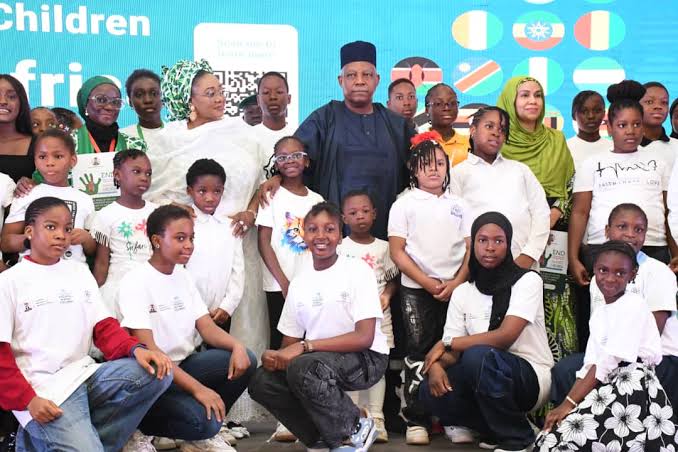
By Atlantic Reports
Legal experts and judicial officers have called for stronger enforcement of child protection laws and better coordination among government institutions to safeguard children from abuse, exploitation and other forms of violence.
The call was made on Friday in Abuja at the inaugural conference of the Nigerian Association of Family Court Judicial Officers, Magistrates and other Practitioners (NAFCJOMP), organised to commemorate the United Nations World Children’s Day.
The Chief Justice of Nigeria (CJN), Justice Kudirat Kekere-Ekun, represented by Justice Jumai Sanke, said the existence of legislation alone could not guarantee the safety and welfare of vulnerable children.
She noted that Nigeria had established a legal framework through the Child Rights Act 2003, but stressed that its effectiveness depended on consistent implementation.
Child abuse and exploitation remain major concerns
Kekere-Ekun identified child abuse, neglect, sexual exploitation, human trafficking, child labour, early and forced marriage, abandonment and denial of access to education and healthcare as continuing threats to children's welfare.
She said the judiciary had an important responsibility to ensure that children appearing before courts as victims, witnesses or children in conflict with the law were treated with dignity and sensitivity.
The Chief Justice called for child-friendly judicial proceedings that protect children's privacy, encourage their participation and take account of their age, maturity and emotional circumstances.
She also stressed that children who come into conflict with the law should, where appropriate, receive rehabilitative and reintegration support rather than punishment that could permanently damage their future prospects.
AGF identifies gap between laws and implementation
The Attorney-General of the Federation and Minister of Justice, Lateef Fagbemi, SAN, described World Children’s Day as a reminder of the collective responsibility to ensure that every child enjoys the full protection of the law.
He challenged stakeholders to assess whether existing laws, policies and institutions were translating into safety and dignity for children in their everyday lives.
Fagbemi said the major challenge was not necessarily the absence of legislation but the gap between legal provisions and their implementation.
He called for sustained political commitment, coordinated institutional action and reforms that respond to changing threats facing children.
The minister said the Federal Ministry of Justice was working to strengthen the country's child justice system.
He disclosed that the ministry had supported the development of Legal Aid Guidelines and Prosecutors’ Guidelines for Handling Cases of Children in Contact with the Law.
According to him, the guidelines are intended to improve access to quality legal representation and promote child-sensitive prosecution standards nationwide.
Family courts urged to strengthen child-sensitive justice
The President of NAFCJOMP, Justice Eberechi Nyesom-Wike, reaffirmed the association's commitment to advancing children's rights and improving family court practice in Nigeria.
She said effective child protection required cooperation among legal professionals, social welfare institutions, healthcare providers and other relevant stakeholders.
Nyesom-Wike said the association would promote compliance with child protection laws and advocate the implementation of policies covering children's education, healthcare and social security.
She also emphasised the need to strengthen the implementation of the Child Rights Act and corresponding laws enacted by state governments.
The association, she said, would pursue professional development and collaboration among family justice and child protection practitioners to improve standards in family and juvenile court proceedings.
Referral system to support vulnerable children
Nyesom-Wike disclosed that NAFCJOMP, working with its partners, facilitated access to essential services through a referral system covering counselling, legal aid and medical support.
She said protecting children required more than sound legislation and effective courts, adding that children also needed coordinated services that addressed their practical circumstances.
The conference, she explained, provided an opportunity for professionals to strengthen collaboration, share expertise and develop practical responses to challenges affecting children.
Enforcement remains the critical test
The calls from the judiciary, the Federal Ministry of Justice and NAFCJOMP highlight a central challenge in Nigeria's child protection system: ensuring that legal safeguards translate into protection for children in homes, schools, communities and institutions.
The Child Rights Act 2003 provides a national legislative framework, while states have responsibilities concerning the adoption and implementation of child protection laws within their jurisdictions.
However, the conference statements point to continuing concerns about enforcement, access to justice and the availability of support services for vulnerable children.
The development of legal aid and prosecution guidelines is an institutional step, but their practical value will depend on implementation, adequate resources, professional training and effective monitoring.
For children facing abuse, neglect, exploitation or exclusion from essential services, the real measure of progress will be whether protection systems respond promptly, preserve their dignity and secure their rights.
Atlantic Reports: Voices. People. Facts.
Written by
Atlantic Reports Admin
Comments
- Be the first to comment.