China Backs Permanent African Seat on UN Security Council
By Atlantic Reports
China has called for Africa to secure a permanent seat on the United Nations Security Council, saying reforms to the global body should give greater representation to developing countries.
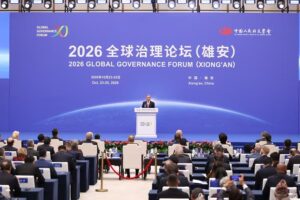
Chinese Foreign Minister Wang Yi made the appeal at the 2026 Global Governance Forum in Xiong’an New Area, Hebei Province, where international participants discussed issues relating to global governance.
Wang said Security Council reform should prioritise developing countries, particularly African nations, while creating more opportunities for small and medium-sized countries to influence international affairs.
He argued that special arrangements should address Africa’s aspirations and reflect the growing role of developing countries in global governance.
According to Wang, expanding developing countries’ participation would help address historical imbalances and bring broader perspectives into international decision-making.
China’s position aligns with its stated support for a more inclusive international order. However, Wang did not identify which African countries might occupy permanent seats or clarify whether any new permanent members should receive veto powers.
Africa’s representation at the Security Council
The UN Security Council has 15 members: five permanent members and 10 non-permanent members elected by the General Assembly for two-year terms.
The permanent members are China, France, Russia, the United Kingdom and the United States. Each holds veto power over substantive resolutions, giving them considerable influence over decisions on international peace and security.
Africa currently has three non-permanent seats but no permanent representation.
The continent’s common position, outlined in the Ezulwini Consensus and the Sirte Declaration, calls for at least two permanent seats with the same prerogatives as existing permanent members, including veto rights for as long as the veto remains in the system. It also seeks five non-permanent seats for Africa.
The African position reflects longstanding concerns that the continent remains underrepresented in a body whose decisions affect conflicts, peacekeeping, sanctions and international security.
Reform requires agreement among UN members
Changing the Security Council’s composition requires an amendment to the UN Charter.
Such an amendment must be adopted by a two-thirds majority of the General Assembly and ratified by two-thirds of UN member states, including all five permanent members of the Security Council.
This requirement means that reform depends on broad international agreement, including approval from the countries whose permanent status and veto powers would be central to any restructuring.
Although China’s support adds to calls for greater African representation, it does not by itself establish a timetable for reform or resolve disagreements over the number of new permanent seats, their distribution and veto powers.
Global governance forum examines international cooperation
The three-day forum, hosted by the Chinese People’s Institute of Foreign Affairs, attracted participants from more than 90 countries.
Xiong’an New Area, where the event was held, was presented as an example of China’s approach to long-term planning, innovation and green development.
Wang’s remarks placed Security Council reform within the wider debate over how international institutions should respond to changing global power relations and the interests of developing countries.
For African states, the central issue remains whether diplomatic support for reform can be translated into an agreed restructuring that gives the continent a permanent voice in decisions on international peace and security.
Atlantic Reports: Voices. People. Facts.
Written by
Atlantic Reports Admin
Comments
- Be the first to comment.