COP31 Advances Paris Agreement Implementation Despite Failure to Reach Wider Consensus, UN Says
By Atlantic Reports
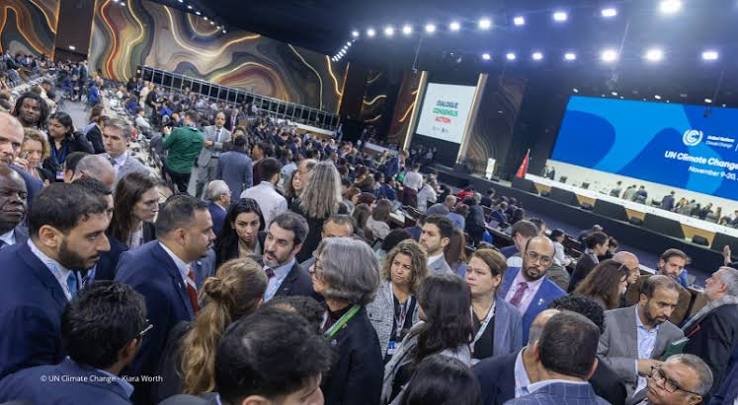
The United Nations Framework Convention on Climate Change (UNFCCC) says the 31st Conference of the Parties (COP31) made important progress in advancing implementation of the Paris Agreement, despite unresolved disagreements on several major negotiating issues.
UNFCCC Executive Secretary Simon Stiell said the conference, held in Antalya, Türkiye, from November 9 to 20, produced agreements on just transition, climate finance and adaptation, while strengthening international efforts to expand electrification.
However, participating governments failed to reach agreement on a presidency-led cover decision, affecting progress on other issues linked to the negotiations.
In a statement issued on Monday, Stiell acknowledged the disappointment over the unresolved matters but said the conference had delivered results through both its formal negotiations and broader climate action programme.
"Our process must follow the science and meet the challenge," he said.
He added that the failure to agree on the presidency-led decision offered lessons for future climate negotiations.
Electrification gains international support
One of the major developments highlighted by the UNFCCC was growing support for a global target to achieve 35 per cent electrification by 2035.
The target was announced in June by the Turkish COP31 Presidency, with support from Australia's Presidency of Negotiations and the UN climate body.
According to the UNFCCC, countries representing about half of the global economy supported the target or indicated an intention to achieve it earlier.
The initiative involves 150 countries, 37 cities and more than 260 businesses with combined annual revenues exceeding $4 trillion.
The Global Climate Action Agenda Electrification Delivery package is expected to encourage investment in clean energy, expand electricity access and accelerate electrification across power grids, transport, buildings and industry.
However, the scale of investment and the pace of implementation will determine whether the commitments translate into wider access to reliable and affordable electricity.
Climate finance moves towards delivery
Stiell said COP31 advanced discussions on how climate finance could reach vulnerable countries and communities more efficiently.
Negotiators moved forward with the Climate Finance Work Programme, including efforts to increase adaptation financing and improve access to funding.
The conference also advanced work on transitioning the Adaptation Fund to serve exclusively the Paris Agreement.
The wider objective is to direct more financial resources towards climate-resilient and low-emission development, particularly in countries facing severe climate impacts.
For developing countries, the challenge extends beyond securing financial commitments. Access procedures, funding delays and the availability of resources for local adaptation projects remain important concerns.
Stiell said climate technologies already existed but needed to reach the countries and communities that required them most.
New steps on adaptation and climate technology
The conference also advanced the implementation of the Belém Technology Implementation Programme, intended to strengthen support for countries seeking to access and deploy climate technologies.
On adaptation, governments took steps towards operationalising the 59 Belém Adaptation Indicators.
The indicators are intended to help countries assess progress in preparing for climate impacts and identify gaps in adaptation efforts.
COP31 established a dedicated task force to improve the indicators' methodologies and supporting data, while creating a platform for countries to share experiences and challenges from voluntary testing.
The conference also advanced implementation of the Baku Adaptation Road Map for 2026 to 2028 and preparations for reviewing the UAE Framework for Global Climate Resilience.
These measures are intended to improve the assessment of adaptation progress without imposing unnecessary reporting requirements on participating countries.
Support for communities facing climate losses
COP31 also recorded progress on the Warsaw International Mechanism and the Santiago Network, which support countries and communities dealing with climate-related loss and damage.
The decisions seek to improve access to technical assistance, speed up responses to requests and simplify procedures for vulnerable communities.
The UNFCCC said the arrangements include measures to ensure that a minimum share of directly funded assistance reaches affected communities.
This reflects growing recognition that climate action must address not only future risks but also the damage already experienced by vulnerable populations.
Just transition remains central to climate action
Another area of progress was the just transition agenda, which seeks to ensure that the shift towards cleaner energy does not unfairly burden workers, households and communities dependent on carbon-intensive industries.
Stiell said transitions must place workers and communities at the centre of economic and social planning.
He also highlighted the UAE Just Transition Work Programme as an important platform for building a shared understanding of how countries can develop their own transition pathways.
The proposed just transition mechanism is expected to support countries as they design and implement policies suited to their economic and social circumstances.
For developing economies, including those dependent on oil, gas and other carbon-intensive industries, the transition raises questions about employment, public revenue, energy access and investment in alternative industries.
Unresolved disagreements expose limits of climate negotiations
Despite the progress outlined by the UNFCCC, the failure to adopt the presidency-led cover decision exposed continuing divisions among governments.
The disagreement reflects the difficulty of securing consensus among more than 190 parties with different economic interests, development priorities and approaches to climate action.
Stiell said the international climate process had achieved significant progress over successive conferences but acknowledged that much more remained necessary.
The outcome leaves governments with the task of translating the agreements reached in Antalya into measurable results, particularly in climate finance, adaptation, technology deployment and support for affected communities.
For countries such as Nigeria, the effectiveness of these commitments will matter in efforts to strengthen electricity access, protect agriculture, manage flooding and build resilience in vulnerable communities.
The central test of COP31 will therefore be whether its negotiated decisions and voluntary commitments produce tangible benefits beyond the conference halls.
Atlantic Reports: Voices. People. Facts.
Written by
Atlantic Reports Admin
Comments
- Be the first to comment.