CSOs Accuse North-West Development Commission of Delaying Distribution of ₦? Interventions
By Atlantic Reports
A coalition of civil society organisations has raised concerns over delays in distributing intervention materials procured by the North-West Development Commission (NWDC), warning that administrative challenges could undermine efforts to address poverty, insecurity and unemployment in the region.
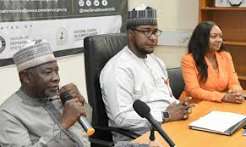
The Chairman of the Coalition of Civil Society Organisations for Good Governance and Accountability (CCSGGA), Dr Abdulsalam Kani, made the allegations at a news conference in Kano on Saturday, alongside the coalition's Secretary, Akibu Hamisu.
Kani said an inspection of the commission's facilities revealed intervention materials that had yet to be distributed, alongside employment approvals that had reportedly not been utilised.
He argued that the delays were preventing intended beneficiaries from accessing support designed to improve livelihoods and strengthen community development.
Inspection reportedly reveals undistributed materials
Kani said the coalition obtained permission to inspect the commission's warehouses as part of its efforts to promote transparency and independent oversight.
According to him, the inspection identified several categories of procured items, including Hilux vehicles intended to support vigilante groups and streetlights meant to improve community infrastructure and public safety.
Other materials reportedly included rice, beans, groundnut oil, seasoning and salt procured for internally displaced persons (IDPs) and vulnerable households.
The coalition also identified solar-powered irrigation pumps, fertilisers and tractors intended to support farmers and improve agricultural productivity.
“The Commission is therefore sitting on both undistributed materials and unused employment approvals,” Kani said.
However, the coalition's account does not establish the total value of the materials, the number of beneficiaries affected or the reasons the distribution has not been completed.
Seven North-West states affected
The coalition expressed concern over the reported delays in distributing the interventions across Jigawa, Kaduna, Kano, Katsina, Kebbi, Sokoto and Zamfara states.
Kani said the materials could support farmers, vulnerable households and communities if distributed transparently and equitably.
He identified institutional disagreements, administrative bottlenecks and poor coordination among leadership structures as possible obstacles to implementation.
The coalition argued that such challenges should not prevent the delivery of interventions intended to address socio-economic difficulties affecting communities across the region.
Calls for legislative and anti-corruption oversight
The CCSGGA chairman urged the National Assembly to intensify its oversight of the commission and called on the Economic and Financial Crimes Commission (EFCC) and the Independent Corrupt Practices and Other Related Offences Commission (ICPC) to deploy monitoring officers.
He said the agencies should ensure that all procured materials were properly accounted for and distributed transparently across the seven states.
Kani also threatened to petition President Bola Tinubu, the EFCC and ICPC if the matter remained unresolved.
He further warned that the coalition could organise protests at government houses across the North-West if no action was taken.
Accountability questions facing the commission
The NWDC was established under the North-West Development Commission Establishment Act, 2024, to support development and address socio-economic challenges across the region.
The allegations raised by the coalition place attention on the implementation of the commission's 2026 intervention programmes, particularly the movement of procured goods from warehouses to intended beneficiaries.
Key questions remain about the procurement dates, quantities, distribution schedules, employment approvals and the administrative reasons for the reported delays.
The commission's response will also be important in establishing whether the materials are awaiting distribution, undergoing verification or affected by other implementation challenges.
Atlantic Reports has not independently verified the coalition's inspection findings, and the commission's response was not included in the information provided.
Delivery matters as much as procurement
The controversy highlights a wider accountability challenge in public development programmes: procuring intervention materials does not automatically translate into benefits for the people they are intended to serve.
For displaced households, farmers and communities facing insecurity, the value of such interventions depends on timely delivery, fair beneficiary selection and effective monitoring.
The NWDC will need to clarify the status of the materials and employment approvals, while relevant oversight institutions can examine the coalition's claims and establish whether public resources are being used as intended.
Atlantic Reports: Voices. People. Facts.
Written by
Atlantic Reports Admin
Comments
- Be the first to comment.