CSOs Urge National Assembly to Scrutinise JBS’ Proposed $2.5bn Investment in Nigeria
By Atlantic Reports
A coalition of civil society organisations (CSOs) has urged the National Assembly to strengthen its oversight of direct foreign investments in Nigeria, particularly large-scale projects with potential environmental, social and economic consequences for local communities.
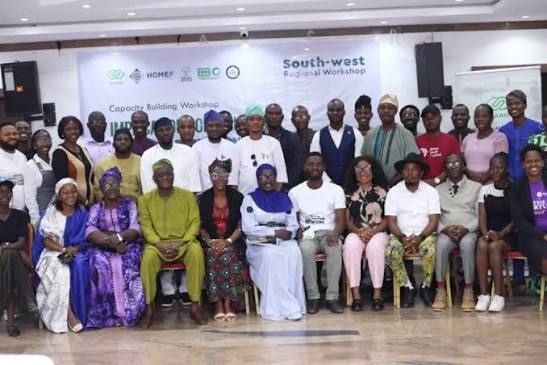
The organisations made the call at a news conference on Wednesday in Abuja, held on the sidelines of a workshop for media practitioners.
They cited the proposed $2.5 billion investment by JBS, described as one of the world's largest meat processing companies, as an example of a major investment requiring greater public scrutiny.
According to the coalition, details of the proposed investment have not been made public since it was announced in 2024, raising questions about transparency, regulatory coordination and the possible implications for Nigeria's agricultural and food systems.
CSOs seek stronger parliamentary oversight
The Programmes Director of the Health of Mother Earth Foundation (HOMEF), Mrs Joyce Brown, said the assessment of an investment of such magnitude should not be left to a single government ministry or agency.
She called on the National Assembly to exercise its oversight responsibilities and ensure that relevant government institutions work together in assessing the proposal.
“We are calling on the National Assembly to exercise that oversight function, because currently, we have seen that there is no collaboration among the agencies, departments and ministries of government that are concerned and are supposed to take this up,” Brown said.
She argued that the potential implications of the investment across different sectors required coordinated scrutiny rather than decisions being concentrated within one government institution.
Brown said parliamentary involvement would help ensure adequate regulatory oversight and greater accountability.
Environmental and livelihood concerns
Founder and Team Lead of Youth for Environmental Sustainability and Development (YESD), Ms Adesuwa Jang, warned that large investments could have adverse consequences for the environment and the livelihoods of people in affected communities if appropriate safeguards were not established.
She stressed the need to protect local interests and assess potential environmental risks before major foreign investment projects proceed.
The concerns raised by the organisations point to the importance of examining how large-scale agricultural and food-processing investments may affect land use, natural resources, local production systems and the economic activities of surrounding communities.
However, the coalition did not provide specific evidence of environmental damage or livelihood disruption linked to the proposed JBS investment. Its position was that the potential risks should be assessed transparently before implementation.
Call for stronger support for local farmers
Also speaking, Programme Manager of the Youth in Agroecology and Restoration Network (YARN), Mr Oluwaseyi Olawuyi, called on the government to introduce supportive policies and regulations that would strengthen local farmers, businesses and rural livelihoods.
He urged financial institutions to improve access to funding for sustainable food production, while research institutions should develop practical innovations suited to local conditions.
Olawuyi also called for greater public and private sector investment in sustainable technologies, food systems and agricultural infrastructure.
He identified irrigation facilities, rural roads and storage infrastructure as important areas requiring attention to improve agricultural productivity and reduce constraints faced by farmers and producers.
He further stressed the need to equip farmers with the knowledge and skills required to adopt sustainable production practices.
Transparency remains central to the investment debate
The coalition's intervention raises broader questions about how Nigeria evaluates large foreign investments, particularly those involving land, agriculture, food processing and natural resources.
While foreign investment can bring capital, technology, employment and expanded production capacity, its benefits depend partly on the terms of the investment, regulatory safeguards, local participation and the distribution of economic gains.
For the proposed JBS investment, important details remain unclear from the information provided by the coalition, including the project's location, implementation timetable, financing structure, environmental assessment, land requirements and expected benefits for local producers.
The government and relevant regulatory institutions would need to clarify these issues to enable informed public scrutiny.
The National Assembly's oversight role could provide an avenue for examining the investment's terms and ensuring that relevant agencies discharge their responsibilities. Such scrutiny would also help establish whether the proposed project complements Nigeria's domestic agricultural sector or creates additional pressures for local producers.
For communities whose livelihoods depend on land, farming and natural resources, the central issue is not simply how much foreign capital enters the country, but whether investment delivers sustainable benefits without undermining their economic security or environmental wellbeing.
Atlantic Reports: Voices. People. Facts.
Written by
Atlantic Reports Admin
Comments
- Be the first to comment.