Dasuki Facilitates Solar Power Installations at Two Sokoto General Hospitals
By Atlantic Reports
Two general hospitals in Sokoto State have received solar power installations facilitated by the Deputy Minority Leader of the House of Representatives, Alhaji Abdussamad Dasuki, in an effort to improve electricity supply for essential healthcare services.
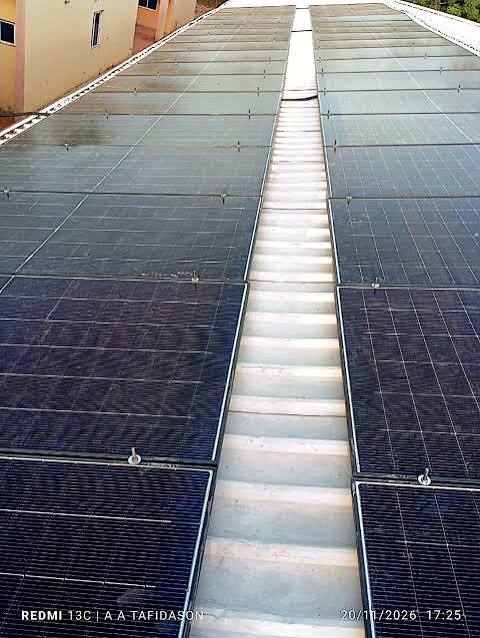
The facilities are Dogondaji General Hospital and Tambuwal General Hospital. The installations are designed to provide power to critical sections, including accident and emergency units, labour rooms, operating theatres, laboratories and selected wards.
Dasuki, who represents Kebbe/Tambuwal Federal Constituency under the African Democratic Congress (ADC), announced the projects through his Senior Aide, Attahiru Danmadi, at an ADC stakeholders' meeting in Tambuwal Local Government Area on Friday.
Details of the Solar Installations
According to Dasuki, each hospital received three Felicity lithium batteries with a combined storage capacity of 52.5 kilowatt-hours, two 12-kilovolt-ampere inverters and 45 bifacial solar panels, each rated at 620 watts.
The lawmaker said the projects were facilitated in collaboration with the Energy Commission of Nigeria (ECN), Abuja, to address electricity challenges affecting healthcare delivery.
He said the systems were expected to reduce the hospitals' dependence on generators, particularly during surgical operations and other procedures requiring a reliable electricity supply.
“With the installations, the hospitals are expected to no longer rely on generators during surgical operations, as the solar systems will provide electricity to the theatres and other critical units,” he said.
Handover Ceremony Delayed
Despite announcing the completion of the installations, Dasuki disclosed that the planned formal handover ceremony could not take place because the project team was denied access to the hospital facilities.
He did not provide details about who denied access or the circumstances surrounding the decision.
The development leaves questions about the formal transfer of responsibility for the installations, their commissioning and when hospital authorities will assume full operational control.
Dasuki urged the hospital management teams to protect the equipment, ensure proper utilisation and maintenance, and report technical problems promptly to the relevant personnel.
Reliable Electricity Remains Critical to Healthcare
Reliable electricity is essential to the operation of hospitals, particularly in emergency care, maternity services, laboratory testing and surgery. Interruptions can affect equipment, patient monitoring and the delivery of time-sensitive medical procedures.
The solar projects could help reduce fuel costs and exposure to generator-related interruptions if the systems are properly maintained and have sufficient capacity to meet the facilities' actual electricity demands.
However, the available announcement did not provide the total project cost, installation dates, expected lifespan of the equipment, maintenance arrangements or provisions for battery replacement.
There was also no independent assessment of the hospitals' previous electricity supply challenges or confirmation that all the targeted medical units are already receiving uninterrupted power.
The effectiveness of the intervention will ultimately depend on consistent operation, adequate technical support and transparent maintenance arrangements.
Dasuki said the projects were intended to benefit the hospitals and surrounding communities regardless of political affiliation. He also acknowledged the contributions of the Energy Commission of Nigeria, project teams and other stakeholders.
For patients and healthcare workers, the most important measure of success will be whether the installations deliver dependable electricity when medical services are needed.
Atlantic Reports: Voices. People. Facts.
Written by
Atlantic Reports Admin
Comments
- Be the first to comment.