Decade of Gas Programme Takes 35 Young Professionals Inside NLNG Operations in Bonny
By Atlantic Reports
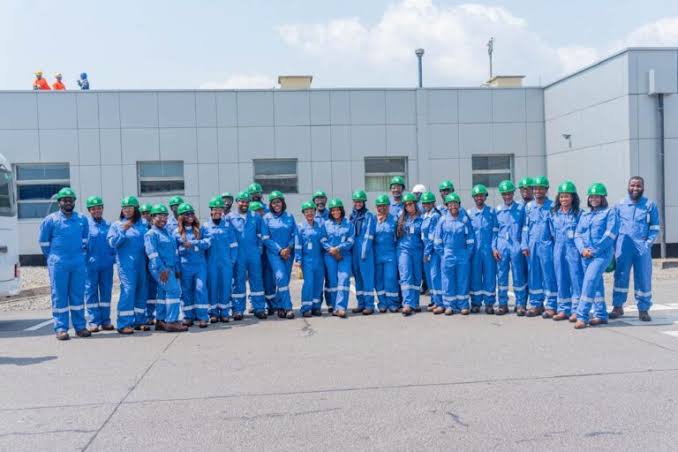
Thirty-five young professionals in Nigeria’s oil and gas industry have received practical training in gas production and export operations during a technical visit to Nigeria LNG Limited (NLNG) on Bonny Island, Rivers State.
The visit formed part of the Decade of Gas Capability Building Programme, which aims to train more than 150 professionals by 2030 to support Nigeria’s ambition of developing a gas-powered economy.
The Coordinating Director of the Decade of Gas Secretariat, Mr Ed Ubong, disclosed this in a statement made available in Lagos on Tuesday, November 24, 2026.
Ubong, who led the delegation, said the participants inspected NLNG’s operational Trains 1 to 6 and the ongoing Train 7 expansion project.
He explained that the programme combines technical instruction with direct exposure to industrial-scale gas operations to equip participants with the knowledge and practical experience required to contribute to the sector.
“What we are building is not just knowledge, but confidence and competence,” he said.
Practical experience for a growing gas industry
Ubong said firsthand exposure to gas operations was essential to preparing young professionals for the country's gas development ambitions.
He argued that developing a gas-powered economy required more than classroom instruction, stressing the importance of understanding how natural gas is processed, liquefied, stored and exported.
According to him, the programme targets engineers, geoscientists, commercial analysts and policymakers, with the aim of developing more than 150 professionals by 2030.
The beneficiaries are expected to contribute to gas-based industrialisation, power generation, increased liquefied petroleum gas (LPG) adoption, compressed natural gas (CNG) utilisation and gas-to-chemicals projects.
The Decade of Gas initiative identifies natural gas as a key resource for Nigeria's energy transition, economic diversification and industrial development.
Ubong said capacity building was one of the programme's seven strategic pillars, adding that further practical engagements were planned with regulators, upstream operators and gas infrastructure companies.
NLNG highlights importance of human capital
The Managing Director of NLNG, Mr Adeleye Falade, who received the delegation alongside members of the company's management team, described human capital development as essential to building a sustainable gas industry.
He said NLNG's operations and the ongoing Train 7 expansion demonstrated Nigeria's capacity to develop and sustain major gas infrastructure.
Falade urged the participants to maintain high standards of safety, environmental sustainability and local content throughout their professional careers.
He also highlighted the country's more than 200 trillion cubic feet of estimated gas reserves, saying the decisions taken by young professionals over the next decade would influence how effectively Nigeria harnessed the resource for electricity generation, industrial growth and employment.
Training covers production, safety and exports
The visit included technical sessions on liquefied natural gas production, plant integrity, health, safety and environmental management.
Participants also received briefings on shipping and export logistics and interacted with NLNG engineers and managers on the company's operations and expansion plans.
A female participant, speaking on behalf of the delegation, said the experience had broadened her understanding of the LNG value chain.
She noted that observing the operational facilities and Train 7 expansion project provided useful insights into the processes supporting Nigeria's LNG exports.
Turning gas ambitions into measurable results
The programme reflects growing recognition that Nigeria's gas ambitions will depend not only on its natural resources and infrastructure but also on the availability of skilled professionals to operate, maintain and expand the industry.
However, its longer-term impact will depend on whether the training translates into practical employment opportunities, stronger technical capacity and measurable contributions to domestic gas development.
The target of more than 150 professionals by 2030 also represents only one part of the wider skills challenge facing a sector expected to support electricity generation, industrial production and cleaner cooking fuel adoption.
For the initiative to deliver lasting value, sustained collaboration among government institutions, regulators, energy companies and training programmes will be essential.
Atlantic Reports: Voices. People. Facts.
Written by
Atlantic Reports Admin
Comments
- Be the first to comment.