Doctor Urges Journalists to Prioritise Regular Health Checks as NAN Staff Receive Free Screening
By Atlantic Reports
A medical doctor, Dr Fatima Kabiru of Nisa Premier Hospital, Abuja, has urged journalists to prioritise regular health checks, warning that conditions such as hypertension, diabetes and cardiovascular diseases may remain undetected until serious complications develop.
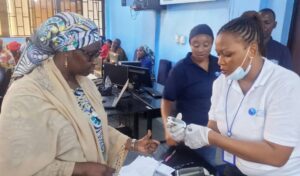
Kabiru gave the advice on Wednesday during a free medical screening and health lecture organised for staff of the News Agency of Nigeria (NAN) by the agency's Chapel of the Nigerian Union of Journalists (NUJ), in collaboration with Nisa Premier Hospital.
The exercise, held at NAN's premises in Abuja, featured health education sessions, blood pressure and blood sugar checks, medical consultations and interactive discussions.
It was organised to promote preventive healthcare and encourage media practitioners to adopt healthier lifestyles.
NAN Management Highlights Importance of Preventive Healthcare
A representative of Nisa Premier Hospital's Business and Media Department, Mr Segun Ojo, introduced the medical team and reaffirmed the hospital's commitment to quality healthcare delivery.
Ojo said the team comprised experienced professionals responsible for health education, medical screening, laboratory investigations and other clinical services.
He explained that the hospital brought the professionals to provide participants with appropriate medical attention and answers to their health-related questions.
In her welcome address, NAN Editor-in-Chief, Hajiya Hadiza Mohammed-Aliyu, described the programme as an important opportunity for journalists to improve their understanding of common health conditions, particularly hypertension, diabetes and cardiovascular diseases.
She urged participants to pay attention to the presentations, noting that some people could be living with high blood pressure without knowing it.
Mohammed-Aliyu said the exercise also offered participants access to free medical screening, professional advice and guidance on healthy eating and lifestyle choices.
Doctor Identifies Warning Signs of Diabetes
In her lecture, Kabiru identified excessive thirst, frequent urination, persistent hunger, tiredness, weakness and unexplained weight loss as possible warning signs of diabetes.
She explained that uncontrolled blood sugar could damage small blood vessels and nerves, potentially resulting in numbness, tingling sensations and delayed wound healing, particularly around the feet.
The doctor advised people living with diabetes to monitor their blood sugar levels, practise portion control, take prescribed medications and follow professional medical guidance.
She stressed that diabetes could be managed with appropriate care and consistent attention to treatment.
Hypertension and Other Cardiovascular Risk Factors
Addressing cardiovascular diseases, Kabiru identified hypertension, diabetes, high cholesterol, physical inactivity, obesity and smoking as major risk factors.
She explained that cholesterol deposits could accumulate in coronary arteries, restricting blood flow to parts of the heart and potentially causing a heart attack.
She also warned that prolonged hypertension could force the heart to work harder than normal, leading to enlargement of the heart muscle and other complications.
On heart palpitations, Kabiru said the condition could be associated with emotional factors such as anxiety and nervousness, as well as medical conditions including thyroid disorders and anaemia.
She advised patients experiencing reduced libido or other complications while taking hypertension medication to consult their doctors rather than discontinue treatment without professional guidance.
Warning Against Unsupervised Medication and Herbal Remedies
The doctor also addressed stomach ulcers, explaining that they occur when the stomach lining is damaged. She identified Helicobacter pylori infection as one possible cause and advised people experiencing persistent abdominal discomfort to seek proper medical evaluation.
Kabiru cautioned against the indiscriminate use of herbal medications, noting that uncertain compositions and dosages could expose users to serious health complications, including kidney damage.
She further explained that low blood pressure was not necessarily dangerous for everyone but could require medical attention when accompanied by symptoms such as weakness, dizziness, tiredness and blurred vision.
Journalists Urged to Share Health Information
Some NAN staff members described the screening as timely, although work schedules prevented several colleagues from participating in the routine medical checks.
They said the exercise provided an opportunity to understand their health conditions rather than automatically attributing every discomfort or illness to common infections such as malaria.
The staff commended the agency's management and the NUJ NAN Chapel for prioritising workers' welfare and called for more medical outreach programmes to support staff health and productivity.
In his closing remarks, the NUJ Chairman, Mr Collins Hammer, thanked Nisa Premier Hospital and its medical team for the collaboration.
Hammer described the initiative as particularly important for journalists, whose professional responsibilities often involve prolonged sitting, demanding assignments and work-related stress.
He said the nature of journalism could expose practitioners to health risks if they neglected routine medical examinations and preventive care.
“As we are leaving this place, let us take this message to our houses. It should not just be us. We should pass this message to other people who were not here,” he said.
He urged participants to share the information with their families and communities, emphasising that good health remained essential for effective service delivery and productivity.
The programme highlighted the importance of making preventive healthcare part of everyday life, particularly for professionals whose demanding work schedules can make routine medical attention difficult.
Atlantic Reports: Voices. People. Facts.
Written by
Atlantic Reports Admin
Comments
- Be the first to comment.