ECOWAS Mission Engages Nigerian Civil Society Groups Ahead of 2027 Elections
By Atlantic Reports
The Economic Community of West African States (ECOWAS) has commenced engagements with key stakeholders in Nigeria to assess preparations for the 2027 general elections and identify potential obstacles to peaceful, transparent and credible polls.
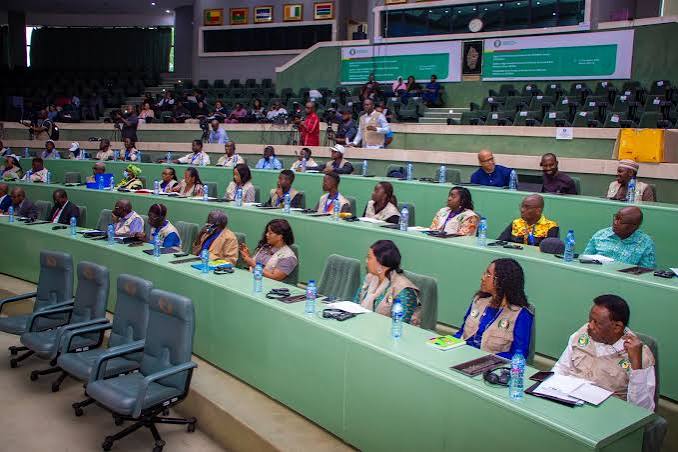
Former Vice-President of Sierra Leone and Head of the Mission, Victor Bockarie Foh, disclosed this during a visit to the headquarters of the National Civil Society Council of Nigeria (NCSCN) in Abuja on Friday.
Foh said the mission was deployed under Article 13 of the ECOWAS Supplementary Protocol on Democracy and Good Governance, Article 53(c) of the ECOWAS Conflict Prevention Framework and a decision of the Authority of Heads of State and Government.
The mission is expected to consult political party leaders, government officials, the Independent National Electoral Commission (INEC), civil society organisations and other electoral stakeholders.
It will also gather relevant legal documents and assess the political environment and institutional preparedness ahead of the elections.
ECOWAS urges political accountability and responsible campaigns
Foh urged civil society organisations to encourage voter participation and hold political parties accountable for promises made during election campaigns.
He also called on political parties to present clear, honest and practical programmes rather than resort to hate speech, personal attacks and divisive rhetoric.
“The country is made up of you, so the responsibility goes back to you.
“The message must be straight, very brief, honest and truthful.
“When a politician makes promises to you and you elect him, you must hold him accountable if he fails to fulfil those promises,” he said.
His remarks placed emphasis on the responsibility of citizens and civil society groups in strengthening democratic participation beyond election day.
Civil society raises concerns over INEC independence
The Executive Director of NCSCN, Blessing Akinlosotu, identified the independence of INEC, the credibility of the voter register and the implementation of previous ECOWAS electoral recommendations as major concerns.
Akinlosotu claimed that Nigeria had implemented less than 40 per cent of the recommendations made by ECOWAS following the 2023 general elections.
He cited recommendations concerning INEC's independence and the appointment of its chairman, arguing that outstanding reforms could undermine public confidence in the electoral process.
He also raised concerns over alleged artificial intelligence-generated photographs appearing in the voter register, saying the claims had generated questions about the reliability of the electoral database.
However, the allegations were not independently established in the information presented at the meeting.
“The people want to see that the election will be credible. It is when they know that the election will be credible that the masses will want to come out,” Akinlosotu said.
Call for specialised electoral offences tribunal
Akinlosotu called for the establishment of an independent electoral offences tribunal to facilitate the speedy prosecution of individuals involved in electoral malpractice.
He argued that existing courts were already burdened with criminal, civil and pre-election cases, making a specialised institution necessary for timely electoral justice.
He also expressed concern over vote-buying, intimidation and alleged harassment of political actors.
He urged security agencies to remain neutral and operate independently of political interests throughout the electoral process.
The NCSCN executive director further called on ECOWAS to strengthen its engagement with member states to promote peaceful, transparent and credible elections.
Voter register and public communication under scrutiny
The NCSCN Director of Media, Gambo Jangidi, also identified the credibility of the voter register and communication between INEC, political parties and citizens as important issues requiring attention.
Jangidi said civil society organisations across the North-West, North-East and North-Central regions had expressed concerns about the electoral process, particularly allegations involving AI-generated entries in the voter register.
He argued that inadequate communication by INEC with citizens and political parties could further weaken public confidence.
“The credibility of INEC’s voter register is a thing of concern, because recently names were discovered on the voter register that are AI-generated,” he said.
Jangidi urged ECOWAS to work more closely with NCSCN to improve information gathering and grassroots engagement.
He said stronger collaboration would allow civil society organisations to communicate citizens' concerns to relevant authorities and contribute to preparations for credible elections.
Electoral preparedness faces public confidence test
The concerns raised during the engagement reflect broader questions about electoral transparency, institutional independence, voter registration and accountability ahead of the 2027 polls.
The ECOWAS mission's consultations provide an opportunity to examine these issues through discussions with electoral authorities, political parties, government institutions and civil society groups.
Nigeria's Foreign Affairs Ministry has also reaffirmed the Federal Government's commitment to peaceful, credible, transparent and inclusive elections following its engagement with the mission.
Ultimately, public confidence will depend not only on assurances from institutions but also on transparent procedures, credible voter records, impartial security arrangements and effective action against electoral offences.
Atlantic Reports: Voices. People. Facts.
Written by
Atlantic Reports Admin
Comments
- Be the first to comment.